Gadkari Hails Yoga as India's Gift to World on IDY 2026

Synopsis
Union Minister Nitin Gadkari on 21 June 2026 celebrated International Day of Yoga, calling the practice India's 'timeless gift to the world.' His post highlights yoga's civilisational roots and growing global reach, aligning with India's decade-long strategy of using yoga as a soft-power instrument since the UN adopted the observance in 2014.
Key Takeaways
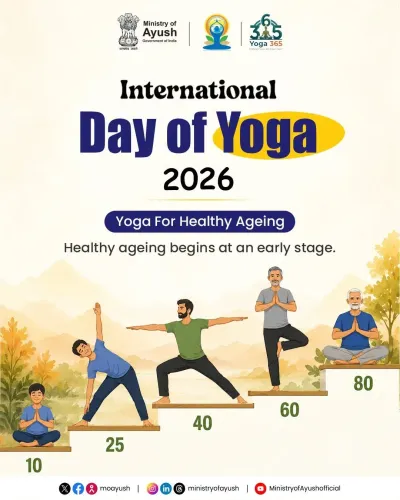
Nitin Gadkari posted a message on 21 June 2026 marking International Day of Yoga , calling yoga India's 'timeless gift to the world.' The post was tagged #YogaForHealthyAgeing and #IDY2026 , reflecting this year's thematic focus on wellness and ageing.
International Day of Yoga was established by the UN General Assembly via resolution 69/131 in December 2014 , following a proposal by PM Narendra Modi .
The first International Day of Yoga was observed on 21 June 2015 , with events at UN headquarters in New York and Indian missions worldwide.
India's Ministry of AYUSH coordinates domestic and international yoga programming, anchoring the country's cultural diplomacy strategy.
Gadkari's message positions yoga as 'a powerful symbol of India's civilisational wisdom,' consistent with the government's broader soft-power narrative.
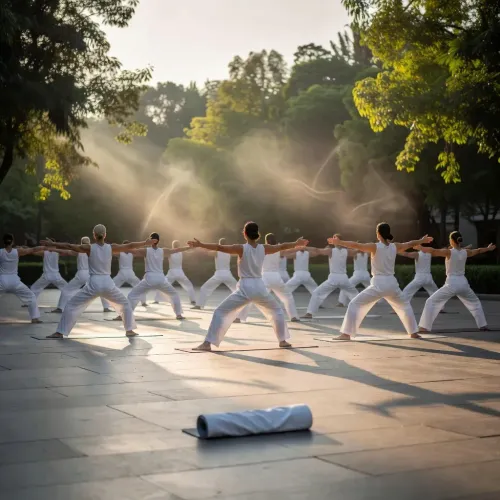
Union Road Transport and Highways Minister Nitin Gadkari on Sunday, 21 June 2026 marked the International Day of Yoga by calling yoga India's 'timeless gift to the world,' underscoring its roots in ancient Bharatiya civilisation and its expanding global footprint.
Context
Posting on the morning of International Day of Yoga 2026, Gadkari described the practice as one that 'brings harmony to mind, body, and soul,' tracing its lineage from Bharat to its present-day worldwide embrace. The post, tagged with #YogaForHealthyAgeing and #IDY2026, reflects the broader thematic focus adopted for this year's observance, centred on wellness across the lifespan.
The minister emphasised that 'with growing global recognition in recent years, this tradition stands as a powerful symbol of India's civilisational wisdom guiding a healthier, more mindful world' — language that situates yoga firmly within India's soft-power narrative.
Policy Backdrop
The International Day of Yoga traces its formal origins to September 2014, when Prime Minister Narendra Modi proposed the observance at the United Nations General Assembly. The UN General Assembly adopted resolution 69/131 in December 2014 without a vote, declaring 21 June as the annual date.
The first edition was observed on 21 June 2015, with events coordinated across Indian diplomatic missions and at UN headquarters in New York. Since then, India's Ministry of AYUSH has anchored domestic and international programming, positioning yoga as a pillar of both public health and cultural diplomacy.
India has systematically leveraged the day through bilateral cultural agreements and UN forums to project traditional knowledge systems as a credible contribution to global wellness — a strategy that has only deepened over the decade since the resolution's adoption.
Stakeholders and Impact
The global yoga community — estimated to span hundreds of millions of practitioners across more than 190 countries — is the primary audience for observances on this day. For India, the occasion doubles as a platform to reinforce the country's identity as the custodian of an ancient wellness tradition now embedded in global public-health discourse.
The Ministry of AYUSH coordinates mass yoga sessions, outreach programmes, and international events, with Indian missions abroad serving as focal points. The #YogaForHealthyAgeing theme signals a policy-level effort to connect yoga practice with demographic challenges such as ageing populations — a concern shared by India and many of its partner nations.
What's Next
Participation metrics, flagship event locations, and any new bilateral or multilateral commitments announced under the 2026 International Day of Yoga framework will indicate how far India's yoga diplomacy has advanced since the initiative's launch. The thematic focus on healthy ageing may also feed into future AYUSH policy frameworks and international health partnerships.
As senior ministers across the government echo similar messages on this occasion, the collective political messaging reinforces yoga's place not just as a wellness practice but as a cornerstone of India's civilisational brand on the world stage.
Point of View
Tying yoga not just to health but to a deeper cultural-nationalist narrative that has been central to the BJP's foreign and domestic messaging since 2014. The #YogaForHealthyAgeing framing also hints at an attempt to link ancient practice with contemporary demographic policy, broadening yoga's relevance beyond spiritual circles. Taken together, the post is less a personal reflection and more a coordinated beat in a well-rehearsed government communications rhythm around 21 June each year.
NationPress
21 Jun 2026
Frequently Asked Questions
When is International Day of Yoga 2026?
International Day of Yoga 2026 falls on Sunday, 21 June 2026 . The date is fixed annually on 21 June, as declared by the UN General Assembly in December 2014.
What is the theme of International Day of Yoga 2026?
The 2026 observance is associated with the theme 'Yoga for Healthy Ageing,' as reflected in the official hashtag #YogaForHealthyAgeing used by government officials including Minister Nitin Gadkari.
Who proposed International Day of Yoga at the United Nations?
Prime Minister Narendra Modi proposed the International Day of Yoga at the UN General Assembly in September 2014 . The assembly adopted resolution 69/131 in December 2014 without a vote.
What did Nitin Gadkari say on Yoga Day 2026?
Nitin Gadkari called yoga 'India's timeless gift to the world' and described it as a practice that 'brings harmony to mind, body, and soul,' rooted in ancient Bharatiya civilisation and now globally embraced.
Which Indian ministry oversees International Day of Yoga events?
The Ministry of AYUSH is the nodal Indian government ministry responsible for coordinating International Day of Yoga programmes domestically and through Indian missions abroad.