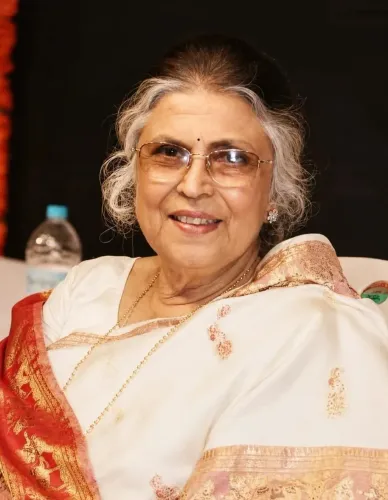
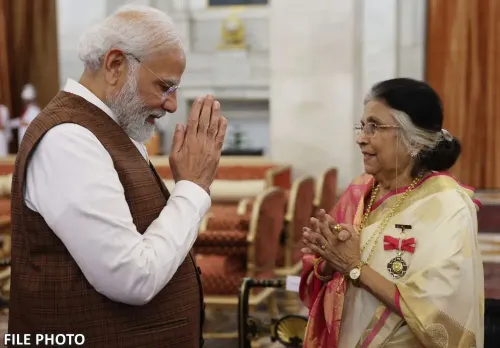
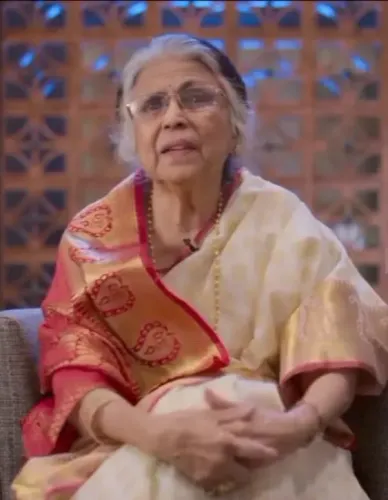
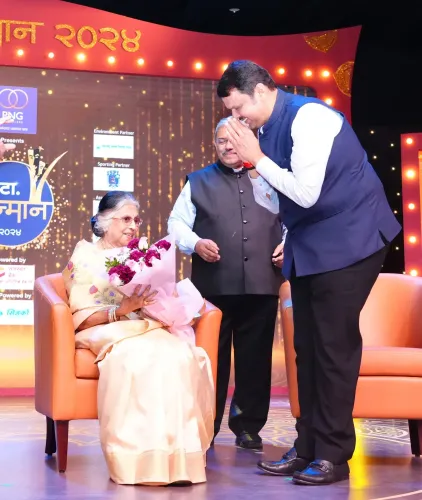
Gadkari mourns Padma Bhushan Suman Kalyanpur's passing

Synopsis
Union Minister Nitin Gadkari paid tribute to Padma Bhushan playback singer Suman Kalyanpur, calling her death a great loss for Indian music. He recalled her iconic Marathi and Hindi songs and prayed for peace for her soul and strength for her family.
Key Takeaways
Union Minister Nitin Gadkari mourned the passing of veteran playback singer Suman Kalyanpur on 31 May 2026 .
Kalyanpur was a recipient of the Padma Bhushan , India's third-highest civilian honour.
Gadkari described her death as a 'great loss to Indian music' and offered his heartfelt tribute.
He specifically cited iconic Marathi songs — 'Ketakichya Bani Tithe' , 'Sang Kadhi Kalnar Tula' , and 'Nimbonichya Zadamaage' — as enduring parts of her legacy.
Kalyanpur lent her voice to thousands of songs across Hindi, Marathi, and several other Indian languages over a career spanning decades from the 1950s onward.
Posthumous honours and commemorative events from cultural bodies are anticipated.
Union Road Transport and Highways Minister Nitin Gadkari expressed deep grief on Sunday, 31 May 2026, over the passing of veteran playback singer and Padma Bhushan awardee Suman Kalyanpur, calling her death a profound loss for Indian music.
Context
Gadkari shared his condolences on X, writing in Marathi: 'भारतीय संगीत सृष्टीतील लोकप्रिय, दिग्गज व ज्येष्ठ पार्श्वगायिका पद्मभूषण सुमन कल्याणपूर यांच्या निधनाचे वृत्त अतिशय दुःखद आहे' ('The news of the passing of the popular, legendary and senior playback singer Padma Bhushan Suman Kalyanpur from the world of Indian music is extremely saddening'). He offered a heartfelt tribute, describing her departure as a 'great loss to Indian music.' The minister prayed for peace for her soul and strength for her bereaved family.
Gadkari specifically recalled beloved Marathi songs from her repertoire — 'Ketakichya Bani Tithe', 'Sang Kadhi Kalnar Tula', and 'Nimbonichya Zadamaage' — noting that these songs 'remain on the lips of listeners even today.' He also acknowledged her contribution across Hindi, Marathi, and several other languages, crediting her with immortalising thousands of songs.
Policy Backdrop
Indian ministers, particularly those with Maharashtra roots, routinely issue public tributes on the passing of veteran artists as a way of recognising contributions to the country's plural cultural heritage. Gadkari, a senior BJP leader from Nagpur, Maharashtra, has frequently engaged with regional cultural matters alongside his infrastructure portfolio. Such tributes reflect a broader political tradition of acknowledging India's multilingual film and music legacy.
Suman Kalyanpur was one of the most distinctive voices in Indian playback singing, active since the 1950s. She was celebrated for her ability to render classical-inflected melodies and was often compared to contemporaries at the top of Hindi film music. The Padma Bhushan — India's third-highest civilian honour — was conferred on her in recognition of her distinguished service to Indian music.
Stakeholders and Impact
The passing of Suman Kalyanpur has resonated deeply with Marathi and Hindi music communities across Maharashtra and beyond. Her catalogue of songs, spanning decades and multiple languages, represents a living archive of mid-twentieth-century Indian popular music. Listeners, musicians, and film-music scholars regard her body of work as an irreplaceable part of India's cultural memory.
The tribute from a Union Minister of Gadkari's stature underlines the cross-generational and cross-political significance of her legacy. Voices from the playback-singing fraternity and Maharashtra's cultural institutions are expected to add to the chorus of condolences in the days ahead.
What's Next
With the passing of a Padma Bhushan recipient of Kalyanpur's standing, state and central cultural bodies may consider posthumous honours or commemorative events to mark her contribution. The film music community is likely to organise tributes celebrating her vast recorded legacy. Her passing renews attention to the preservation and documentation of mid-century Indian playback singing — a tradition she helped define.
Point of View
Delivered in Marathi rather than Hindi or English, is a deliberate cultural signal — a Maharashtra-origin leader honouring a regional icon in her own linguistic register. It fits a well-established pattern of senior BJP figures using social media condolences to simultaneously express genuine grief and reinforce their cultural connectedness with regional audiences. The specific naming of Marathi songs alongside a nod to Hindi and multilingual contributions positions Kalyanpur's legacy as both regional pride and national heritage. As India's political class increasingly competes for cultural legitimacy, tributes to artists of Kalyanpur's generation serve as soft-power moments that transcend partisan lines.
NationPress
19 Sept 2026
Frequently Asked Questions
Who was Suman Kalyanpur?
Suman Kalyanpur was a celebrated Indian playback singer active from the 1950s, known for her contributions to Hindi and Marathi film music and honoured with the Padma Bhushan, India's third-highest civilian award.
What did Nitin Gadkari say about Suman Kalyanpur's death?
Gadkari called her passing a 'great loss to Indian music,' offered a heartfelt tribute, recalled her iconic Marathi songs, and prayed for peace for her soul and strength for her bereaved family.
Which songs did Gadkari mention in his tribute to Suman Kalyanpur?
Gadkari specifically mentioned the Marathi songs 'Ketakichya Bani Tithe,' 'Sang Kadhi Kalnar Tula,' and 'Nimbonichya Zadamaage' as enduring examples of her legacy.
What award did Suman Kalyanpur receive?
Suman Kalyanpur was awarded the Padma Bhushan, one of India's highest civilian honours, in recognition of her distinguished contribution to Indian music.
Why did Nitin Gadkari pay tribute to Suman Kalyanpur?
As a senior Union Minister and Maharashtra-origin leader, Gadkari paid tribute to acknowledge Kalyanpur's immense contribution to Indian playback singing across Hindi, Marathi, and other languages over several decades.