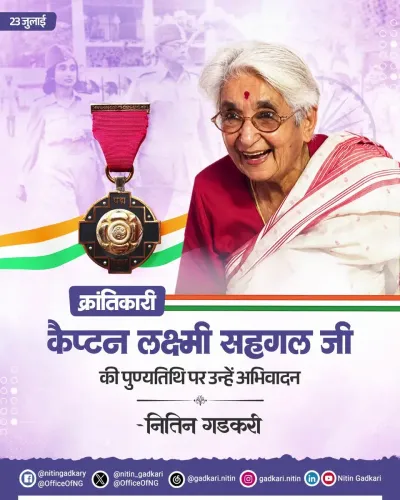
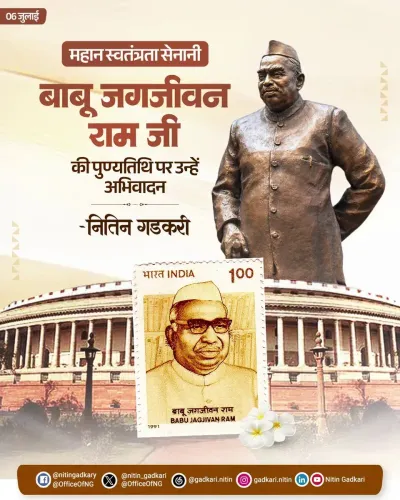
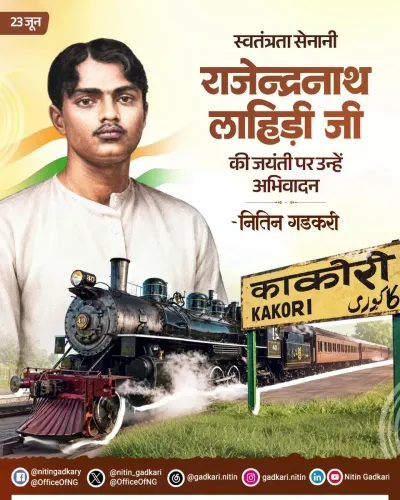
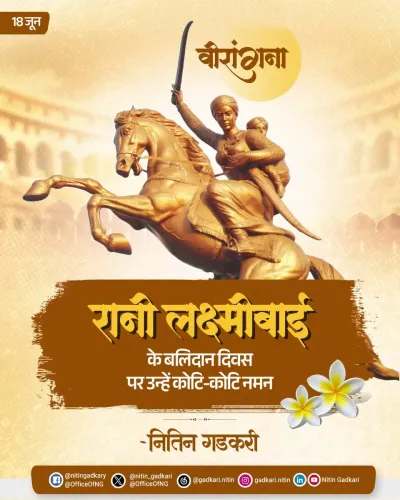
Gadkari pays tribute to Lala Lajpat Rai on death anniversary
Synopsis
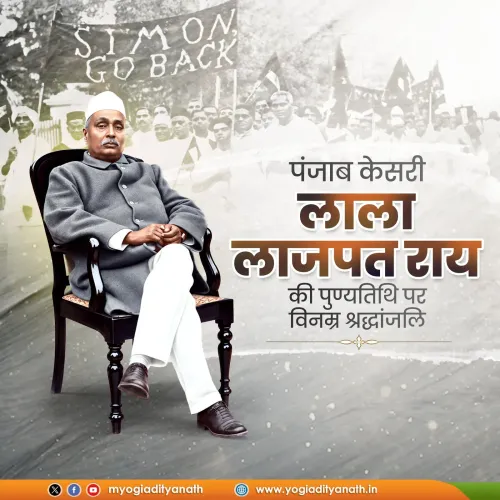
Union Minister Nitin Gadkari paid tribute to Lala Lajpat Rai on his 17 November death anniversary, honouring the Punjab Kesari who died in 1928 from injuries sustained during protests against the Simon Commission.
Key Takeaways
Nitin Gadkari posted a tribute to Lala Lajpat Rai on 17 November 2026 , the leader's death anniversary.
Lala Lajpat Rai was known as Punjab Kesari and was part of the celebrated Lal-Bal-Pal nationalist trio.
He died on 17 November 1928 from injuries sustained in a lathi charge during protests against the Simon Commission .
The Simon Commission was a British constitutional review body that included no Indian members , triggering widespread protests.
Annual tributes to Lala Lajpat Rai form part of a recurring pattern of political commemoration of independence-era icons across Indian parties.
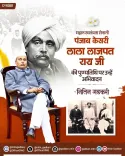
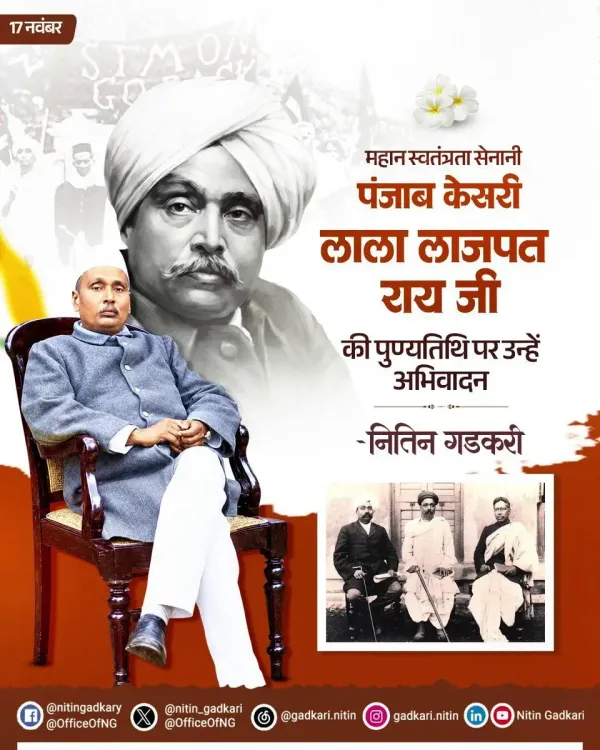
On the death anniversary of one of India's most defiant freedom fighters, Union Road Transport and Highways Minister Nitin Gadkari paid solemn homage to Lala Lajpat Rai — the leader known across the subcontinent as Punjab Kesari (the Lion of Punjab) — on Tuesday, 17 November 2026.
Gadkari's post, shared on X, read: 'महान स्वतंत्रता सेनानी पंजाब केसरी लाला लाजपत राय जी की पुण्यतिथि पर उन्हें अभिवादन' — 'Greetings to the great freedom fighter Punjab Kesari Lala Lajpat Rai on his death anniversary.'
Who was Punjab Kesari — and why he still commands reverence
Lala Lajpat Rai was one of the defining voices of India's independence movement, part of the celebrated Lal-Bal-Pal trio alongside Bal Gangadhar Tilak and Bipin Chandra Pal. His politics were uncompromising: he demanded complete rejection of British authority at a time when moderation still dominated nationalist discourse.
His death on 17 November 1928 became a watershed moment in the independence struggle. He succumbed to injuries sustained during a brutal lathi charge by British police while leading protests against the Simon Commission — a British parliamentary body that had arrived to review India's constitutional framework with no Indian member on its panel. His last words, widely remembered, warned that every blow struck against him would prove a nail in the coffin of British rule in India.
A tribute pattern that runs deeper than ceremony
Across parties, Indian political leaders mark 17 November each year with public remembrances of Lala Lajpat Rai. For BJP leaders in particular, tributes to nationalist icons of the pre-Independence era carry deliberate historical weight — drawing a line of continuity from 19th-century resistance to contemporary governance.
The hashtags #लाला_लाजपत_राय, #LalaLajpatRai, and #पंजाब_केसरी trend annually on this date, reflecting how deeply the leader remains embedded in public memory nearly a century after his death.
Lala Lajpat Rai's legacy is especially alive in Punjab, where institutions, roads, and public spaces bear his name — a living civic testament to a man who turned his own martyrdom into a political inflection point for a nation still decades from freedom.
Point of View
Particularly those whose politics centred on assertive resistance to colonial authority. Lala Lajpat Rai's legacy — combining mass mobilisation with uncompromising demands — resonates with the party's self-narrated continuity from that era. Such commemorations also serve a cultural-political function in Punjab, a state where Lajpat Rai's memory carries emotional and electoral weight. The tribute is ceremonial in form, but the choice of which icons to honour, and how prominently, is never without political texture.
NationPress
17 Nov 2026
Frequently Asked Questions
When did Lala Lajpat Rai die and why?
Lala Lajpat Rai died on 17 November 1928 from injuries sustained during a lathi charge by British police while he led protests against the Simon Commission in Lahore.
Why is Lala Lajpat Rai called Punjab Kesari?
Lala Lajpat Rai is called Punjab Kesari , meaning 'Lion of Punjab', in recognition of his fierce and uncompromising leadership of the independence movement in the Punjab region.
What was the Simon Commission?
The Simon Commission was a British parliamentary body appointed in 1927 to review India's constitutional arrangements. It had no Indian members, which triggered mass protests across India.
Who were the Lal-Bal-Pal trio?
Lal-Bal-Pal refers to Lala Lajpat Rai, Bal Gangadhar Tilak, and Bipin Chandra Pal — three nationalist leaders who advocated radical opposition to British colonial rule in the early 20th century.
Why do Indian politicians pay tribute to Lala Lajpat Rai every year?
17 November is observed as the death anniversary of Lala Lajpat Rai, and Indian political figures across parties mark the date with public tributes to honour his martyrdom and contribution to the independence movement.