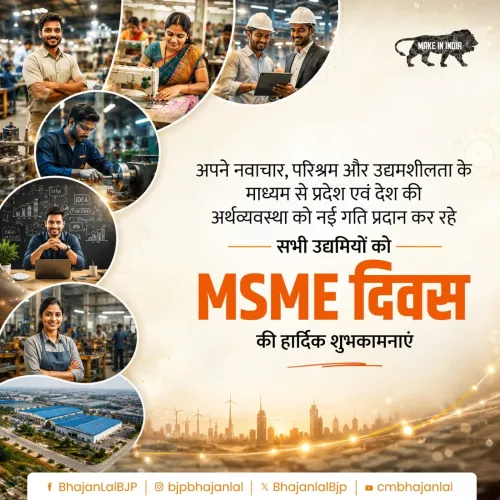
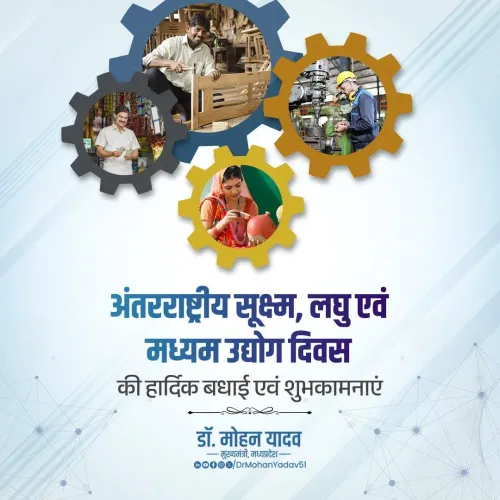
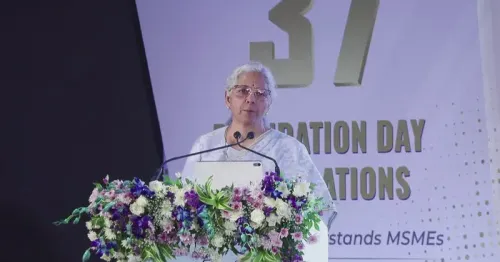
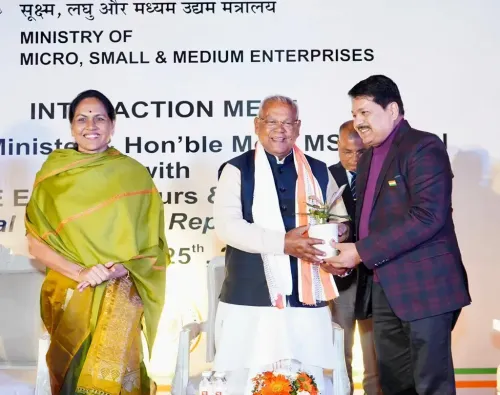
Gadkari salutes MSMEs on World MSME Day 2026
Synopsis
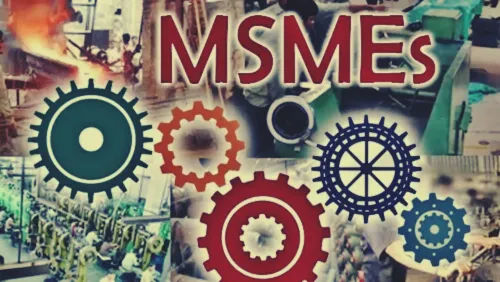
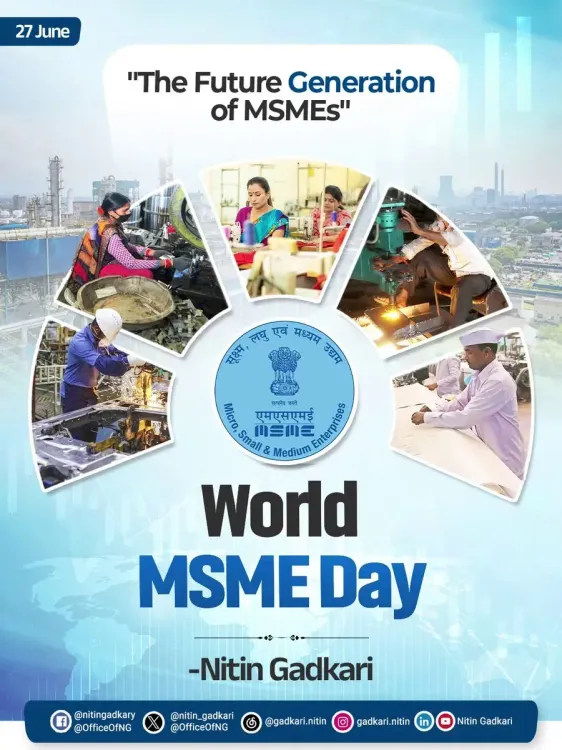
On World MSME Day, 27 June 2026, Union Minister Nitin Gadkari saluted India's entrepreneurs, artisans, and job creators, calling MSMEs the backbone of the economy and champions of self-reliance, innovation, and inclusive growth.
Key Takeaways
World MSME Day is observed on 27 June every year, established by a UN General Assembly resolution in 2017 .
Union Minister Nitin Gadkari described MSMEs as 'the backbone of India's economy' and called them drivers of self-reliance and inclusive growth.
The Atmanirbhar Bharat package of 2020 allocated Rs 3 lakh crore in collateral-free credit to support MSMEs during a period of economic stress.
The government revised MSME classification thresholds and launched the Udyam Registration portal in 2020 to widen formal sector coverage.
Road infrastructure expansion under Gadkari's ministry is positioned as a logistics enabler that directly lowers costs for smaller enterprises.
Upcoming parliamentary discussions on MSME budget allocations and credit-guarantee norms will shape the sector's near-term policy environment.
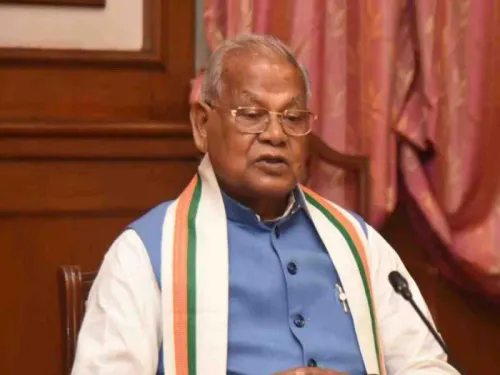
Union Road Transport and Highways Minister Nitin Gadkari on Saturday, 27 June 2026 marked World MSME Day by saluting India's millions of entrepreneurs, artisans, and job creators, calling them the backbone of the national economy.
Context
World MSME Day is observed every year on 27 June, following a UN General Assembly resolution in 2017 that recognised the critical role of micro, small and medium enterprises in sustainable development and poverty reduction. Gadkari wrote that MSMEs are 'powering the nation's journey towards self-reliance, driving innovation, creating livelihoods, and fostering inclusive growth,' and extended wishes for their 'continued success as they shape a stronger, more prosperous, and globally competitive India.'
The message comes from a minister whose portfolio — road infrastructure and logistics — is directly intertwined with MSME competitiveness, as cheaper and faster freight movement lowers input and distribution costs for smaller firms across manufacturing and trade.
Policy Backdrop
India's MSME sector has been a recurring priority across successive budgets and policy cycles. A landmark shift came in 2020, when the government revised the investment and turnover thresholds that define micro, small, and medium enterprises, bringing more firms under the formal support umbrella, and launched the Udyam Registration portal to simplify compliance.
The same year, the Atmanirbhar Bharat stimulus package — the government's flagship self-reliance initiative — earmarked Rs 3 lakh crore in collateral-free emergency credit for MSMEs, one of the largest liquidity interventions for the sector. The Atmanirbhar (self-reliant) framing has since anchored government messaging around reducing import dependence, a theme Gadkari's post echoes explicitly.
The Ministry of MSME oversees a range of programmes spanning credit guarantees, technology upgradation, cluster development, and public procurement preferences — all aimed at shifting the sector's posture from protection to global competitiveness.
Stakeholders and Impact
MSMEs collectively represent one of India's largest sources of non-farm employment, spanning artisans, small manufacturers, service providers, and exporters spread across urban centres and rural districts alike. Their health is closely tracked as a proxy for grassroots economic resilience, particularly in the context of job creation and income distribution.
For the road transport sector specifically, the expansion of the national highway network and logistics parks under Gadkari's tenure is framed as a force-multiplier for smaller enterprises, reducing the time and cost of moving goods from factory floor to market — a persistent structural disadvantage that MSMEs face relative to large corporates with captive logistics.
What's Next
Parliamentary deliberations on the next round of MSME budget allocations and potential revisions to credit-guarantee norms and public-procurement mandates will be closely watched by industry bodies representing smaller firms. Any policy signal on easing access to formal credit or expanding the scope of government procurement quotas for MSMEs is likely to draw significant attention from the sector's stakeholders in the months ahead.
Point of View
Linking grassroots entrepreneurship to the Atmanirbhar Bharat narrative. Coming from the road transport minister rather than the MSME minister, the post also subtly reinforces the government's argument that infrastructure investment is inseparable from small-business competitiveness. The timing — ahead of what are expected to be keenly contested budget discussions — keeps the political spotlight on a constituency that cuts across caste, region, and income lines. Sustained messaging from senior Cabinet figures signals that MSME welfare will remain a central plank in the ruling party's economic communication strategy.
NationPress
27 Jun 2026
Frequently Asked Questions
When is World MSME Day celebrated?
World MSME Day is celebrated every year on 27 June , following a UN General Assembly resolution adopted in 2017 to highlight the contribution of micro, small and medium enterprises to sustainable development.
What did Nitin Gadkari say on World MSME Day 2026?
Nitin Gadkari posted on X that MSMEs are 'the backbone of India's economy,' praising them for powering the country's self-reliance journey, driving innovation, creating livelihoods, and fostering inclusive growth.
What is Atmanirbhar Bharat and how does it relate to MSMEs?
Atmanirbhar Bharat is the government's self-reliance initiative launched in 2020 . As part of it, Rs 3 lakh crore in collateral-free emergency credit was earmarked specifically for MSMEs to help them survive economic stress and reduce dependence on imports.
What is the Udyam Registration portal?
The Udyam Registration portal was launched in 2020 by the Ministry of MSME to simplify the formal registration process for micro, small, and medium enterprises, replacing the earlier Udyog Aadhaar system.
Why does road infrastructure matter for MSMEs in India?
Better roads and logistics networks lower freight costs and delivery times, which directly reduces the structural cost disadvantage that smaller firms face compared to large corporates. Expansion of the national highway network under Nitin Gadkari's ministry is therefore closely linked to MSME competitiveness.