Gadkari pays tribute to classical singer Hirabai Barodekar
Synopsis
Union Minister Nitin Gadkari paid humble tribute to legendary Hindustani classical vocalist Hirabai Barodekar on her birth anniversary, honouring her Kirana gharana legacy and her recognition with the Padma Bhushan and Sangeet Natak Akademi award.
Key Takeaways
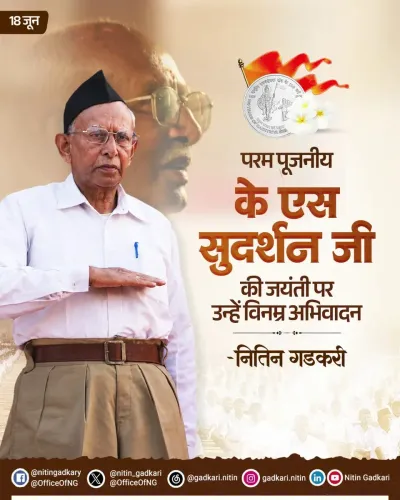
Union Minister Nitin Gadkari posted a Marathi tribute to Hirabai Barodekar on her birth anniversary on 29 May 2026 .
Barodekar was a celebrated exponent of the Kirana gharana of Hindustani classical music.
She was honoured with both the Padma Bhushan and the Sangeet Natak Akademi award , two of India's highest performing arts honours.
Gadkari referred to her as 'गानहिरा' — 'jewel of song' — in his tribute post.
The tribute reflects a wider practice among Indian political leaders of publicly acknowledging classical artists on birth and death anniversaries.
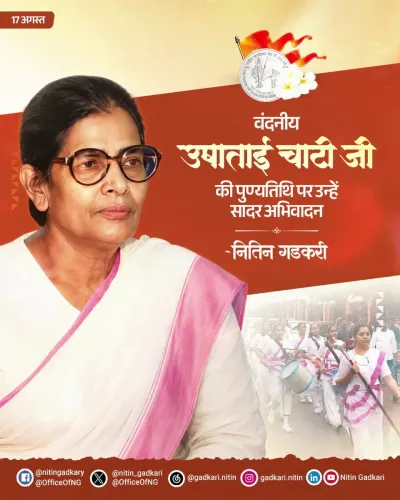
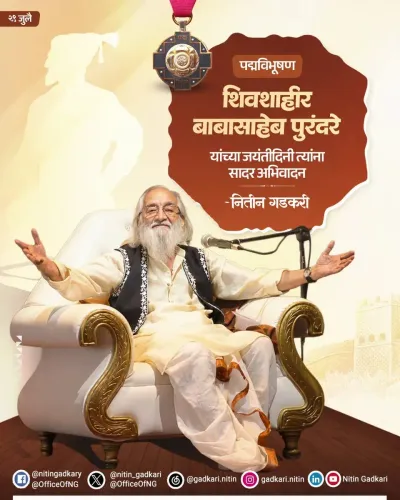
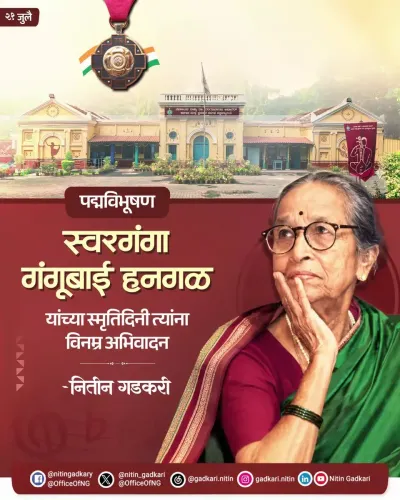
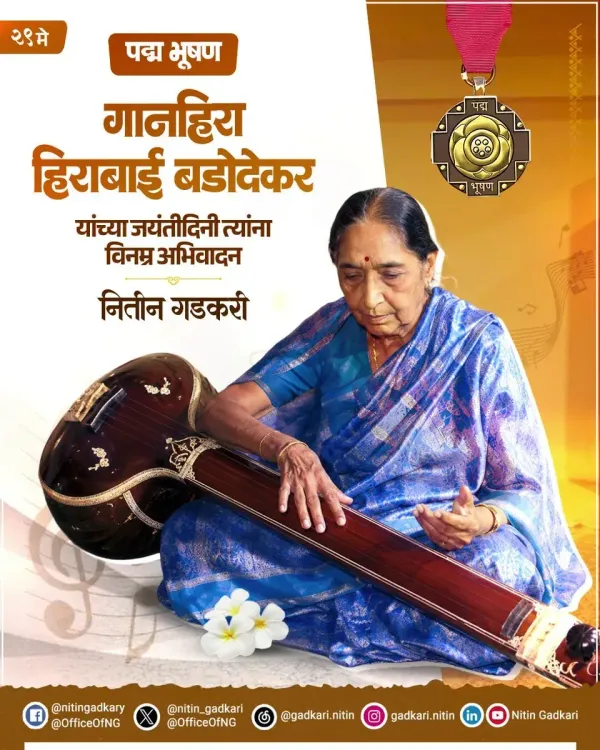
Union Road Transport and Highways Minister Nitin Gadkari on Friday, 29 May 2026, paid tribute to legendary Hindustani classical vocalist Hirabai Barodekar on her birth anniversary, honouring her legacy through a post on X.
Context
Gadkari's post, written in Marathi, offered a respectful salutation — 'विनम्र अभिवादन' (humble salutations) — to Hirabai Barodekar, describing her as 'गानहिरा' (jewel of song) and acknowledging her as a celebrated exponent of the Kirana gharana of Hindustani classical music. The minister noted her receipt of both the Sangeet Natak Akademi award and the Padma Bhushan, two of India's most prestigious honours in the performing arts.
Barodekar was among the foremost female voices of Hindustani classical music in the twentieth century, carrying forward the distinct melodic and emotive tradition of the Kirana gharana, a school rooted in the Kirana region of present-day Uttar Pradesh.
Policy Backdrop
The Sangeet Natak Akademi, India's national academy for performing arts established in 1952, confers fellowships and awards to artists who have made outstanding contributions to music, dance, and drama. The Padma Bhushan, awarded by the Government of India, ranks among the country's highest civilian honours and has long been conferred on classical musicians in recognition of distinguished service to the arts.
Barodekar's receipt of both honours placed her among a small cohort of artists recognised at the highest levels of both governmental and institutional cultural patronage in independent India.
Stakeholders and Impact
Tributes of this kind from senior ministers carry symbolic weight for practitioners and students of Hindustani classical music, affirming continued state-level recognition of the classical tradition. The Kirana gharana, known for its lyrical depth and emphasis on sur (tonal purity), has produced several celebrated vocalists, and public acknowledgement by government figures helps sustain visibility for these traditions among younger audiences.
Cultural organisations, music academies, and arts patrons across Maharashtra and beyond mark Barodekar's birth anniversary annually, and social media tributes from political leaders amplify that commemoration to wider national audiences.
What's Next
Birth anniversary commemorations of classical artists often coincide with announcements by cultural institutions of archival projects, music festivals, or special performances in the artist's memory. As India's classical music institutions continue efforts to document and preserve the Kirana gharana's repertoire, tributes such as Gadkari's reflect the broader political consensus around cultural heritage as a pillar of national identity.
Point of View
Particularly those rooted in regional traditions. Acknowledging a Marathi-language icon with a Marathi-language post speaks to a dual audience — classical music patrons and Maharashtra's broader cultural constituency. Such tributes, while ceremonial, form part of a deliberate pattern of political messaging that frames the ruling establishment as custodians of India's performing arts heritage. Over time, this pattern shapes public expectations of state engagement with cultural institutions.
NationPress
20 Sept 2026
Frequently Asked Questions
Who was Hirabai Barodekar?
Hirabai Barodekar was a prominent Hindustani classical vocalist and a leading exponent of the Kirana gharana, honoured with the Padma Bhushan and the Sangeet Natak Akademi award for her outstanding contributions to Indian classical music.
What is the Kirana gharana?
The Kirana gharana is a school of Hindustani classical music known for its emphasis on tonal purity and lyrical depth, originating from the Kirana region of present-day Uttar Pradesh, and has produced several celebrated vocalists over generations.
Why did Nitin Gadkari post about Hirabai Barodekar?
Gadkari posted a tribute on X to mark Hirabai Barodekar's birth anniversary, offering humble salutations and recognising her legacy as a Padma Bhushan and Sangeet Natak Akademi awardee.
What is the Sangeet Natak Akademi award?
The Sangeet Natak Akademi award is conferred by India's national academy for performing arts, established in 1952, to artists who have made outstanding contributions to music, dance, or drama.
What is the Padma Bhushan?
The Padma Bhushan is one of India's highest civilian honours, awarded by the Government of India to individuals for distinguished service of a high order to the nation, including in the field of arts and culture.