Gehlot-Pilot bonhomie at Jaipur meet: Rajasthan Congress unity or poll optics?
Synopsis
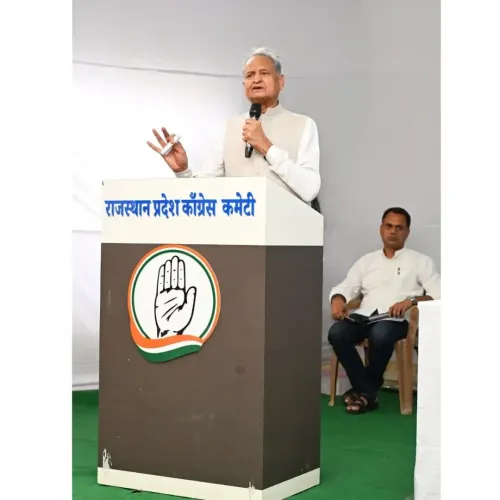
Gehlot cracked a joke, Pilot smiled back, and Rajasthan Congress briefly looked like a united party. But behind the banter at the Jaipur strategy meeting lies a harder question: can three senior leaders — Gehlot, Pilot, and Dotasra — who have spent years pulling in different directions actually hold together when Panchayat election tickets are on the table?
Key Takeaways
Ashok Gehlot and Sachin Pilot were seen exchanging jokes at a Rajasthan Congress strategy meeting in Jaipur on 8 October 2026 .
Around 20 senior Congress leaders attended, including PCC chief Govind Singh Dotasra and Leader of Opposition Tika Ram Jully .
The meeting's stated purpose was to prepare the party for the upcoming Panchayat elections .
Separate tensions between Gehlot and Dotasra over campaign strategy and 'Chief Minister for a fourth term' slogans remain unresolved publicly.
Pilot had defended Dotasra 's leadership after Gehlot questioned the party's urban local body election strategy.
Analysts say the real test of unity will come during candidate selection and ground-level campaigning, not at a closed-door meeting.
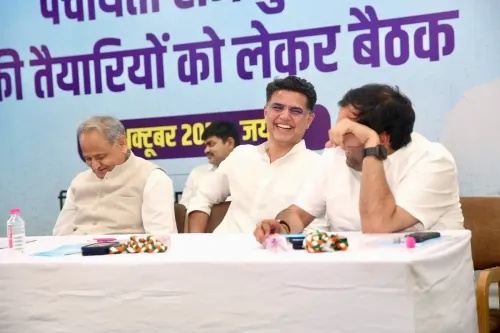
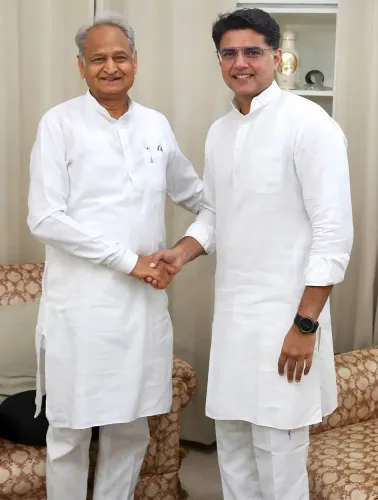
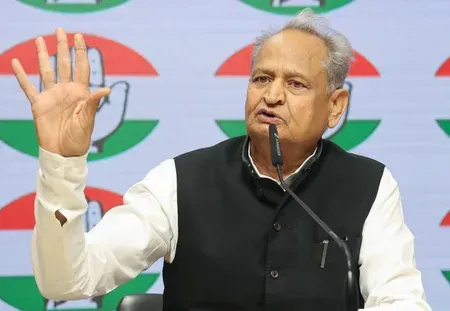
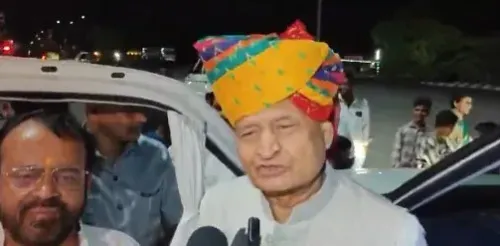
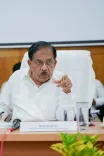
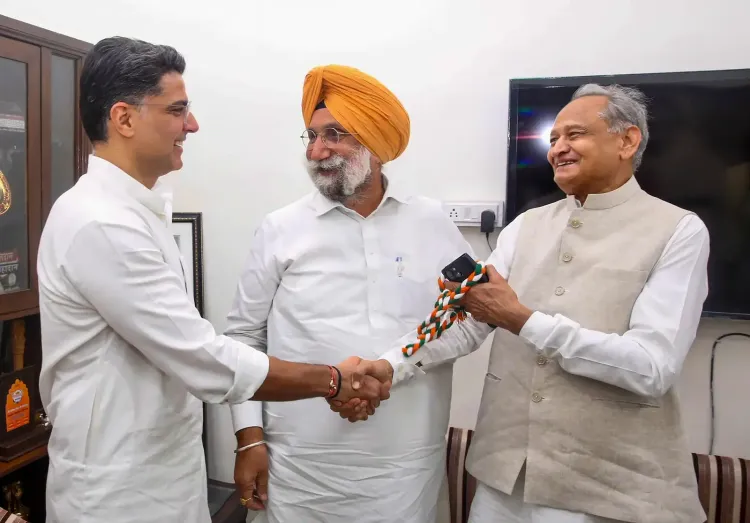
Ashok Gehlot and Sachin Pilot, whose long-running rivalry has defined the Rajasthan Congress's internal fault lines, were seen exchanging jokes and banter at a Congress strategy meeting in Jaipur on 8 October 2026, prompting fresh scrutiny over whether the party is genuinely reconciling ahead of the Panchayat elections or simply managing optics. Political circles across the state took immediate notice of the unusually relaxed exchange between the two veteran leaders.
What Happened at the Jaipur Meeting
The closed-door session brought together approximately 20 senior Congress leaders, including Gehlot, Pilot, Pradesh Congress Committee (PCC) chief Govind Singh Dotasra, Punjab Congress in-charge Sukhjinder Singh Randhawa, and Leader of Opposition Tika Ram Jully. The stated agenda was Panchayat election preparedness.
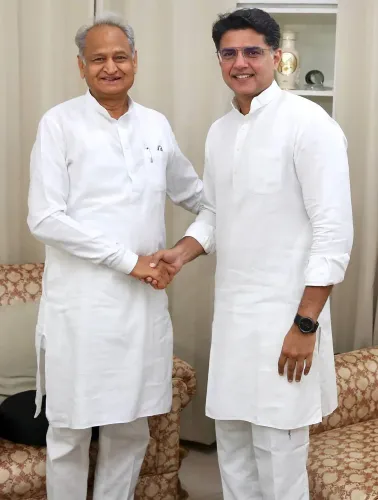
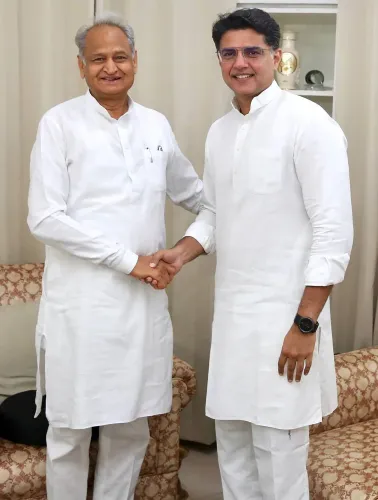
During the meeting, Gehlot reportedly teased Pilot about his old association with Randhawa. Pilot responded with a quip of his own, telling Gehlot that it hardly mattered who held what charge because Gehlot was, in his words, 'in charge of all of us.' Gehlot's retort — 'I am the permanent in-charge' — drew laughter from those present. The exchange was notable precisely because of how different it looked from the confrontations that have characterised their relationship over the years.
History Behind the Smiles
The Gehlot-Pilot political relationship has traversed confrontation, open rebellion, forced reconciliation, and renewed tensions over the better part of a decade. Their disagreements have repeatedly overshadowed the Congress's organisational agenda in Rajasthan, costing the party visible cohesion during multiple electoral cycles. The 2020 political crisis, when Pilot mounted a near-rebellion against Gehlot's government, remains the most dramatic episode of that fraught equation.
A separate internal tension has also been developing between Gehlot and Dotasra. After the Congress's mixed performance in recent urban local body elections, Gehlot publicly questioned whether a more coordinated campaign strategy could have yielded better results — remarks widely read as implicit criticism of Dotasra's stewardship of the state organisation. Pilot subsequently defended Dotasra, arguing that the PCC chief had adopted a sound strategy and brought all stakeholders along. The episode once again exposed the party's competing internal currents.
The Slogans Episode and Its Fallout
The fault lines sharpened further at a Congress event in Jaipur when supporters raised slogans projecting Gehlot as Chief Minister for a fourth term. Dotasra pushed back, publicly cautioning against what he described as personality-driven politics and individual branding. Gehlot subsequently distanced himself from the slogans, stating that the party's immediate priority should be winning elections rather than projecting individual leaders. The episode crystallised a fundamental disagreement within the party: how much political space Rajasthan Congress should accord to Gehlot's personal influence versus a collective leadership model.
Two Ways to Read the Unity Signal
Analysts offer two contrasting interpretations of the Jaipur display of unity. The first holds that the Congress leadership has genuinely recognised the political cost of sustained factionalism and is working toward a durable arrangement among its senior leaders. The second is more transactional: Panchayat elections are fought at the grassroots, where internal divisions directly affect candidate selection, campaign machinery, and local mobilisation. A united public face, on this reading, is simply necessary election management.
The more revealing test, observers note, will come not from a single meeting but from what follows: whether Gehlot campaigns for candidates backed by the state organisation, whether Pilot and Dotasra share platforms, and whether local factions accept centrally agreed candidates once ticket distribution begins.
What the Panchayat Elections Will Decide
The upcoming Panchayat elections represent the first significant electoral test for Rajasthan Congress since it lost power in the state. For the party, the elections are less about winning grassroots seats than about demonstrating organisational coherence and rebuilding a campaign infrastructure that factionalism has eroded. Whether Gehlot, Pilot, and Dotasra can sustain their public alignment through candidate lists, campaigning, and local disputes will determine whether the 8 October meeting is remembered as a turning point or simply as a well-photographed moment.
Point of View
And Rajasthan Congress veterans know it. The Gehlot-Dotasra tension — over slogans, over election strategy, over how much space one leader's shadow should occupy — is arguably the more structurally dangerous fault line right now, because it pits the party's most electorally experienced leader against the man meant to rebuild its state organisation. Pilot's decision to publicly defend Dotasra against Gehlot's implicit criticism was tactically shrewd but adds another layer of complexity to an already layered dynamic. The Panchayat elections will be a stress test precisely because grassroots contests expose internal divisions that press conferences can paper over. If ticket distribution triggers a new round of factional manoeuvring, the Jaipur banter will be remembered as the prelude — not the resolution.
NationPress
8 Oct 2026
Frequently Asked Questions
What happened at the Rajasthan Congress meeting in Jaipur on 8 October 2026?
Around 20 senior Congress leaders, including Ashok Gehlot, Sachin Pilot, PCC chief Govind Singh Dotasra, and Leader of Opposition Tika Ram Jully, met in Jaipur to discuss Panchayat election strategy. The meeting drew attention because Gehlot and Pilot were seen exchanging jokes and banter in front of colleagues, a visible contrast to their historically tense relationship.
Are Ashok Gehlot and Sachin Pilot genuinely reconciled?
The public display of warmth at the Jaipur meeting signals a tactical truce, but analysts caution that their rivalry — which has included open rebellion, forced reconciliation, and renewed tensions — has deep roots. The real test will come during candidate selection and campaigning for the Panchayat elections, when factional interests typically reassert themselves.
What is the Gehlot-Dotasra dispute about?
Gehlot publicly questioned whether a better-coordinated strategy could have improved Congress's performance in recent urban local body elections, remarks widely interpreted as implicit criticism of PCC chief Govind Singh Dotasra. Dotasra had also pushed back against supporters raising slogans projecting Gehlot as Chief Minister for a fourth term, cautioning against personality-driven politics.
Why do the Panchayat elections matter for Rajasthan Congress?
The Panchayat elections are the first major electoral test for Rajasthan Congress since it lost power in the state. They are a ground-level measure of the party's organisational coherence, and internal divisions — over candidates, campaigns, and leadership — can directly affect performance at the village and block level.
What will indicate whether the Congress unity is real or just optics?
Political observers say the key indicators will be whether Gehlot campaigns for organisation-backed candidates, whether Pilot and Dotasra share public platforms, and whether local factions accept centrally agreed candidates once ticket distribution begins. A sustained common line through those pressures would signal genuine reconciliation.