Giriraj Singh Congratulates Padma Shri Handloom Weavers
Synopsis
Union Textiles Minister Giriraj Singh congratulated Padma Shri awardees who have brought global recognition to Indian handloom and weaving art, calling their journeys an enduring inspiration for the nation's future generations.
Key Takeaways
Giriraj Singh , Union Textiles Minister, congratulated Padma Shri recipients for promoting Indian handloom globally on 24 June 2026 .
The Padma Awards , instituted in 1954 , are among India's highest civilian honours; the Padma Shri is the fourth-highest tier.
Singh described the awardees' journeys as an inspiration that 'will always guide the future generations of the country.' The Ministry of Textiles has supported handloom artisans through the National Handloom Development Programme and GI tagging of traditional textile products.
Recognition of grassroots weavers aligns with the government's broader strategy of linking heritage preservation with export promotion and rural livelihoods.
Union Textiles Minister Giriraj Singh on Wednesday, 24 June 2026 extended congratulations to Padma Shri awardees who have brought global recognition to India's handloom and weaving traditions, describing their journeys as an enduring inspiration for future generations.
Context
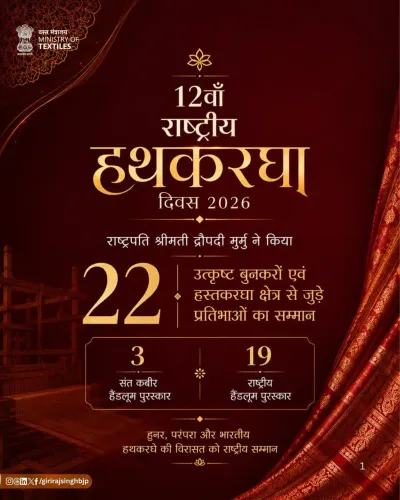
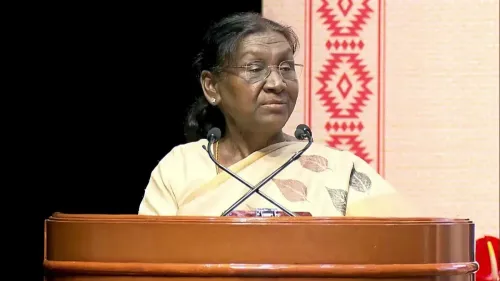
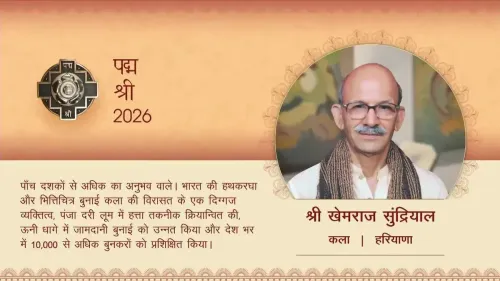
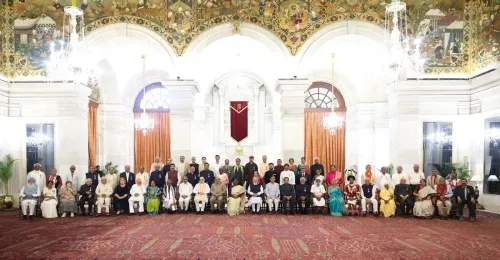
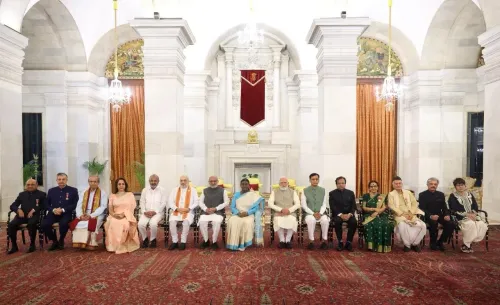
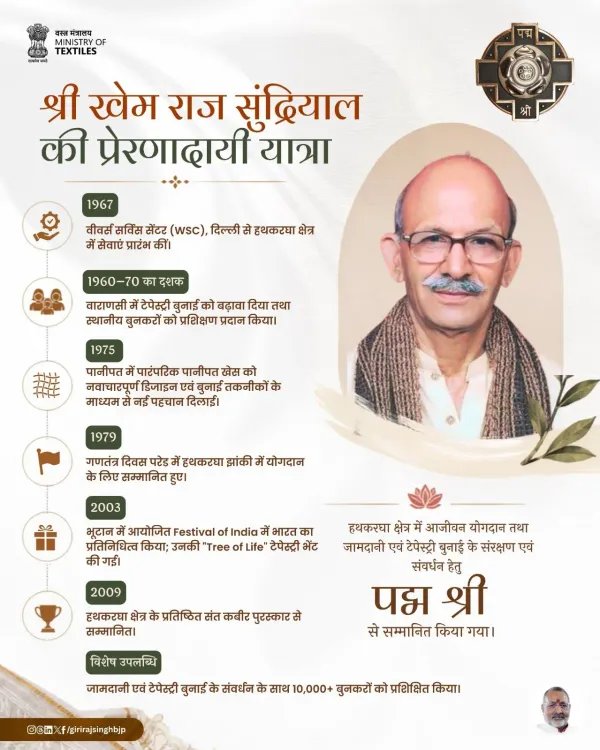
Posting on X with the hashtags #PadmaAwards and #Handloom, Singh wrote in Hindi: 'भारतीय हथकरघा एवं बुनाई कला को वैश्विक पहचान दिलाने वाले' ['Those who have given global recognition to Indian handloom and weaving art'] — offering 'heartfelt congratulations and endless good wishes' to the recipients. He added that their 'inspirational journey will always guide the future generations of the country.' The post was accompanied by three images highlighting the honoured artisans and their craft.
The Padma Awards, instituted in 1954, are conferred annually by the President of India and rank among the country's highest civilian honours. The Padma Shri is the fourth-highest of these distinctions and has, over the years, recognised grassroots practitioners of handloom weaving from states with deep textile traditions.
Policy Backdrop
The Ministry of Textiles, which Singh heads, oversees policy and welfare measures for the handloom sector — a segment that supports millions of weavers across rural India. Flagship initiatives such as the National Handloom Development Programme, launched in the mid-2010s, have sought to strengthen artisan livelihoods, expand market access, and promote traditional techniques.
The government has also pursued Geographical Indication (GI) tagging for distinctive textile products — from Banarasi silk to Pochampally ikat — as a tool for both heritage preservation and export promotion. Recognising weavers through national awards fits into this broader strategy of linking cultural identity with economic opportunity.
Stakeholders and Impact
Handloom weavers and traditional artisans form the primary stakeholder group. For grassroots practitioners, a Padma Shri confers not only national prestige but also tangible benefits: greater visibility, access to institutional support, and improved marketability of their products domestically and internationally.
Singh's public acknowledgement, issued from his official capacity as Textiles Minister, signals the ministry's continued interest in elevating the profile of the sector. Such recognition also reinforces the government's stated goal of positioning Indian handloom as a globally competitive, culturally rooted industry.
What's Next
Attention will now turn to any follow-up announcements from the Ministry of Textiles on handloom cluster development, export incentive schemes, or welfare measures timed to coincide with the award cycle. The ministry has previously used moments of national recognition to amplify policy messaging around artisan welfare and textile exports.
With India's handloom sector seeking greater global market share, the convergence of civilian honours and active policy support could shape the next phase of outreach to international buyers and diaspora consumers.
Point of View
But its context is not trivial — it arrives as the Textiles Ministry seeks to position India's handloom sector as both a cultural asset and an export driver. By publicly celebrating Padma Shri recipients from the weaving community, the minister reinforces a deliberate policy narrative that frames artisan recognition as inseparable from economic ambition. This reflects a broader BJP-era pattern of using civilian honours to spotlight sectors the government is actively promoting through welfare and trade policy. The signal to watch is whether the ministry translates this symbolic moment into concrete announcements on cluster development or export incentives.
NationPress
23 Sept 2026
Frequently Asked Questions
Who are the Padma Shri handloom weavers congratulated by Giriraj Singh?
Giriraj Singh congratulated Padma Shri awardees recognised for promoting Indian handloom and weaving art globally, though the specific names of the 2026 recipients have not been detailed in his post.
What is the Padma Shri award?
The Padma Shri is the fourth-highest civilian honour in India, instituted in 1954 and conferred annually by the President for distinguished service in fields including arts, crafts, and public life.
What is Giriraj Singh's role in the handloom sector?
Giriraj Singh is the Union Minister of Textiles and oversees policy, welfare schemes, and development programmes for India's handloom and broader textile sector.
What government schemes support Indian handloom weavers?
The National Handloom Development Programme is a key central initiative supporting artisan livelihoods, market access, and skill development; GI tagging of products like Banarasi silk and Pochampally ikat also protects and promotes traditional weaving.
Why does the government recognise handloom weavers with Padma Awards?
Recognising handloom weavers through Padma Awards serves to elevate their national and global profile, support rural livelihoods, and align cultural heritage preservation with India's textile export promotion goals.