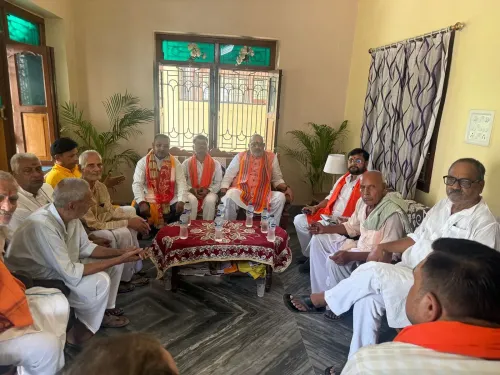
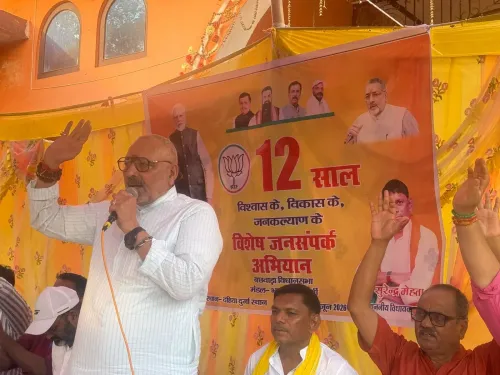
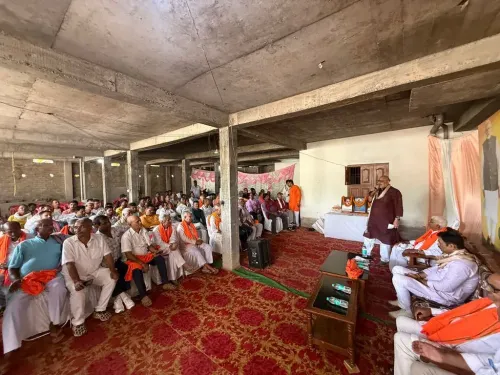
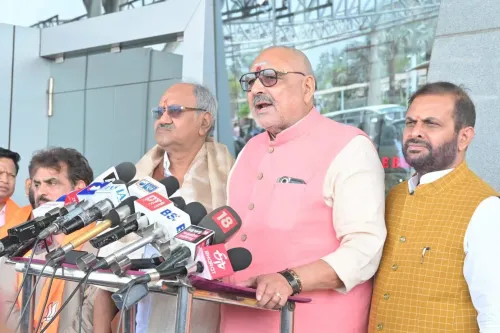
Giriraj Singh hosts MP Minister Prahlad Patel in Patna
Synopsis
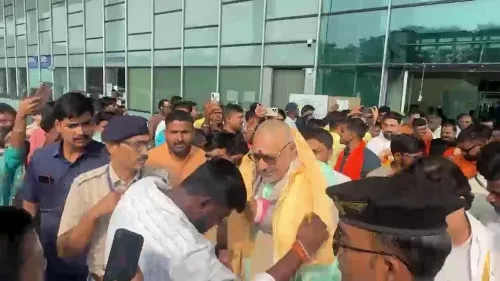
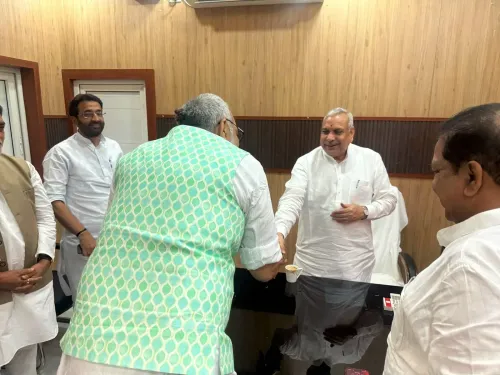
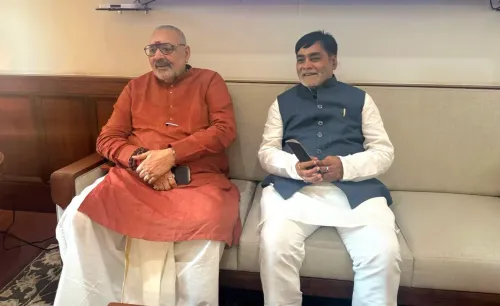
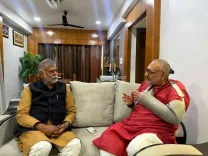
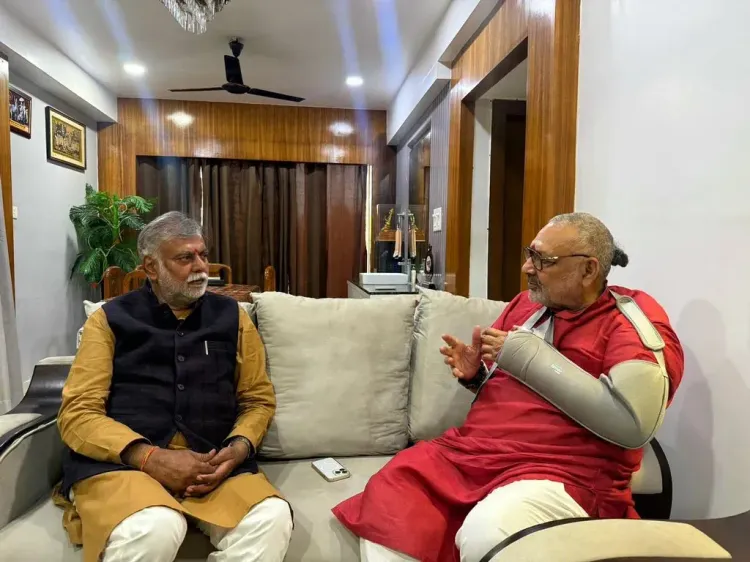
Union Textiles Minister Giriraj Singh welcomed Madhya Pradesh Minister Prahlad Singh Patel at his Patna home on 12 November 2026. The two BJP leaders discussed rural development, strengthening Panchayati Raj institutions, rural livelihoods, and labour welfare in a wide-ranging bilateral meeting.
Key Takeaways
Giriraj Singh hosted Prahlad Singh Patel at his residence in Patna on 12 November 2026 .
Prahlad Singh Patel holds the Panchayat, Rural Development, and Labour portfolios in the Madhya Pradesh government.
Discussions covered rural area development, Panchayati Raj strengthening, rural livelihoods, and workers' welfare.
The meeting fits a broader BJP pattern of informal inter-state ministerial coordination on rural governance.
The 73rd Constitutional Amendment (1992) provides the foundational framework for Panchayati Raj institutions that underpinned the conversation.
No concrete joint announcements have been made; follow-up statements from either minister are the key thing to watch.
Two senior BJP leaders sat down in Patna on Thursday, 12 November 2026 to talk rural India — and the conversation stretched across panchayati raj, rural livelihoods, and labour welfare. Union Textiles Minister Giriraj Singh welcomed Madhya Pradesh Panchayat, Rural Development and Labour Minister Prahlad Singh Patel at his residence, in a meeting that underlines how BJP functionaries across the Centre and states are keeping coordination channels open on grassroots governance.
Singh described the meeting as an 'aatmiy bhent' — a warm, personal exchange — in which discussions ranged over 'comprehensive development of rural areas, further strengthening of the Panchayati Raj system, promotion of rural livelihoods, and various important issues related to the welfare of workers.' The tone was positive; the agenda, substantive.
Why Panchayati Raj keeps coming up between Centre and states
The conversation lands against a long constitutional backdrop. The 73rd Constitutional Amendment of 1992 gave Panchayati Raj institutions their formal framework — but bridging the gap between constitutional mandate and on-the-ground delivery has remained an ongoing project for every government since. Central schemes for rural livelihoods and labour welfare must ultimately be executed through state machinery, making meetings like this more than ceremonial.
Prahlad Singh Patel, who holds the Panchayat and Rural Development as well as the Labour portfolios in Madhya Pradesh, brings a direct stake in how central policy translates to one of India's largest states by rural population. Giriraj Singh, rooted in Bihar as the Lok Sabha MP from Begusarai, has long been a voice on rural and agricultural concerns within the BJP's federal structure.
BJP's pattern of inter-state ministerial coordination
This kind of bilateral sit-down — a Union minister hosting a state counterpart, away from a formal conference table — is a recognisable pattern within BJP-governed states. It allows frank conversation on where central rural development schemes are gaining traction and where implementation gaps persist. Labour welfare, in particular, sits at the intersection of central legislation and state enforcement, making informal coordination politically useful.
No specific policy decisions or joint announcements have emerged from the meeting so far. What to watch: whether either minister follows up with concrete proposals on rural livelihood programmes or labour welfare coordination in the days ahead.
Two ministers, one residence in Patna, a conversation about India's villages — the follow-through will reveal whether this was groundwork or goodwill.
Point of View
Informal Centre-state coordination on Panchayati Raj and labour welfare can shape how central schemes land on the ground. That a Union Textiles Minister — rather than a rural development counterpart — hosted this conversation also reflects how BJP's senior leadership often cross-pollinate portfolios through personal networks. The absence of a formal announcement keeps the meeting low-profile, but recurring interactions of this kind typically precede more structured collaborative proposals.
NationPress
12 Nov 2026
Frequently Asked Questions
Why did Giriraj Singh meet Prahlad Singh Patel in Patna?
Union Textiles Minister Giriraj Singh hosted Madhya Pradesh Minister Prahlad Singh Patel at his Patna residence on 12 November 2026 to discuss rural development, Panchayati Raj strengthening, rural livelihoods, and labour welfare.
Who is Prahlad Singh Patel?
Prahlad Singh Patel is a BJP leader serving as the Minister for Panchayat and Rural Development and Labour in the Madhya Pradesh state government.
What is Giriraj Singh's current role in the central government?
Giriraj Singh is the Union Minister of Textiles and a senior BJP leader. He is also the Lok Sabha MP from Begusarai, Bihar.
What is the significance of Panchayati Raj in India?
Panchayati Raj institutions form the third tier of Indian democracy, established by the 73rd Constitutional Amendment in 1992. They are the primary vehicle for delivering rural governance and development at the grassroots level.
Did the Giriraj Singh and Prahlad Patel meeting produce any concrete decisions?
No specific policy decisions or joint announcements have been made public following the 12 November 2026 meeting. Any follow-up proposals on rural livelihoods or labour welfare coordination are still awaited.