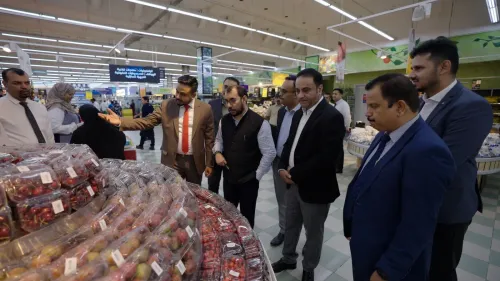
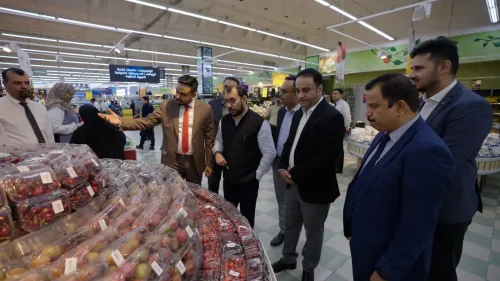
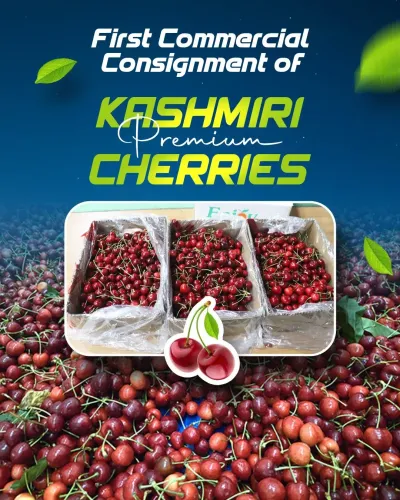
Giriraj Singh Flags J&K Cherry, Plum Export to UAE
Synopsis
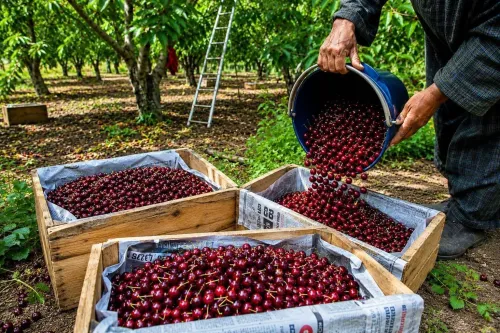
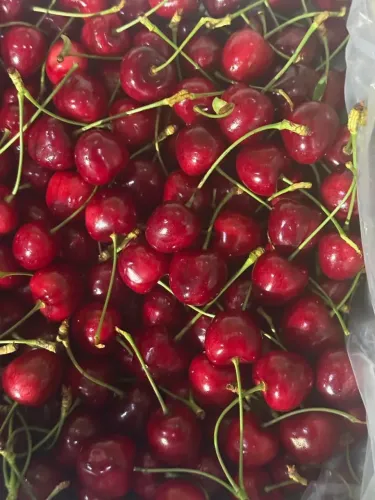
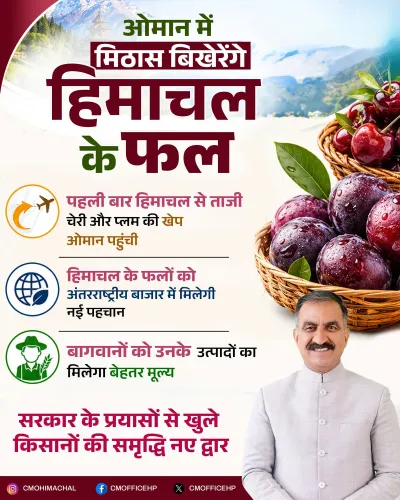
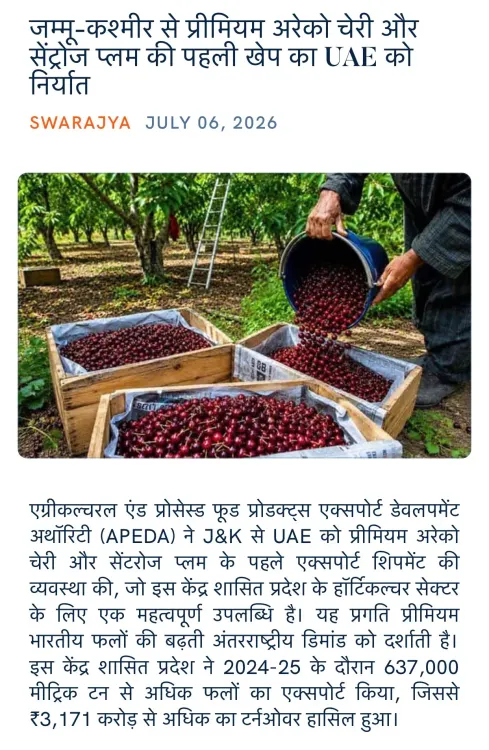
Union Textiles Minister Giriraj Singh on 6 July 2026 shared the milestone first export of premium Areko cherries and Scentrose plums from Jammu and Kashmir to the UAE, reflecting India's push to integrate J&K produce into international markets under the 2022 India-UAE CEPA framework.
Key Takeaways
Union Textiles Minister Giriraj Singh shared the news of the first export shipment of Areko cherries and Scentrose plums from Jammu and Kashmir to the UAE on 6 July 2026 .
The shipment marks the first consignment of these two premium fruit varieties from J&K to a Gulf market.
The India-UAE Comprehensive Economic Partnership Agreement (CEPA) , signed in February 2022 , reduced tariffs on Indian agricultural goods, enabling such exports.
India's Agricultural Export Policy of 2018 had designated horticultural produce as a priority export category.
The development is part of a broader government effort to integrate J&K horticulture into international value chains following the UT's reorganisation in 2019 .
J&K farmers and perishable goods exporters stand to benefit from premium Gulf market pricing if the export corridor is sustained.
Union Textiles Minister Giriraj Singh on Monday, 6 July 2026, highlighted the first export shipment of premium Areko cherries and Scentrose plums from Jammu and Kashmir to the United Arab Emirates, sharing the development on his official X account.
Context
The post, shared via the NaMo App, draws attention to what is described as the first consignment of two premium fruit varieties — Areko cherries and Scentrose plums — originating from Jammu and Kashmir reaching a Gulf export market. The minister's amplification of the development signals the central government's intent to showcase J&K's horticultural output as a marker of post-reorganisation economic progress.
Jammu and Kashmir has long been recognised for its horticultural wealth, producing a significant share of India's temperate fruits. Since the Union Territory's reorganisation in 2019, the central government has consistently highlighted steps to integrate J&K produce into international supply chains.
Policy Backdrop
India's Agricultural Export Policy of 2018 identified horticultural produce as a priority category, emphasising market diversification and export promotion. The policy laid a framework for channelling perishable goods — including cherries and stone fruits — toward high-value overseas markets.
A significant enabler for this specific shipment is the India-UAE Comprehensive Economic Partnership Agreement (CEPA), signed in February 2022. The agreement reduced tariffs on several Indian agricultural items, making Gulf markets more accessible for Indian exporters of perishable produce. The UAE has emerged as one of India's most strategically important bilateral trade partners, with the CEPA covering a broad range of agricultural goods.
Improved cold-chain infrastructure in Jammu and Kashmir has been a recurring theme in government communications, with investments aimed at reducing post-harvest losses and enabling time-sensitive exports of delicate fruit varieties to distant markets.
Stakeholders and Impact
The primary beneficiaries of this export linkage are J&K horticulture farmers and perishable goods exporters who gain access to premium pricing in Gulf markets. The UAE, as a re-export hub, also offers J&K produce indirect exposure to wider West Asian and European consumer markets.
For farmers cultivating varieties such as Areko cherries and Scentrose plums, an established export corridor to the UAE can translate into improved farm-gate prices, provided logistics and quality certification pipelines are sustained. Industry observers note that first-shipment milestones are significant because they establish export protocols, phytosanitary clearances, and market relationships that subsequent consignments can build upon.
What's Next
Attention will now turn to whether this inaugural shipment leads to regular, scaled export volumes under the same fruit varieties, and whether the Ministry of Agriculture or the J&K administration formalises export targets for the current season. Expansion of similar protocols to additional destinations — particularly other Gulf Cooperation Council countries — remains a logical next step under the broader CEPA framework.
Any parliamentary or ministry-level update on J&K horticulture export targets for 2026-27 will be closely watched by farmers' bodies and exporters' associations as an indicator of how aggressively the government intends to scale this market access.
Point of View
The government frames the Union Territory's integration as an ongoing, measurable success story rather than a settled political fact. The India-UAE CEPA, signed in 2022, provides a ready policy peg that lends institutional credibility to what might otherwise read as a routine trade event. The real test will come in whether this inaugural consignment scales into a sustained export programme, or remains a symbolic milestone in government messaging.
NationPress
6 Jul 2026
Frequently Asked Questions
What fruits were exported from Jammu and Kashmir to the UAE?
The first export shipment included premium Areko cherries and Scentrose plums from Jammu and Kashmir to the United Arab Emirates .
Why is the India-UAE CEPA important for J&K fruit exports?
The India-UAE Comprehensive Economic Partnership Agreement (CEPA) , signed in February 2022 , reduced tariffs on several Indian agricultural products, making it commercially viable for exporters to ship perishable J&K produce to Gulf markets.
Who highlighted the J&K cherry and plum export to UAE?
Union Textiles Minister Giriraj Singh shared the development on his official X account on 6 July 2026 via the NaMo App.
What is the significance of this being a 'first shipment'?
A first shipment establishes the export protocols, phytosanitary clearances, and market relationships needed for future, larger consignments, making it a foundational milestone for any new export corridor.
How does this export fit into India's broader agricultural export policy?
India's Agricultural Export Policy of 2018 identified horticultural produce as a priority for market diversification. This shipment aligns with that policy and with the government's post-2019 focus on integrating J&K's agricultural output into international value chains.