Giriraj Singh Hails India's 39-Medal Haul at CWG 2026
Synopsis
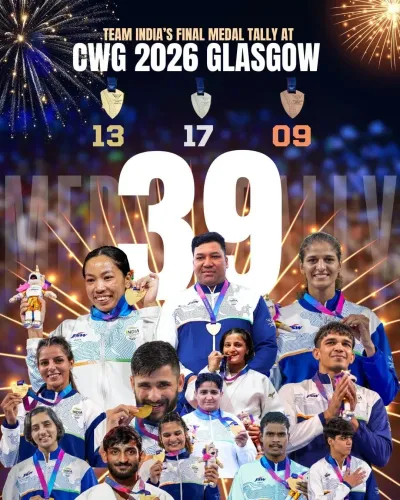
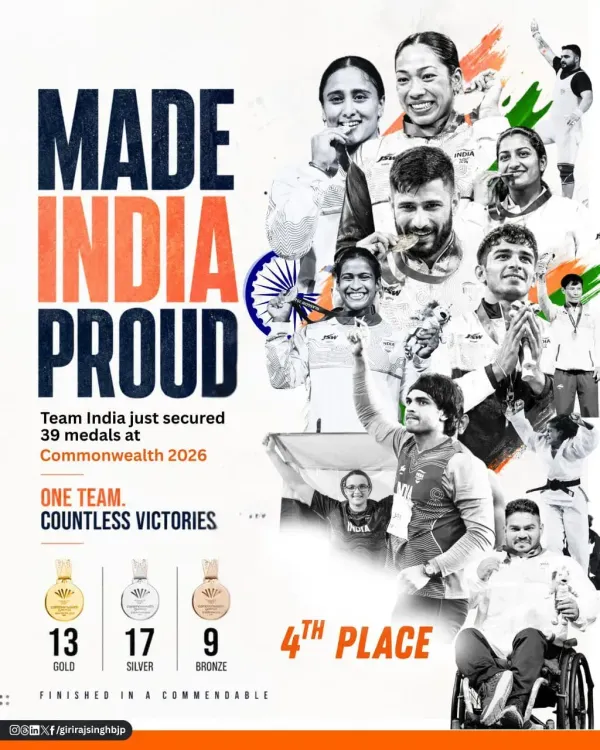
Union Textiles Minister Giriraj Singh praised Indian athletes for winning 39 medals — 13 gold, 17 silver, 9 bronze — and finishing fourth at the Commonwealth Games 2026, calling it a historic achievement and crediting athletes, coaches, and sports management.
Key Takeaways
India finished fourth at the Commonwealth Games 2026 with a total of 39 medals .
The medal breakdown: 13 gold, 17 silver, and 9 bronze .
Union Textiles Minister Giriraj Singh extended congratulations to athletes, coaches, and sports management on August 3, 2026.
India also finished fourth at the 2022 Birmingham Commonwealth Games , with 61 medals including 22 gold.
The Khelo India programme, launched in 2017, has been a key policy driver behind India's consistent CWG performance.
CWG results are expected to influence sports budget discussions ahead of the 2028 Los Angeles Olympics.
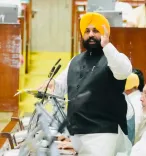
Thirty-nine medals. Fourth place on the global table. Union Textiles Minister Giriraj Singh on Monday, August 3, 2026, took to X to salute the Indian contingent's performance at the Commonwealth Games 2026, calling the achievement a matter of pride for every Indian.
Posting in Hindi, the Begusarai MP wrote: 'अदम्य साहस, अनुशासन और उत्कृष्ट प्रदर्शन' — 'indomitable courage, discipline, and outstanding performance' — crediting not just the athletes but also coaches and sports management personnel for the tally of 13 gold, 17 silver, and 9 bronze medals.
How India's CWG 2026 tally stacks up historically
Fourth place is a position India has held before. At the 2022 Commonwealth Games in Birmingham, the country finished fourth with 61 medals, including 22 gold — a benchmark that set the bar high heading into this cycle. The 2026 edition's 39-medal haul represents a leaner but still podium-heavy campaign, with the fourth-place ranking signalling India's continued status as a top-tier Commonwealth sporting nation.
That consistency is no accident. Since the launch of the Khelo India programme in 2017, successive governments have funnelled structured investment into grassroots and elite athlete development. The scheme has created a pipeline of talent visible across multi-sport events, and CWG results routinely feed back into domestic sports policy — shaping where the next round of funding flows.
Eyes already on Los Angeles 2028
For Indian sports administrators, every Commonwealth Games is also a dress rehearsal. The 2028 Los Angeles Olympics looms as the next major milestone, and a fourth-place CWG finish — with gold medals in the cabinet — gives selectors and coaches data on which disciplines are peaking and which need reinforcement. Parliamentary discussions on sports budget allocations are likely to reference this tally in the months ahead.
Singh's congratulatory post lands at a moment when political acknowledgement of sporting achievement carries weight beyond ceremony — it signals government ownership of the result, and implicitly, of the infrastructure that produced it.
Thirty-nine medals don't happen by accident. The question now is whether the policy architecture that built this podium can be scaled fast enough for the Olympic stage.
Point of View
Government-backed outcome rather than individual heroism alone. With the Khelo India programme entering its second decade, the CWG tally becomes both a report card and a campaign talking point. The real test of that narrative will be the medal count at Los Angeles.
NationPress
3 Aug 2026
Frequently Asked Questions
How many medals did India win at the Commonwealth Games 2026?
India won 39 medals at the Commonwealth Games 2026 — 13 gold, 17 silver, and 9 bronze — finishing fourth in the overall standings.
What position did India finish at CWG 2026?
India finished fourth overall at the Commonwealth Games 2026.
What did Giriraj Singh say about CWG 2026?
Union Textiles Minister Giriraj Singh praised the Indian contingent's 'indomitable courage, discipline, and outstanding performance,' and extended congratulations to athletes, coaches, and sports management for the 39-medal haul.
How does India's CWG 2026 performance compare to 2022?
At the 2022 Birmingham Commonwealth Games , India won 61 medals including 22 gold and also finished fourth. The 2026 tally of 39 medals represents a smaller haul but maintains the same overall ranking.
What is the Khelo India programme and how does it relate to CWG results?
Launched in 2017 , Khelo India is a government scheme supporting grassroots and elite athlete development in India. It is widely credited with building the talent pipeline that contributes to India's consistent top-five finishes at the Commonwealth Games.