Haryana syndicate used modified phones to cheat in Baba Farid varsity exam: Punjab minister
Synopsis
A Haryana-based cheating syndicate used modified phones and hidden earpieces to rig a Baba Farid University pharmacy exam — not a paper leak, but a technology-driven operation, Punjab's education minister told the Assembly. The disclosure came as the same minister claimed Punjab had jumped from 27th to number one in NITI Aayog's school education rankings, overtaking Kerala.
Key Takeaways
Punjab Education Minister Harjot Singh Bains told the Assembly on Monday that a Haryana-based syndicate used modified phones and hidden earpieces to cheat in the Baba Farid University of Health Sciences pharmacy exam.
Bains described it as a 'technology-driven cheating operation busted by Punjab Police ' — not a paper leak.
Punjab climbed from 27th position in 2020 to number one in the NITI Aayog School Education Quality Report 2026 , overtaking Kerala .
882 students from Punjab government schools qualified NEET-UG 2026 , up more than 100 per cent from 437 in 2024 .
Punjab became the first state in India to introduce AI as a mainstream subject from Classes 1 to 12, covering 25,172 schools and 31.5 lakh students .
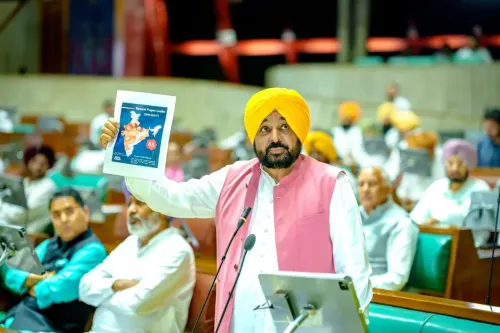
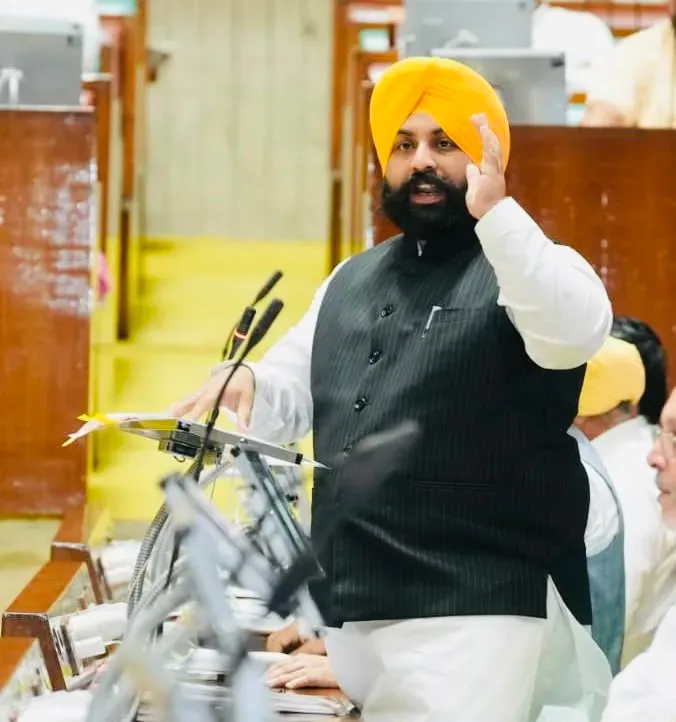
Punjab Education Minister Harjot Singh Bains on Monday told the state Assembly that a Haryana-based cheating syndicate deployed modified mobile phones, concealed wireless earpieces, and other sophisticated gadgets to rig a pharmacy examination at Baba Farid University of Health Sciences. The disclosure came during a legislative debate on a censure motion over repeated paper leaks across India and the treatment of protesting students.
How the Cheating Operation Worked
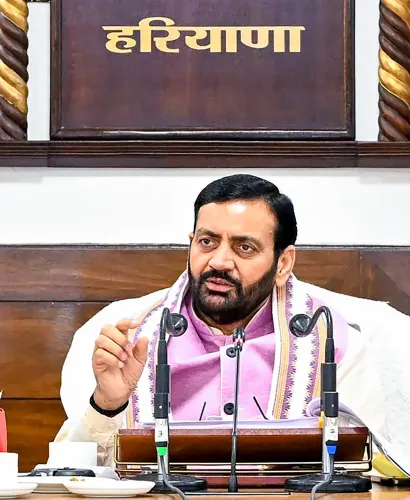
Bains was categorical that the incident was not a conventional paper leak. 'This was not a paper leak. This was a technology-driven cheating operation busted by Punjab Police. For years the Haryana government looked away while this syndicate destroyed the future of thousands of students,' he said. The minister directed a pointed remark at Haryana Chief Minister Nayab Singh Saini, advising him to 'fix his own backyard before coming to Punjab to set the political agenda.'
Punjab's Rise in School Education Rankings
Bains used the Assembly floor to present a broader account of Punjab's educational turnaround under the Sikhya Kranti initiative. He said the state had climbed from 27th position in 2020 to become the number one ranked state in the NITI Aayog School Education Quality Report 2026, overtaking Kerala — a result he described as a historic milestone for government schools in the state.
NEET-UG Results and AI in Schools
On academic outcomes, the minister informed the House that 882 students from Punjab's government schools qualified NEET-UG 2026, representing a cumulative increase of more than 100 per cent from 437 qualifiers in 2024. He also announced that Punjab has become the first state in India to introduce artificial intelligence as a mainstream subject from Classes 1 to 12, covering 25,172 schools and nearly 31.5 lakh students. The curriculum was developed after studying best practices from Singapore, Finland, the UAE, and the US.
Heritage Invoked in Defence of Punjab
Bains anchored his address in Punjab's intellectual and cultural legacy, invoking figures from Sri Guru Nanak Dev and Shaheed Bhagat Singh to Nobel laureate Dr Har Gobind Khorana, fibre optics pioneer Dr Narinder Singh Kapany, and semiconductor memory innovator Dr Gurtej Singh Sandhu. The invocation was framed as a rebuttal to what he characterised as attempts to defame the state amid the national paper-leak controversy.
What Comes Next
The Assembly debate signals that the Punjab government intends to keep political pressure on Haryana over the syndicate's alleged operations. With the NEET-UG cheating controversy still reverberating nationally, Punjab's claims of a technology-driven bust — and its counter-narrative of educational progress — are likely to remain contested terrain in the coming weeks.
Point of View
Governed by the Bharatiya Janata Party, while simultaneously showcasing its own education record. Whether the 'technology-driven operation' framing holds up depends on what Punjab Police's investigation eventually charges and proves. The NITI Aayog ranking leap from 27th to first in six years is striking, but ranking methodology and what it actually measures in classroom outcomes deserves scrutiny. The NEET-UG qualifier doubling is a verifiable metric, but 882 qualifiers from government schools in a state of 30 million-plus is still a small absolute number — progress, not arrival.
NationPress
3 Aug 2026
Frequently Asked Questions
What cheating method did the Haryana-based syndicate use in the Baba Farid University exam?
According to Punjab Education Minister Harjot Singh Bains, the syndicate used modified mobile phones, concealed wireless earpieces, and other advanced gadgets to facilitate cheating during the Baba Farid University of Health Sciences pharmacy examination. He described it as a technology-driven operation, not a conventional paper leak.
Who busted the Baba Farid University cheating racket?
Punjab Police busted the cheating syndicate, according to Minister Harjot Singh Bains's statement to the Punjab Assembly on Monday. The syndicate was reportedly based in Haryana.
What is Punjab's current ranking in school education according to NITI Aayog?
Punjab ranked number one in the NITI Aayog School Education Quality Report 2026, up from 27th position in 2020, overtaking Kerala. The minister cited this as evidence of the state's progress under the Sikhya Kranti initiative.
How many Punjab government school students qualified NEET-UG 2026?
882 students from Punjab's government schools qualified NEET-UG 2026, a rise of more than 100 per cent compared to 437 qualifiers in 2024, according to the education minister's statement in the Assembly.
Is Punjab the first state to introduce AI as a school subject?
Punjab is reportedly the first state in India to introduce artificial intelligence as a mainstream subject from Classes 1 to 12. The initiative covers 25,172 schools and nearly 31.5 lakh students, with the curriculum modelled on practices from Singapore, Finland, the UAE, and the US.