CM Bhagwant Mann Raises Paper Leak Crisis in Punjab Assembly
Synopsis
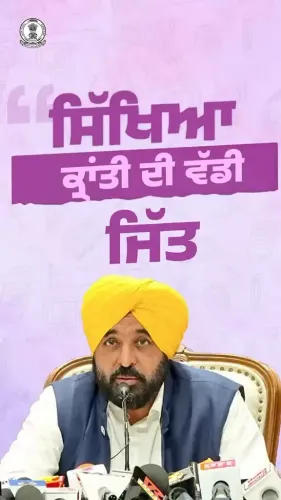
Punjab CM Bhagwant Mann used a Vidhan Sabha session on 3 August 2026 to attack national paper-leak failures, claim Punjab is India's top-ranked education state, announce a private school fee bill, and urge parents to look beyond marks.
Key Takeaways
Bhagwant Mann addressed the Punjab Vidhan Sabha on 3 August 2026 on education and exam integrity.
He cited 93 paper leaks nationally since 2014 , alleging most occurred in BJP-ruled states .
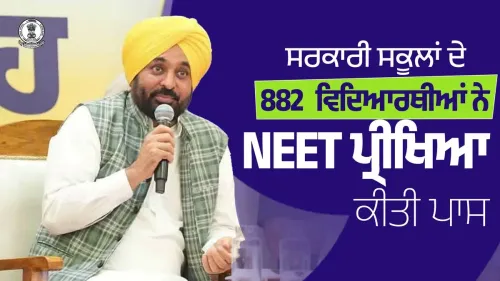
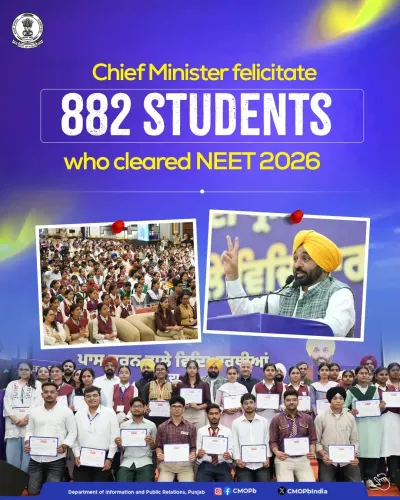
882 students from Punjab government schools reportedly cleared NEET , cited as evidence of public-school reform.
The government is introducing a bill to regulate private school fees in Punjab.
Mann announced that the true history of Sikh Gurus and martyrs will be formally included in Punjab's school syllabus.
More than 68,500 transparent recruitments were cited as proof of clean hiring under the AAP government.
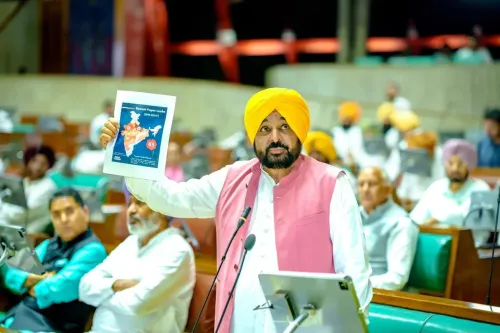
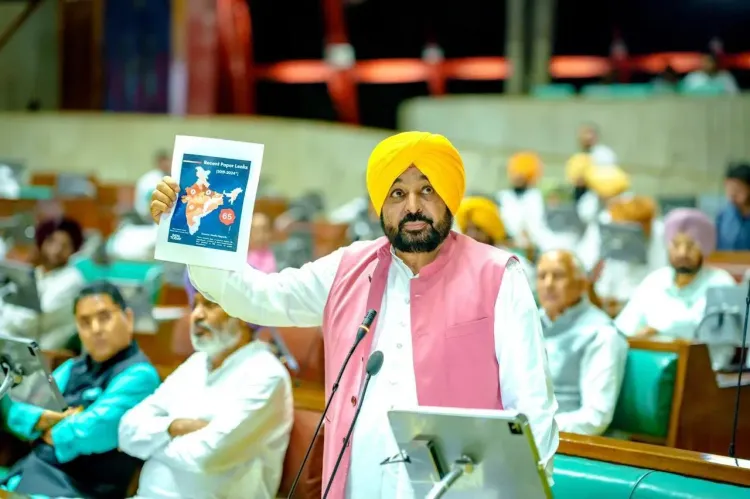
Every paper leak, Punjab Chief Minister Bhagwant Mann told the state assembly on Monday, 3 August 2026, is 'the murder of the dreams of poor and hardworking children.' That single line — blunt, moral, and aimed squarely at a national scandal — set the tone for a wide-ranging debate in the Punjab Vidhan Sabha that wove together exam integrity, curriculum politics, and the state's own educational report card.
93 Leaks, One Accusation, and a National Reckoning
Mann told legislators that 93 paper leaks have occurred across India since 2014, and that a majority of those incidents took place in BJP-governed states. The figure, cited from the floor of the assembly, is a direct political indictment — framing exam fraud not as administrative failure but as a systemic pattern under a particular dispensation. The claim lands in a charged national atmosphere: the NEET paper-leak controversy of recent years rattled millions of medical aspirants and triggered protests across the country, making exam integrity one of the sharpest pressure points in Indian public life.
The Chief Minister's framing is deliberate. By anchoring the number to 2014 — the year the Bharatiya Janata Party came to power at the centre — he ties the leak crisis to a political timeline, not merely an administrative one. It is the kind of argument designed to travel far beyond the Vidhan Sabha chamber.
Syllabus, Sikh History, and the Curriculum Battleground
Mann also took direct aim at what he described as attempts to alter India's history through curriculum revision — a pointed reference to debates around the National Education Policy 2020 and subsequent textbook changes that critics say diluted or reframed certain historical narratives. His government's counter-move, he announced, is to ensure that 'the true history of our great Gurus and martyrs' becomes a formal part of Punjab's school syllabus.
This is not a symbolic gesture. It places Punjab in active friction with the centre on education federalism — a state asserting its constitutional right to shape what its children learn, particularly around Sikh heritage that carries deep political and cultural weight in the region. The Aam Aadmi Party government has consistently used education as the terrain on which it differentiates itself from both the BJP and the previous Congress administration.
Punjab's Own Scorecard: NEET Passes, Fee Controls, and Jobs
Against the backdrop of national failures, Mann presented Punjab's own numbers as proof of a different model. He cited 882 students from government schools clearing NEET, a figure that — if borne out — would represent a striking outcome for public-school students who typically compete at a steep disadvantage against private coaching-backed peers. He also pointed to a forthcoming bill to regulate private school fees, and to more than 68,500 transparent recruitments carried out by his government.
The fee-regulation bill is the one to watch. Private school fee disputes have fuelled parental anger across Punjab's urban centres, and legislation in this space would mark a significant intervention in a sector that has long operated with minimal state oversight.
A Word to Parents: Stop the Marks Race
Mann closed with an appeal that stepped outside the political argument entirely. He urged parents not to burden children with pressure to chase marks alone — 'ਹਰ ਬੱਚੇ 'ਚ ਕੋਈ ਨਾ ਕੋਈ ਵੱਖਰਾ ਹੁਨਰ ਜ਼ਰੂਰ ਹੁੰਦਾ ਹੈ' ('every child has some unique talent') — before signing off with his characteristic Inquilab Zindabad.
It is a rare moment in a combative speech: a chief minister pausing the political fight to speak directly to a kitchen-table anxiety that millions of Indian families carry every exam season. Whether it lands as policy vision or electoral warmth, it gives the address a human register that the numbers alone cannot.
The private school fee bill's progress through the legislature will be the real test of whether Monday's assembly session produces law — or just a well-framed argument.
Point of View
Job numbers — to reframe a national scandal as a state-versus-centre contrast. By anchoring 93 paper leaks to 2014 and BJP-ruled states, he converts an administrative failure into a political identity argument ahead of what will be a competitive electoral cycle. The Sikh syllabus announcement deepens that calculus, signalling to Punjab's dominant community that cultural sovereignty is on the ballot alongside school quality. The private school fee bill, if it passes, would be the most consequential legislative outcome — it addresses a pocketbook issue that cuts across caste and class in ways that curriculum debates do not.
NationPress
18 Sept 2026
Frequently Asked Questions
What did Bhagwant Mann say about paper leaks in the Punjab assembly?
Mann told the Punjab Vidhan Sabha on 3 August 2026 that 93 paper leaks have taken place across India since 2014, and that most of them occurred in BJP-governed states. He called paper leaks 'the murder of the dreams of poor and hardworking children.'
How many Punjab government school students cleared NEET according to Bhagwant Mann?
Mann stated that 882 students from Punjab government schools cleared the NEET examination, presenting this as evidence of the state's progress in public education.
What is the Punjab private school fee regulation bill?
Bhagwant Mann announced in the Vidhan Sabha that his government will introduce a bill to regulate private school fees in Punjab, aiming to bring state oversight to a sector that has largely operated without fee controls.
What changes is Punjab making to its school syllabus?
The Punjab government is incorporating the history of Sikh Gurus and martyrs into the state school syllabus. Mann framed this as a counter to what he described as attempts to alter Indian history through curriculum revision at the national level.
Is Punjab ranked number one in education in India?
CM Bhagwant Mann claimed on 3 August 2026 that Punjab has become the top-ranked state in education in India, citing NEET results from government schools, transparent recruitments, and upcoming fee regulation as supporting evidence. This claim has not been independently verified.