CM Mann: 882 Punjab Govt School Students Clear NEET 2026
Synopsis
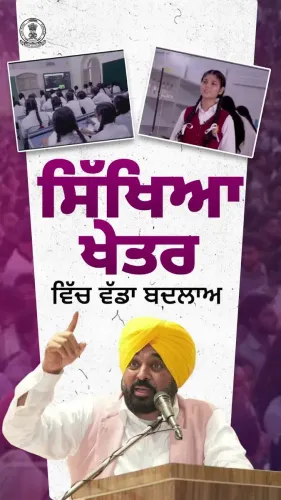
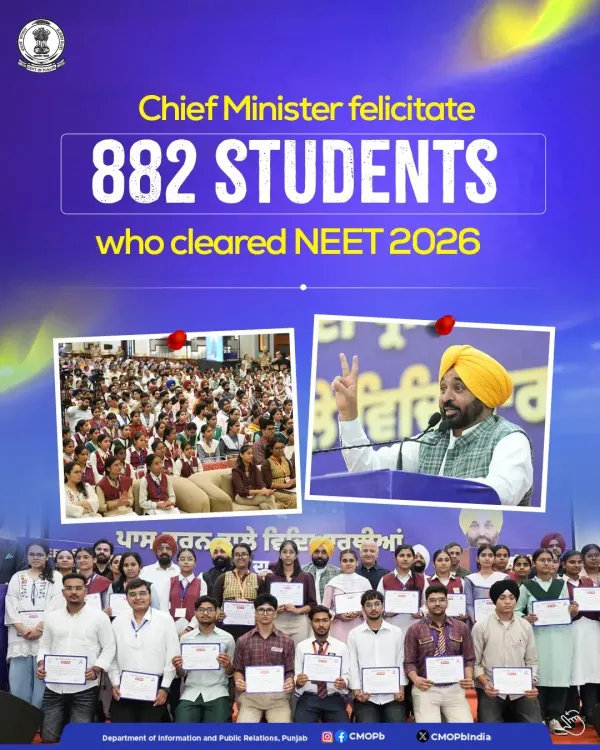
Chief Minister Bhagwant Mann announced that a record 882 students from Punjab Government schools qualified NEET 2026 and over 68,000 government posts were filled on merit, positioning the state's public education and recruitment systems as corruption-free and performance-driven.
Key Takeaways
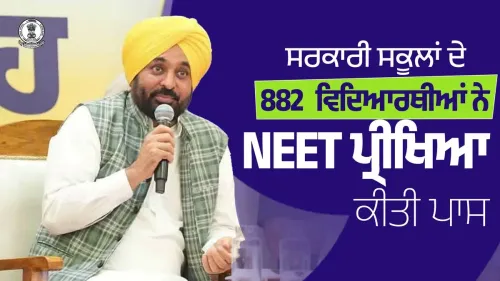
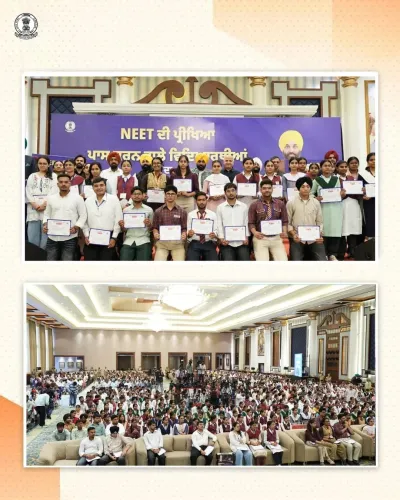
A record 882 students from Punjab Government schools qualified NEET 2026 , according to the Chief Minister's Office.
CM Bhagwant Mann stated that more than 68,000 government jobs have been provided solely on merit through a transparent recruitment process.
Mann credited the NEET milestone to students' dedication, parental support, and teachers' efforts.
The AAP government, in power since March 2022 , has modelled Punjab's education reforms on improvements made to Delhi government schools since 2015.
The Punjab Government pledged continued commitment to ensuring every child has the opportunity, resources, and support to pursue higher education.
The Chief Minister's Office of Punjab announced on Monday, 27 July 2026 that a record 882 students from Punjab Government schools have qualified NEET 2026, with Chief Minister Bhagwant Mann crediting the milestone to a merit-first system that has also delivered more than 68,000 government jobs through transparent recruitment.
Context
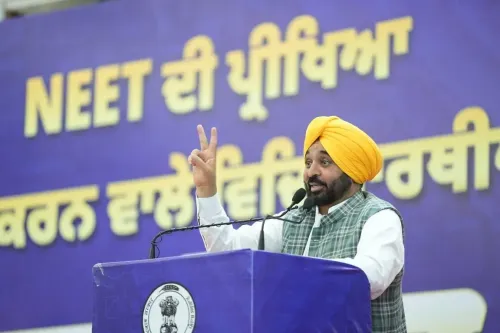
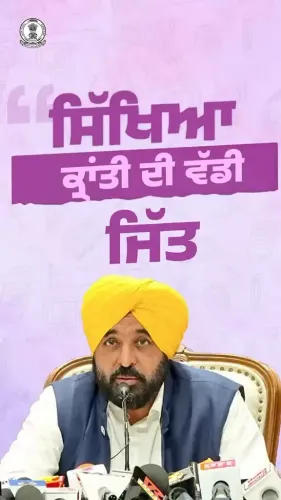
Announcing the results via the official CMO Punjab handle, CM Mann stated that Punjab has 'established a system where neither cash nor recommendations determine success, but merit alone prevails.' He attributed the achievement to 'students' dedication, the unwavering support of their parents, and the tireless efforts of our teachers.' The NEET (National Eligibility cum Entrance Test) is India's sole undergraduate medical entrance examination, conducted annually by the National Testing Agency, making a state's tally of qualifiers a widely tracked indicator of public school quality.
Policy Backdrop
The Aam Aadmi Party government that took office in Punjab in March 2022 explicitly modelled its education reform agenda on improvements made to Delhi government schools since 2015. Infrastructure upgrades, teacher training drives, and the introduction of 'Schools of Eminence' were central planks of that programme. The claim of more than 68,000 government jobs filled solely on merit through transparent recruitment sits alongside the education push as part of a broader anti-corruption governance narrative the party has advanced since coming to power.
State governments across India have increasingly used NEET qualifier tallies from public schools as a proxy metric for the effectiveness of education spending, making the 882-qualifier figure a politically significant data point for the AAP administration heading into future electoral cycles.
Stakeholders and Impact
The most immediate beneficiaries are the 882 students from Punjab Government schools who now hold NEET-qualifying scores and can seek admission to MBBS and BDS programmes across India. Their families — often from lower-income or rural backgrounds who rely on state-run schooling — stand to gain access to professional medical education that was historically dominated by students from private institutions. Teachers in the government school system are also cited directly by the Chief Minister, signalling a policy intent to sustain and reward their role.
For the broader pool of Punjab job seekers, the reference to 68,000-plus merit-based appointments reinforces a message that the recruitment pipeline has been insulated from the patronage networks that drew criticism under previous administrations. Civil society groups and opposition parties are likely to scrutinise both figures in the weeks ahead.
What's Next
The Punjab Government has stated its commitment to ensuring 'every child gets the opportunity, resources, and support needed to dream big and turn those dreams into reality,' indicating that the current round of results will be used to justify continued investment in public school infrastructure and teaching capacity. Analysts will watch whether the NEET qualifier count from government schools grows in successive years and whether the recruitment transparency measures are institutionalised through legislation or independent oversight. The trajectory of both metrics will be a key test of whether the AAP administration's education reforms produce durable, systemic change or remain a single-cycle headline.
Point of View
Using NEET qualifier numbers — a nationally legible metric — to validate its education reform agenda ahead of future electoral tests. By coupling the NEET figure with the 68,000-jobs claim, CM Mann is weaving a single anti-corruption narrative that spans both education access and public employment. This mirrors the AAP playbook from Delhi, where school infrastructure photographs and board-result data were deployed as political communication tools. The durability of this narrative will depend on whether independent audits and successive NEET cycles corroborate the trend.
NationPress
25 Oct 2026
Frequently Asked Questions
How many Punjab government school students qualified NEET 2026?
According to the Chief Minister's Office of Punjab, a record 882 students from Punjab Government schools qualified NEET 2026.
What did CM Bhagwant Mann say about government jobs in Punjab?
CM Bhagwant Mann stated that more than 68,000 government jobs have been provided solely on merit through a transparent recruitment process, with no role for cash or recommendations.
What is NEET and why does it matter for Punjab students?
NEET (National Eligibility cum Entrance Test) is India's single undergraduate medical entrance exam. A high qualifier count from government schools signals improved public education quality and opens pathways to MBBS and BDS programmes for students from lower-income families.
What education reforms has the AAP government introduced in Punjab?
Since taking office in March 2022 , the AAP government in Punjab has pursued infrastructure upgrades, teacher training, and 'Schools of Eminence' initiatives modelled on Delhi government school reforms implemented from 2015 onward.
Will Punjab continue to invest in government school education?
Yes. The Punjab Government has publicly committed to ensuring every child receives the opportunity, resources, and support needed to pursue higher education, suggesting continued investment in public school capacity and merit-based systems.