CM Bhagwant Mann's 'Shiksha Kranti': 881 Govt School Students Clear NEET
Synopsis
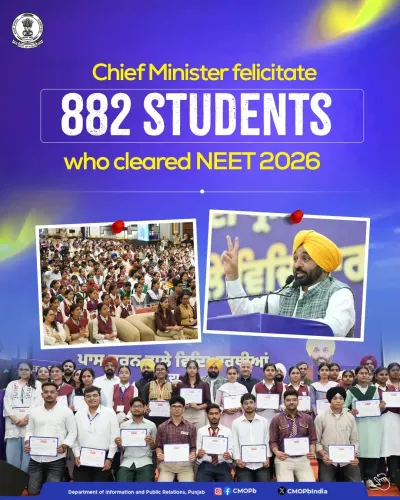
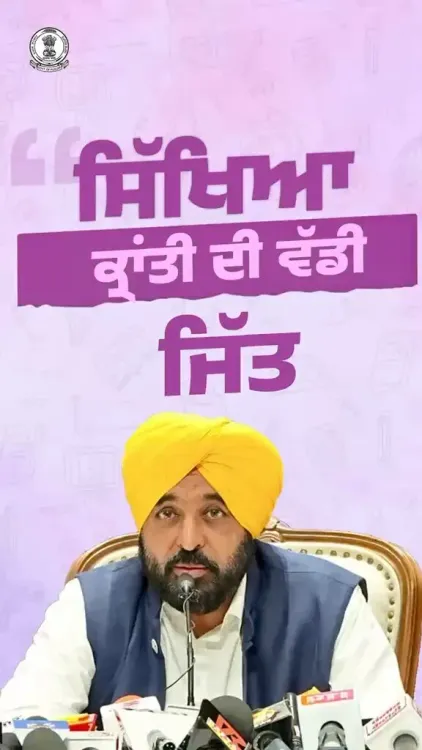
The Chief Minister's Office of Punjab announced on 23 July 2026 that 881 government school students cleared NEET under CM Bhagwant Mann's 'Shiksha Kranti', claiming Punjab has become the top-ranked state in school education outcomes nationally.
Key Takeaways
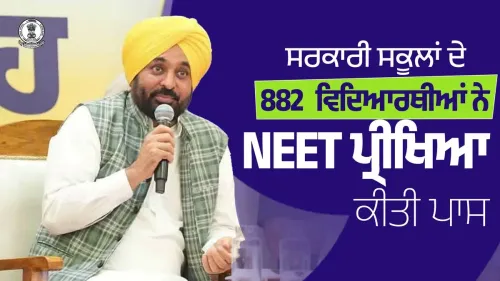
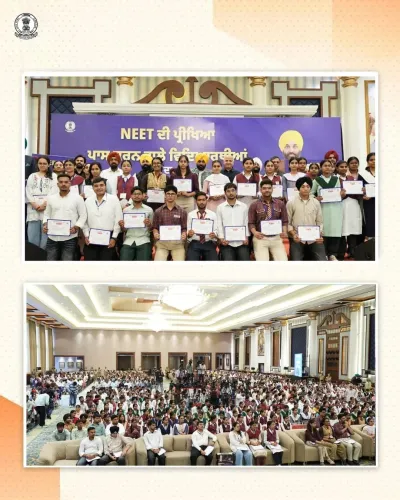
881 students from Punjab government schools cleared the NEET examination, according to the CMO's official post dated 23 July 2026 .
The achievement is attributed to the 'Shiksha Kranti' (Education Revolution) initiative under Chief Minister Bhagwant Mann .
The CMO claims Punjab is now ranked number one nationally in education based on this result.
The AAP government has pursued school reforms in Punjab since 2022 , including teacher recruitment and coaching support within the public system.
The qualifying students come primarily from rural and lower-income households dependent on state school infrastructure.
Sustained results in future NEET cycles will be critical to validating the government's broader education reform claims.
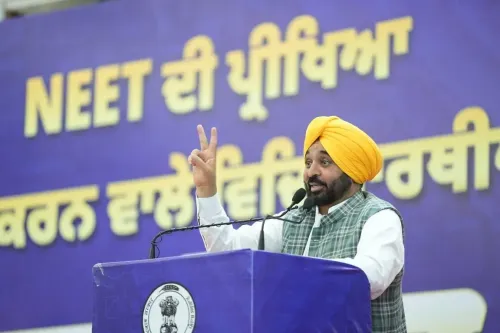
The Chief Minister's Office of Punjab announced on Thursday, 23 July 2026 that 881 students from government schools across the state have cleared the NEET (National Eligibility cum Entrance Test), crediting the achievement to the 'Shiksha Kranti' — or Education Revolution — driven under Chief Minister Bhagwant Mann. The post claims this result has propelled Punjab to the number-one position nationally in school education outcomes.
Context
The CMO's post, written in Punjabi, states: 'ਮੁੱਖ ਮੰਤਰੀ @BhagwantMann ਦੀ ਅਗਵਾਈ ਹੇਠ ਪੰਜਾਬ ਵਿੱਚ ਆਈ ਸਿੱਖਿਆ ਕ੍ਰਾਂਤੀ ਦੀ ਬਦੌਲਤ ਸਰਕਾਰੀ ਸਕੂਲਾਂ ਦੇ 881 ਬੱਚਿਆਂ ਨੇ NEET ਪ੍ਰੀਖਿਆ ਪਾਸ ਕਰਕੇ ਇਤਿਹਾਸ ਰਚਿਆ ਹੈ' — 'Thanks to the Education Revolution brought to Punjab under the leadership of Chief Minister Bhagwant Mann, 881 children from government schools have created history by passing the NEET examination.' The CMO further claims this makes Punjab 'number one in the country' in the field of education.
NEET is the single national entrance test for undergraduate medical admissions in India, conducted by the National Testing Agency. Clearing it is widely regarded as one of the most competitive academic benchmarks for school students.
Policy Backdrop
The Aam Aadmi Party (AAP) government, which came to power in Punjab in 2022, launched a series of reforms in state-run schools modelled partly on the approach it had pursued in Delhi — including large-scale teacher recruitment, infrastructure upgrades, and embedding coaching support for competitive examinations within the public school system. Successive education budgets after 2022 reflected a stated priority of improving measurable outcomes in government schools.
Delhi government schools under AAP had recorded rising numbers of NEET and JEE qualifiers from 2015 onward, and the party has consistently used such results as a headline indicator of education policy success. The Punjab government appears to be applying the same political and policy template to a state with a large rural student population that has historically had limited access to private coaching.
Stakeholders and Impact
The 881 qualifying students are drawn from Punjab government schools, meaning they come predominantly from lower-income and rural households that rely on state infrastructure rather than private tuition centres. A NEET qualification opens pathways to MBBS, BDS, and allied medical programmes at government and private medical colleges across India.
For families in rural Punjab, placing a child in a medical college through the public school route represents a significant shift in access. Broader stakeholders include medical aspirants statewide and the state's education department, which stands to receive increased enrolment pressure if results are sustained in coming cycles.
What's Next
The key test for the government's 'Shiksha Kranti' claim will be whether the NEET qualifier numbers from government schools continue to rise in subsequent examination cycles and whether the state can demonstrate a consistent upward trend rather than a single-year spike. Observers will also watch for the rollout of any new state-level coaching programmes or scholarships specifically targeting medical and engineering aspirants in government schools. The Punjab government's ability to institutionalise these gains — and to publish transparent, school-wise data — will determine how durable the 'number one' claim proves to be.
Point of View
A strategy first honed in Delhi from 2015 onward. Framing the result as a national 'number one' ranking amplifies the political dividend ahead of future electoral cycles in a state where public education access is a deeply felt issue. However, the claim rests on a single exam cycle's data, and independent verification of both the qualifier count and the national ranking will be essential before the 'Shiksha Kranti' label can be treated as a settled verdict. The broader policy significance lies in whether Punjab can institutionalise coaching support and quality teaching within the public system at scale — not just produce headline numbers.
NationPress
21 Oct 2026
Frequently Asked Questions
How many Punjab government school students cleared NEET in 2026?
According to the Chief Minister's Office of Punjab, 881 students from government schools in the state cleared the NEET examination, a result the CMO described as historic.
What is 'Shiksha Kranti' in Punjab?
' Shiksha Kranti ' — meaning Education Revolution — is the term used by the AAP government in Punjab to describe its package of school reforms since 2022 , including teacher recruitment, infrastructure upgrades, and competitive exam coaching within government schools.
Is Punjab really number one in education in India?
The CMO Punjab has claimed Punjab is ranked number one nationally in education based on the NEET results from government schools. Independent verification of this ranking has not been confirmed by a central government body as of the post date.
What is NEET and why does it matter for government school students?
NEET (National Eligibility cum Entrance Test) is India's single entrance exam for undergraduate medical admissions. Clearing it is significant for government school students as it demonstrates that public school education can compete with private coaching in one of India's most competitive exams.
What has the AAP government done to improve Punjab government schools?
Since coming to power in 2022 , the AAP government in Punjab has announced large-scale teacher recruitment, school infrastructure upgrades, and integration of competitive exam coaching into the public school system, drawing on a model previously used in Delhi.