Punjab Assembly passes censure motion on paper leaks, targets Centre
Synopsis
The Punjab Assembly has formally censured the BJP-led Union Government over 93 alleged paper leaks since 2014 — a legislative escalation that puts the state's Aam Aadmi Party government on record demanding accountability from the Centre at the height of the NEET controversy. The motion will land on the desks of the PMO, the Education Ministry, and the Home Ministry.
Key Takeaways
The Punjab Legislative Assembly passed a censure motion against repeated paper leaks by a voice vote on 3 August .
CM Bhagwant Mann alleged 93 paper leaks since 2014 , with 65 occurring between 2019 and 2024 , under the BJP -led Union Government.
The motion will be forwarded to the Prime Minister's Office , the Union Ministry of Education , and the Union Ministry of Home Affairs .
Mann cited 22 NEET candidates who reportedly died by suicide amid the examination integrity crisis.
The main opposition Congress walked out of the House during the debate.
The government criticised the Centre's proposal of fast-track courts, arguing it addresses cases after the fact rather than preventing leaks.
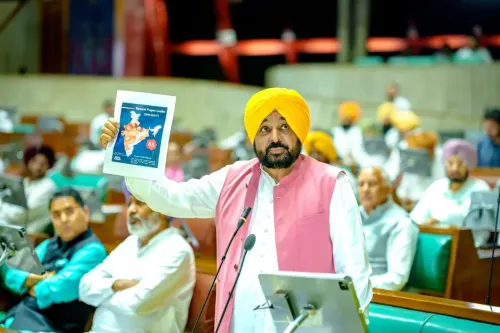
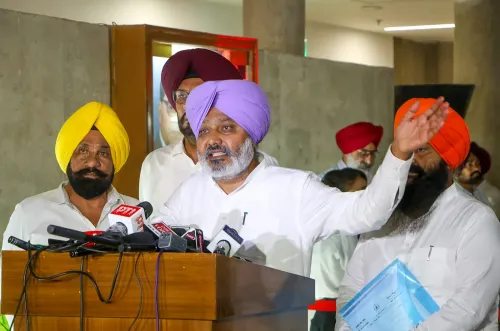
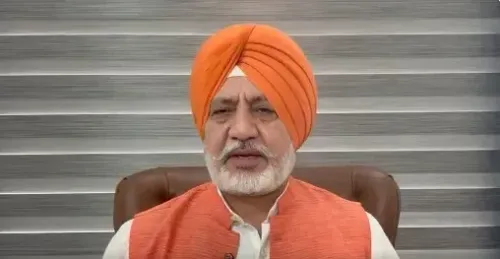
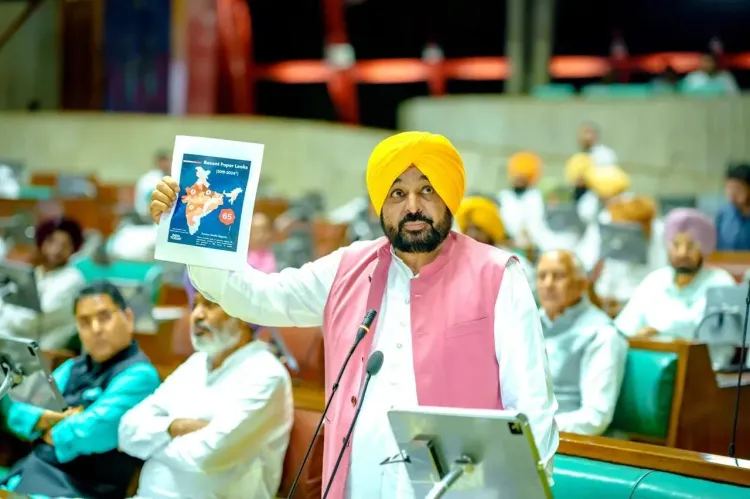
The Punjab Legislative Assembly on Monday, 3 August passed a censure motion against repeated examination paper leaks across the country, with Chief Minister Bhagwant Mann squarely blaming the Bharatiya Janata Party (BJP)-led Union Government for failing to protect the aspirations of millions of students. The motion was passed by a voice vote and will be formally forwarded to the Prime Minister's Office, the Union Ministry of Education, and the Union Ministry of Home Affairs.
What the Motion Demands
The censure motion calls on the Centre to take stringent measures to prevent paper leaks and restore credibility to India's examination system. The state government has framed the move as a direct expression of solidarity with young Indians — particularly those preparing for competitive examinations — who, according to Mann, have been let down by systemic failure at the national level.
What Chief Minister Mann Said
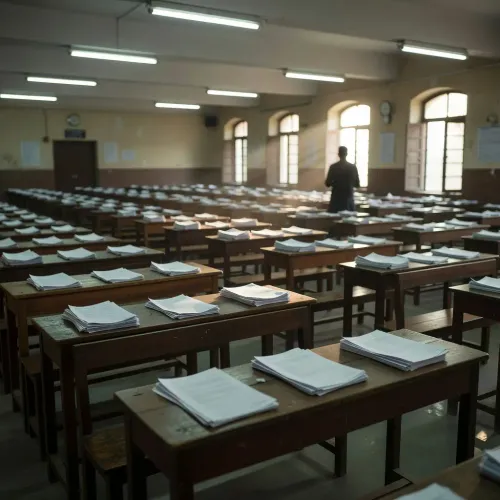
Winding up the debate in the House, CM Bhagwant Mann said: Those who have been claiming to make the country a Vishwaguru have made a mockery of the education system by failing to check the repeated paper leaks across the country. Paper leaks, or in other words the selling of examination papers, shatter the dreams of the aspirants.
Mann cited figures to buttress his charge, stating that 93 paper leaks had occurred since 2014 when the BJP assumed office at the Centre, with 65 of those leaks taking place between 2019 and 2024. He alleged that the highest number of leaks occurred in BJP-governed states including Rajasthan, Gujarat, Uttar Pradesh, Uttarakhand, and Madhya Pradesh. These figures were stated by the Chief Minister in the House and have not been independently verified.
Mann also referenced the NEET examination controversy, claiming that 22 NEET candidates had died by suicide — a figure he attributed to the broader crisis of examination integrity. He further said that student protests had compelled the Prime Minister to accept the resignation of the Union Minister responsible for overseeing the examination system.
Criticising the government's handling of student protests, Mann said: The high-handedness of the Union Government in the use of tear gas, brutal police force, pellet guns and other measures against the students is regrettable.
He added that pellet guns were banned across the world and their use against students was, in his words, merciless.
On the government's proposed fast-track courts for paper-leak cases, Mann was dismissive: That means paper leaks will continue, and only the cases will be decided later.
He also raised concerns about the Centre involving defence services in examination logistics, calling it a reflection of systemic failure.
Opposition Walkout
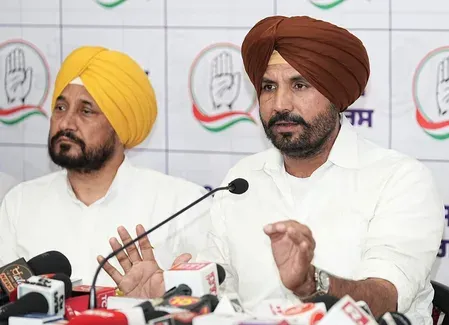
The main opposition Indian National Congress (Congress) walked out of the House during the debate, declining to participate in the discussion on the motion. The party did not publicly elaborate on its reasons for the walkout at the time of the session.
Broader Context
The motion comes amid a wider national debate over examination integrity, triggered most prominently by alleged irregularities in the NEET-UG 2024 results. The controversy has drawn protests from students across multiple states and prompted political responses from several opposition-governed assemblies. This is among the first state legislative resolutions to formally censure the Union Government on the issue, and the Punjab government's decision to route it through official ministerial channels signals an intent to place it on the record at the Centre. How the Union Government responds — if at all — will be closely watched.
Point of View
However, is any reckoning with Punjab's own examination administration record. The Congress walkout is telling: the opposition declined to either endorse or oppose, a posture that reflects its own complicated relationship with the issue in states it has governed. The bigger question is whether a censure motion forwarded to ministries that are under no obligation to respond will produce any structural change — or whether it remains, like the CBI inquiries Mann himself criticised, a well-documented formality.
NationPress
18 Sept 2026
Frequently Asked Questions
What did the Punjab Assembly censure motion on paper leaks say?
The Punjab Assembly passed a censure motion on 3 August blaming the BJP-led Union Government for repeated examination paper leaks and demanding stringent measures to restore the credibility of India's examination system. The motion will be sent to the Prime Minister's Office, the Union Ministry of Education, and the Union Ministry of Home Affairs.
How many paper leaks has CM Bhagwant Mann alleged since 2014?
Chief Minister Bhagwant Mann stated in the Assembly that 93 paper leaks had occurred since 2014 when the BJP assumed office at the Centre, with 65 of those taking place between 2019 and 2024. These figures were asserted by the Chief Minister and have not been independently verified.
Why did the Congress walk out of the Punjab Assembly during the debate?
The Indian National Congress walked out of the Punjab Assembly during the debate on the censure motion. The party did not publicly state its reasons for the walkout at the time of the session.
What is the NEET controversy that forms the backdrop of this motion?
The NEET-UG 2024 examination faced widespread allegations of paper leaks and result irregularities, triggering student protests across India and a national political debate. CM Mann cited the crisis — including an alleged 22 student suicides — as evidence of a systemic failure in the Centre's oversight of competitive examinations.
What action has the Punjab government said it will take after passing the motion?
The Punjab government has said it will formally forward the censure motion to the Prime Minister's Office, the Union Ministry of Education, and the Union Ministry of Home Affairs, urging the Centre to take stringent steps to prevent future paper leaks.