Punjab Assembly passes resolution blaming Centre for exam leaks
Synopsis
The Punjab Legislative Assembly has unanimously passed a resolution formally blaming the Centre for more than 70 examination scandals over the past decade — including the NEET paper leak — and demanding a complete overhaul of the NTA. It is one of the sharpest legislative indictments of federal education oversight by any state assembly this year.
Key Takeaways
The Punjab Legislative Assembly unanimously passed a resolution on 3 July holding the Centre accountable for repeated exam scandals and paper leaks.
The resolution condemns more than 70 major examination scandals over the past decade, including the NEET paper leak.
It demands complete restructuring of the National Testing Agency (NTA) and action against paper leak syndicates.
More than 2.50 lakh students reportedly boycotted the NEET re-examination, according to Finance Minister Harpal Cheema .
The resolution will be sent to the Union Ministry of Education , Union Ministry of Home Affairs , and the Prime Minister's Office .
Punjab CM Bhagwant Mann 's government cited 70,000 merit-based jobs and restored SC scholarships for over 50,000 students as its counter-record.
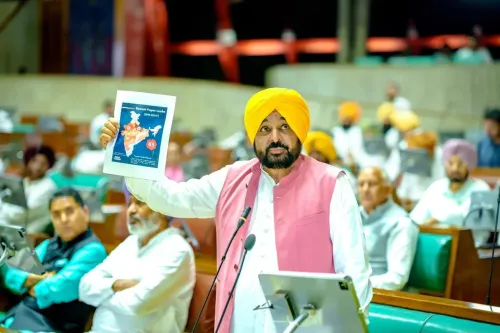
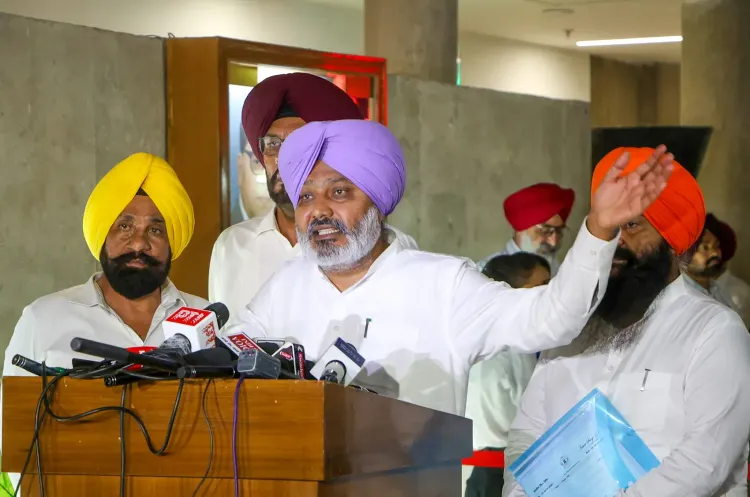
The Punjab Legislative Assembly on Monday, 3 July unanimously passed a resolution holding the Centre accountable for repeated examination scandals, paper leaks, and institutional failures that have undermined the prospects of millions of students and job aspirants across the country. The resolution was moved by Punjab Finance Minister Harpal Cheema.
What the Resolution Demands
The resolution condemns more than 70 major examination scandals, digital remote-access hacks, and recruitment scams recorded over the past decade. It calls for the complete restructuring and decentralisation of testing bodies such as the National Testing Agency (NTA), exemplary action against paper leak syndicates, and the immediate withdrawal of criminal proceedings against peaceful student protesters.
Cheema also urged that the resolution be formally transmitted to the Union Ministry of Home Affairs, the Union Ministry of Education, and the Prime Minister's Office.
Key Allegations Raised in the House
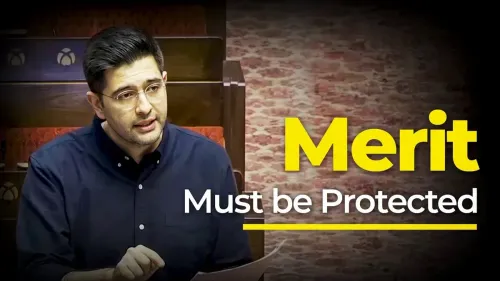
Speaking during the debate, Cheema alleged that systemic corruption and repeated paper leaks in high-stakes examinations — including NEET — had broken the morale of young aspirants. He cited that more than 2.50 lakh students stayed away from the NEET re-examination, reportedly out of despair over the perceived compromise of merit.
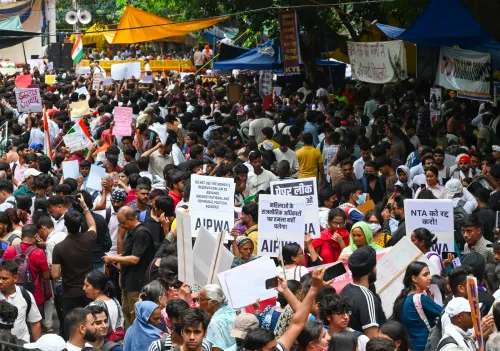
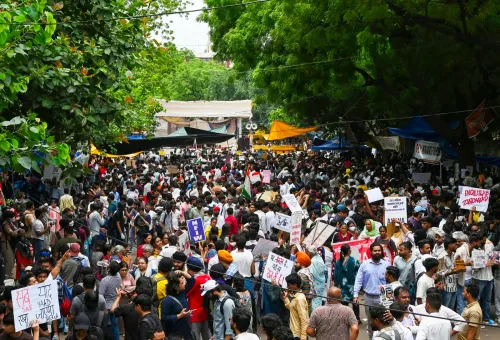
Cheema also alleged that student protesters raising democratic appeals had faced responses involving shock batons, pellet guns, tear gas, and AK-47 assault rifles. He further claimed that individuals including minors, schoolgirls, and climate activist Sonam Wangchuk had been booked under provisions of the Bharatiya Nyaya Sanhita instead of receiving justice.
Punjab Government's Counter-Narrative
Cheema drew a contrast between what he described as Centre-backed corruption and the record of the Punjab government under Chief Minister Bhagwant Mann. He said the state had provided nearly 70,000 government jobs purely on merit and restored Scheduled Caste scholarships, enabling more than 50,000 marginalised students to pursue education without financial barriers.
The minister argued that the contrast between Punjab and BJP-ruled states was evident, and that the youth's collective awakening had forced the ruling dispensation at the Centre to respond to public pressure.
Political Context
The resolution comes amid a nationwide controversy over the NEET-UG 2024 paper leak and broader questions about the integrity of centrally administered competitive examinations. The Aam Aadmi Party (AAP)-led Punjab government has been among the most vocal state administrations demanding federal accountability on the issue. This is the latest in a series of state legislative interventions on examination integrity — reflecting a growing pattern of opposition-ruled states using assembly resolutions to formally register dissent with the Centre on education policy.
The resolution's passage marks a formal escalation of Punjab's position, with the state legislature now on record demanding structural reform of the NTA and accountability for what it calls a decade-long failure.
Point of View
Not binding — but symbolism matters in Indian federal politics. The Punjab AAP government has turned the NEET crisis into a sustained political front against the BJP-led Centre, and a unanimous assembly vote sharpens that posture considerably. What the resolution cannot do is compel NTA reform or accelerate prosecutions; those levers remain with the Union government. The deeper question mainstream coverage underplays is structural: over 70 examination scandals in a decade is not a law-and-order failure alone — it is a governance architecture failure. Whether opposition pressure translates into actual NTA restructuring, or remains confined to legislative record, will depend on how the Centre responds ahead of the next round of competitive examinations.
NationPress
18 Sept 2026
Frequently Asked Questions
What did the Punjab Assembly resolution on exam leaks demand?
The resolution demands the complete restructuring and decentralisation of the National Testing Agency (NTA), exemplary action against paper leak syndicates, and the immediate withdrawal of criminal proceedings against peaceful student protesters. It also calls on the Centre to be held accountable for more than 70 examination scandals over the past decade.
Who moved the resolution in the Punjab Assembly?
Punjab Finance Minister Harpal Cheema moved the resolution on 3 July. The assembly passed it unanimously.
What is the NEET paper leak controversy referenced in the resolution?
The NEET-UG 2024 paper leak refers to allegations that question papers for the National Eligibility cum Entrance Test were compromised before the examination, prompting a re-test. According to Cheema, more than 2.50 lakh students boycotted the re-examination out of loss of confidence in the process.
Where will the Punjab Assembly resolution be sent?
The resolution is to be formally transmitted to the Union Ministry of Home Affairs, the Union Ministry of Education, and the Prime Minister's Office, so that student concerns are placed on official federal record.
What has the Punjab government cited as its own record on jobs and education?
Finance Minister Cheema stated that the Punjab government under Chief Minister Bhagwant Mann has provided nearly 70,000 government jobs on merit and restored Scheduled Caste scholarships, enabling more than 50,000 marginalised students to pursue higher education without financial barriers.