Rijiju Calls for Parliament Debate on NEET Paper Leaks
Synopsis
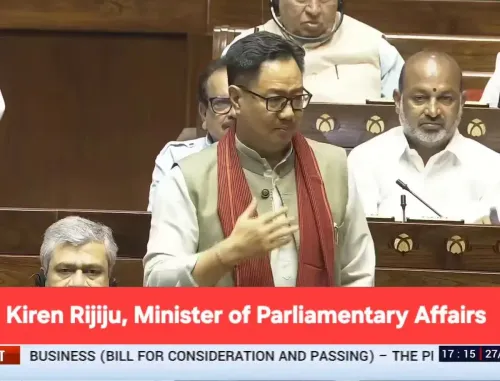
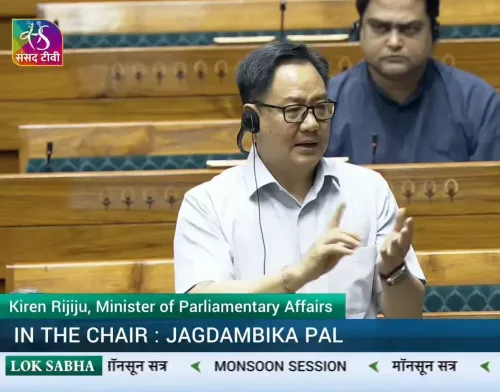
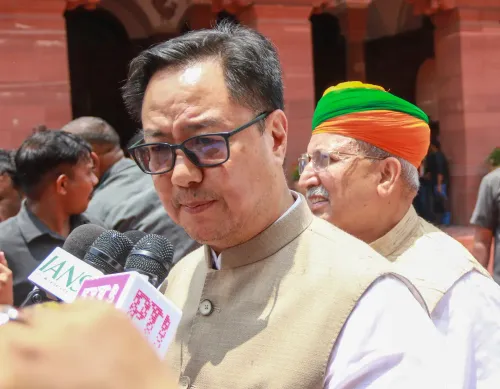
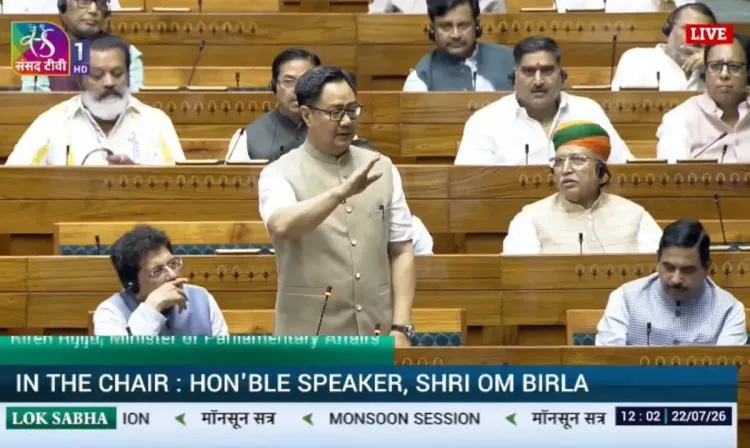
Union Parliamentary Affairs Minister Kiren Rijiju has called for a comprehensive parliamentary debate on NEET paper leaks, saying the government has already appealed to all political parties. He stressed that Parliament must deliberate on examination-related issues for the future of India's students.
Key Takeaways
Union Parliamentary Affairs Minister Kiren Rijiju stated on 22 July 2026 that the government has appealed to all political parties for a comprehensive discussion on NEET paper leaks .
Rijiju stressed that Parliament must deliberate on examination-related matters given their importance to the future of Indian students.
NEET-UG , introduced in 2013 and made the sole medical entrance test in 2016 , is conducted by the National Testing Agency and affects lakhs of aspirants annually.
Recurring allegations of irregularities in national entrance examinations have repeatedly prompted demands for parliamentary scrutiny and systemic reform.
The next step will be whether the government schedules a full floor debate or refers the matter to the Parliamentary Standing Committee on Education .
Union Parliamentary Affairs Minister Kiren Rijiju on Wednesday, 22 July 2026 stated that the government has already reached out to all political parties seeking a comprehensive parliamentary discussion on NEET paper leaks and broader examination-related concerns across the country, underscoring the urgency of the matter for millions of student aspirants.
Context
Posting on X, Rijiju said, 'Govt has already appealed to all the political parties for a comprehensive discussion on NEET paper leaks and all the matters related to examinations in the country. Parliament must deliberate on such important issues for the future of the students of our country.' The statement positions the government as proactively seeking cross-party consensus rather than deflecting scrutiny.
The National Eligibility cum Entrance Test (NEET) is the sole undergraduate medical entrance examination in India, conducted annually by the National Testing Agency (NTA). Allegations of paper leaks and irregularities in high-stakes national examinations have repeatedly triggered demands for systemic reform and greater parliamentary oversight.
Policy Backdrop
NEET-UG was introduced in 2013 and became the single mandatory medical entrance test across all states following Supreme Court directions in 2016, replacing a patchwork of state-level tests. Since then, the exam has become the gateway for lakhs of medical aspirants each year, making its integrity a matter of acute national concern.
The National Testing Agency, an autonomous body under the Ministry of Education, has faced sustained pressure over its examination management processes. Recurring controversies around question-paper security have fuelled demands — from opposition parties, student groups, and civil society — for structural safeguards and independent audits of the agency's operations.
Stakeholders and Impact
At the centre of the debate are lakhs of medical aspirants who prepare for years to clear NEET-UG, a single examination on which their entire career trajectory depends. Any compromise in examination integrity directly undermines the principle of merit-based selection and erodes public trust in the credibility of national testing infrastructure.
Political parties across the spectrum have previously demanded accountability from the government on examination irregularities. Rijiju's appeal for an all-party discussion signals an attempt to convert political pressure into a structured legislative conversation, with Parliament as the forum for accountability rather than street protests or court proceedings alone.
What's Next
The key question now is whether the government will schedule a full floor debate in both Houses or refer the matter to the Parliamentary Standing Committee on Education for a deeper, evidence-based review. The response from opposition parties to the government's appeal for cross-party talks will determine the shape and pace of parliamentary action.
A structured parliamentary discussion could pave the way for legislative or regulatory changes to the NTA's functioning, potentially including independent oversight mechanisms, stricter paper-security protocols, and a review of the single-exam model that currently places enormous pressure on millions of students annually.
Point of View
The government subtly distributes political responsibility across party lines. This move fits a broader pattern where examination scandals, which carry acute electoral sensitivity among aspirational middle-class and rural families, are sought to be managed through institutional channels. Whether opposition parties accept the invitation or continue to press the issue on the streets and in courts will define the political temperature around education governance in the months ahead.
NationPress
21 Oct 2026
Frequently Asked Questions
What did Kiren Rijiju say about NEET paper leaks?
Union Parliamentary Affairs Minister Kiren Rijiju stated on 22 July 2026 that the government has already appealed to all political parties for a comprehensive discussion on NEET paper leaks and all examination-related matters, and that Parliament must deliberate on these issues for the future of students.
What is NEET and why is it controversial?
NEET, or the National Eligibility cum Entrance Test, is India's sole undergraduate medical entrance examination conducted by the National Testing Agency. It has been controversial due to recurring allegations of paper leaks and irregularities that affect lakhs of aspirants who depend entirely on this single exam for medical college admissions.
Will Parliament debate NEET paper leaks?
The government has appealed to all parties for a comprehensive parliamentary discussion on NEET paper leaks. Whether a full floor debate or a referral to the Parliamentary Standing Committee on Education follows will depend on the response from opposition parties.
What is the National Testing Agency?
The National Testing Agency is an autonomous body under the Ministry of Education responsible for conducting NEET and other national entrance examinations. It has faced sustained pressure over examination security and management processes.
What can Parliament do about NEET paper leaks?
A parliamentary debate could lead to legislative or regulatory changes to the NTA's functioning, including independent oversight mechanisms, stricter paper-security protocols, and a review of the single-exam model that places immense pressure on millions of students each year.