Goa CM Sawant Champions E20 Fuel for Cleaner India
Synopsis
Goa Chief Minister Pramod Sawant has amplified India's E20 ethanol-blended petrol initiative, calling it a driver of cleaner mobility, farmer income support, and energy self-reliance under the Viksit Bharat vision for 2047.
Key Takeaways
E20 denotes petrol blended with 20% ethanol , cutting fossil fuel consumption and carbon emissions.
India's Ethanol Blended Petrol programme began in 2003 with a 5% blending target and was upgraded under the National Policy on Biofuels (2018) .
Ethanol procurement directly supports sugarcane farmers and grain producers by creating a guaranteed domestic demand channel.
E20 is positioned as a pillar of Viksit Bharat , India's goal of becoming a developed economy by 2047 .
State-level rollout of E20-compliant fuel pumps and vehicle compatibility standards remain the key near-term milestones to watch.
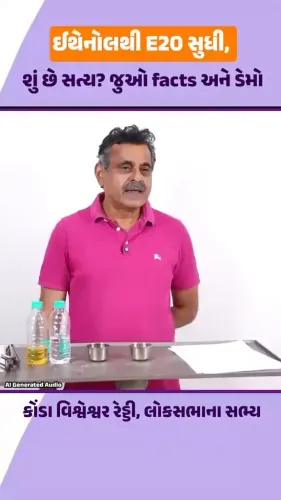
Twenty percent ethanol in every litre of petrol — that is the quiet revolution Goa Chief Minister Pramod Sawant is urging Indians to understand. On Thursday, 13 August 2026, Sawant took to X to spotlight E20, the ethanol-blended fuel at the centre of India's push for cleaner mobility, stronger farm incomes, and reduced dependence on imported crude.
What E20 Actually Means — and Why It Matters Now
E20 is petrol blended with 20% ethanol, a domestically produced biofuel derived largely from sugarcane and surplus grain. The logic is straightforward: burn less fossil fuel, emit less carbon, and route more money to Indian farmers instead of overseas oil exporters. India's Ethanol Blended Petrol (EBP) programme dates back to 2003, when the government set an initial blending target of just 5%. The ambition has grown steadily since, with the National Policy on Biofuels, updated in 2018, charting a course toward higher blends including the E20 milestone.
Farmers, Fuel Pumps, and the Road to Viksit Bharat
The beneficiaries extend well beyond the fuel pump. Sugarcane farmers and grain producers gain a guaranteed procurement channel when ethanol demand rises — a direct income support mechanism baked into the country's energy policy. For oil marketing companies, scaling up E20 distribution means investing in blending infrastructure and ensuring compatibility across the vehicle fleet. Sawant's post frames all of this within India's larger civilisational ambition: Viksit Bharat — a developed India by 2047. The message is deliberate. Energy self-reliance is not a technocratic footnote; it is a pillar of that centenary goal.
State-Level Push as the Real Test
National policy sets the direction, but state governments determine the pace on the ground. The rollout of E20-compliant pumps and clarity on vehicle compatibility standards from automotive regulators will determine how quickly ordinary motorists feel the shift. A sitting chief minister amplifying the E20 narrative signals that state administrations are being drawn into the communications effort — not just the implementation machinery. Whether Goa accelerates its own pump network and farmer linkage programmes will be the practical measure of that commitment.
The blend is already in the tank. The question now is whether the infrastructure catches up fast enough to make it count.
Point of View
Making it harder for critics to oppose without appearing to oppose development itself. For a coastal state like Goa, where tourism drives fuel consumption, visible state-level buy-in from the chief minister also signals to oil marketing companies that local infrastructure investment will find political support. The real test of this advocacy will be measurable: how many E20 pumps are operational in Goa, and how many farmers are enrolled in ethanol supply chains.
NationPress
13 Aug 2026
Frequently Asked Questions
What is E20 fuel in India?
E20 is petrol blended with 20% ethanol, a domestically produced biofuel. It burns cleaner than standard petrol, reduces carbon emissions, and cuts India's dependence on imported crude oil.
How does E20 help farmers in India?
Ethanol used in E20 is largely sourced from sugarcane and surplus grain. Higher ethanol blending creates guaranteed procurement demand, directly supporting the incomes of sugarcane farmers and grain producers.
When did India start the ethanol blending programme?
India launched its Ethanol Blended Petrol programme in 2003 with an initial 5% blending target. The National Policy on Biofuels, updated in 2018, set the roadmap for advancing to higher blends including E20.
What is Viksit Bharat and how is E20 connected to it?
Viksit Bharat is India's stated goal of becoming a fully developed economy by 2047. E20 is positioned as a contributor to that vision by reducing oil import bills, supporting rural incomes, and advancing cleaner energy.
Is E20 compatible with all vehicles in India?
Vehicle compatibility with E20 is an active area of regulatory work by automotive authorities. Consumers should check manufacturer guidelines for their specific vehicle before using E20 blended fuel.