CM Sawant: Goa expands dialysis access statewide
Synopsis
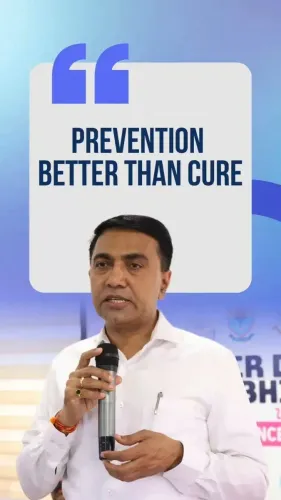
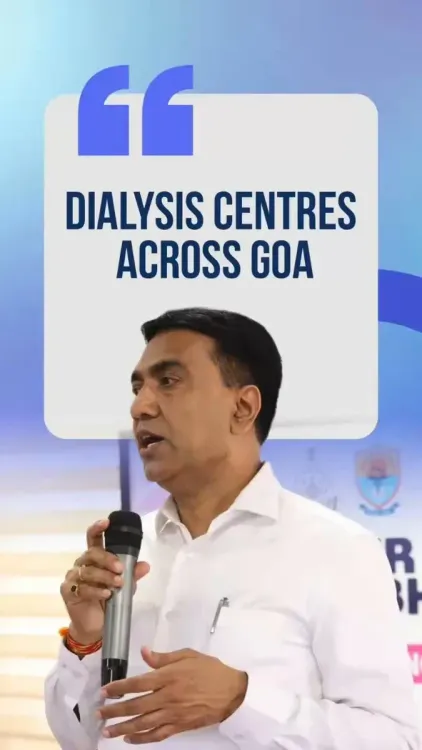
Goa Chief Minister Pramod Sawant has announced a major expansion of dialysis services across the state, scaling up from just one or two machines to a network of facilities at health centres statewide, bringing critical kidney-care treatment closer to patients in every part of Goa.
Key Takeaways
Goa previously had only one or two dialysis machines in the entire state, severely limiting patient access.
Chief Minister Pramod Sawant announced the expansion of dialysis facilities across multiple public health centres statewide.
The expansion is designed to bring treatment closer to patients in every corner of Goa , including remote villages and interior talukas.
Dialysis is a recurring, life-sustaining treatment — typically required two to three times a week — making proximity to facilities critical for patient survival and adherence.
The move aligns with a broader Indian policy trend of decentralising specialist healthcare services to the primary and community health centre level.
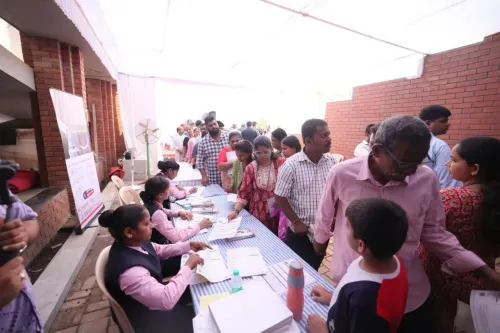
Where once a patient in a remote corner of Goa had to travel long distances for a single session of dialysis, the state now offers the treatment at health centres spread across its length and breadth. Goa Chief Minister Pramod Sawant on Saturday, October 10, 2026, highlighted the state's dramatic expansion of dialysis infrastructure — from just one or two machines to a network of facilities that brings life-sustaining care closer to every resident.
From near-zero to a statewide dialysis network
Sawant's post underscores a stark before-and-after: Goa once operated with only one or two dialysis machines in the entire state. That scarcity forced patients with chronic kidney disease — who typically require sessions two to three times a week — to either crowd a single facility or, in many cases, go without. The expansion of machines and centres across public health infrastructure directly addresses that bottleneck.
Dialysis is not a one-time intervention. It is a recurring, time-intensive treatment that patients depend on for survival when kidneys fail to filter waste from the blood. Distance and availability are therefore not merely matters of convenience — they are, quite literally, matters of life and death. Bringing these facilities closer to people in every corner of Goa compresses that burden significantly.
Why proximity to dialysis centres matters for Goa's geography
Goa, despite being India's smallest state by area, has a dispersed population across coastal villages, interior talukas, and hilly regions. Patients in areas far from Panaji or Margao historically faced the twin burden of travel cost and physical exhaustion — a punishing combination for someone already managing kidney failure. Decentralising dialysis to local health centres removes that double penalty.
The Chief Minister's emphasis on 'every corner of Goa' signals an intent to ensure that geography does not determine access to critical care — a principle that has driven healthcare decentralisation efforts across several Indian states in recent years.
What this signals for Goa's public health direction
The announcement reflects a broader push in Indian state governance to shift specialist services — long concentrated in district hospitals or private facilities — into the primary and community health centre tier. When dialysis moves closer to the patient, the pressure on tertiary hospitals eases, out-of-pocket costs fall, and treatment adherence improves. All three outcomes matter for a state that doubles its population during tourist season and must maintain a robust baseline of public health capacity year-round.
For Goa's residents managing chronic kidney disease, the expansion is not a headline — it is a changed daily reality. That is the measure by which this infrastructure push will ultimately be judged.
Point of View
Adequate staffing, and machine maintenance will determine its real impact. The political credit is being claimed; the administrative follow-through is what the health system now owes Goa's patients.
NationPress
10 Oct 2026
Frequently Asked Questions
How many dialysis centres does Goa have now?
Chief Minister Pramod Sawant has stated that Goa has expanded dialysis facilities across health centres statewide, up from just one or two machines previously, though a precise total count of current centres was not specified in the announcement.
Is dialysis free in Goa government hospitals?
CM Sawant's announcement focused on expanding access and availability of dialysis at public health centres across Goa; specific details on cost or free-of-charge provision were not mentioned in the post.
Why is dialysis access important in a small state like Goa?
Despite being India's smallest state, Goa has a dispersed population across coastal villages and interior regions. Dialysis patients require sessions two to three times a week, making proximity to centres critical — long travel distances impose serious physical and financial burdens on those with kidney failure.
What is the BJP government's healthcare policy in Goa?
Under Chief Minister Pramod Sawant, the Goa government has focused on expanding public health infrastructure, including decentralising specialist services like dialysis to community and primary health centres to improve access for residents across the state.
Who is Pramod Sawant and what is his role?
Pramod Sawant is the Chief Minister of Goa and a senior BJP leader. He has held the post since March 2019 and was re-elected following the February 2022 Goa Legislative Assembly elections.