How has the Government’s Fiscal Strategy Supported Growth and Stability?
Synopsis
The Economic Survey reveals the effectiveness of the government’s fiscal strategy, emphasizing its role in stabilizing India’s economy amidst global challenges. With notable improvements in tax collections and capital expenditures, India is on a path of sustainable growth. Find out how these fiscal policies are reshaping the nation’s financial landscape.
Key Takeaways
The government’s fiscal strategy has bolstered economic stability.
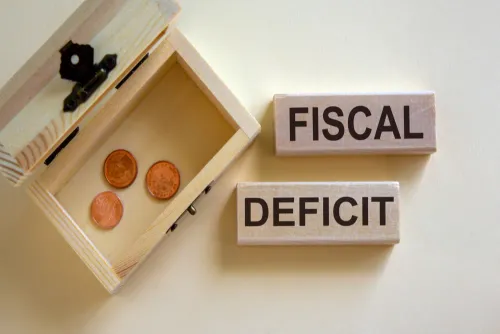
Fiscal deficit is projected to decrease to 4.4 percent of GDP in FY26.
Revenue receipts have improved significantly.
Direct tax base expansion indicates better compliance.
GST collections show positive trends aligned with GDP growth.
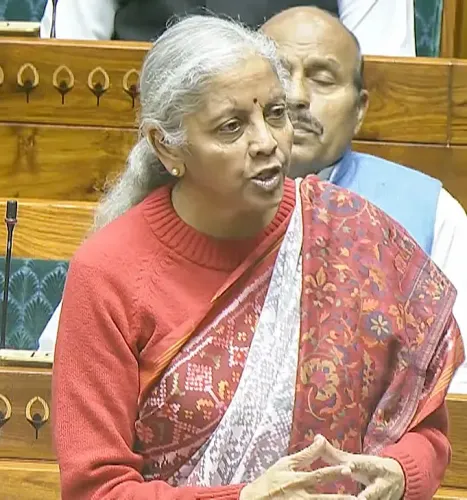
New Delhi, Jan 29 (NationPress) The government’s strategic fiscal approach has effectively stabilized India’s economic progress amidst global uncertainties, as outlined in the Economic Survey presented in Parliament on Thursday.
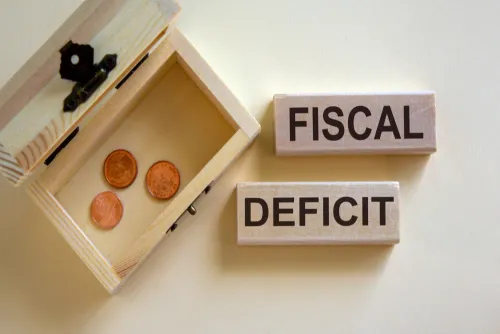
It emphasizes that increasing tax revenues and a commitment to capital investments have led to a reduction in the fiscal deficit, thereby fortifying the country’s macroeconomic foundations.
The Centre’s fiscal deficit is projected at 4.4 percent of GDP for FY26, a decrease from 4.8 percent in the previous fiscal year. During this period, the revenue deficit relative to GDP has steadily reduced, hitting its lowest point of 0.8 percent in FY26, the lowest since FY09, allowing for more funds to be allocated to capital expenditure and reflecting ongoing improvements in expenditure quality, according to the survey.
The government’s revenue receipts increased from an average of about 8.5 percent of GDP in FY16–FY20 to 9.2 percent of GDP in FY25. This growth was primarily fueled by a rise in non-corporate tax collections, which climbed from approximately 2.4 percent of GDP pre-pandemic to around 3.3 percent post-pandemic, the survey notes.
The direct tax base has broadened, with income tax returns filed surging from 6.9 crore in FY22 to 9.2 crore in FY25. The increase in return filings indicates improved compliance, enhanced technological use in tax administration, and a growing number of individuals entering the tax system as their earnings increase.
Gross GST collections for the period of April–December 2025 reached Rs 17.4 lakh crore, reflecting a year-on-year growth of 6.7 percent. This growth in GST revenue is in line with the current nominal GDP growth trends. Concurrently, high-frequency indicators point to strong transaction volumes, with cumulative e-way bill volumes for April-December 2025 rising by 21 percent year-on-year.
The Economic Survey further reveals that the effective capital expenditure of the Central government increased from an average of 2.7 percent of GDP in the pre-pandemic phase to about 3.9 percent post-pandemic, reaching 4 percent of GDP in FY25.
Through its Special Assistance to States for Capital Expenditure initiative, the Centre has encouraged States to keep capital spending at around 2.4 percent of GDP in FY25.
Meanwhile, the combined fiscal deficit of State Governments has remained relatively stable at approximately 2.8 percent of GDP in the post-pandemic phase, akin to pre-pandemic levels, yet it has increased in recent years to 3.2 percent in FY25, indicating rising pressures on State finances.
India has successfully decreased its overall government debt-to-GDP ratio by about 7.1 percentage points since 2020, all while sustaining a high level of public investment.
Point of View
I believe the government’s fiscal strategy is a commendable approach towards achieving economic stability. It demonstrates a proactive stance in enhancing revenue collections while judiciously managing expenditures. This balanced approach is essential for navigating the complexities of global economic conditions, ensuring that India remains on a trajectory of growth and stability.
NationPress
20 Sept 2026
Frequently Asked Questions
What is the projected fiscal deficit for FY26?
The projected fiscal deficit for FY26 is 4.4 percent of GDP.
How have revenue receipts changed from FY16-FY20 to FY25?
Revenue receipts have increased from an average of 8.5 percent of GDP in FY16-FY20 to 9.2 percent of GDP in FY25.
What was the growth rate of GST collections during April-December 2025?
Gross GST collections during April-December 2025 grew by 6.7 percent year-on-year.
How has the direct tax base changed recently?
The direct tax base has expanded, with income tax returns filed increasing from 6.9 crore in FY22 to 9.2 crore in FY25.
What is the current status of the combined fiscal deficit of State Governments?
The combined fiscal deficit of State Governments has remained stable at around 2.8 percent of GDP post-pandemic, but it has increased to 3.2 percent in FY25.