Goyal Accuses Opposition of Flip-Flopping on Debate Demands
Synopsis
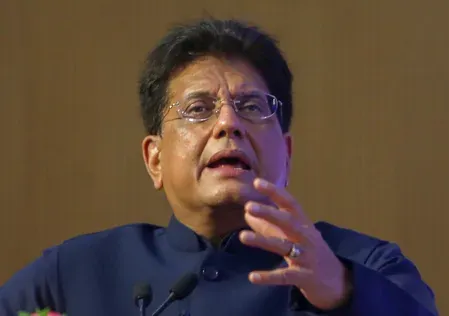
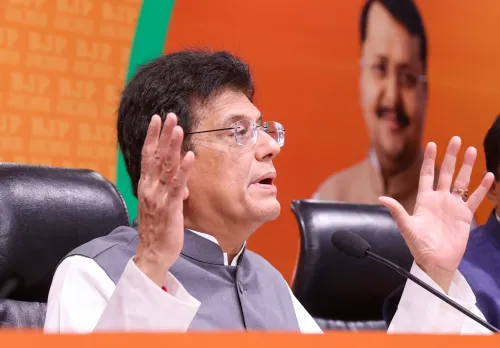
Union Commerce Minister and Rajya Sabha Leader of the House Piyush Goyal accused the opposition, naming Rahul Gandhi directly, of demanding parliamentary debates and then reversing course once the government agrees — calling the pattern deliberate obstruction with no real agenda.
Key Takeaways
Piyush Goyal, Leader of the House in the Rajya Sabha, posted in Hindi on August 12, 2026 accusing the opposition of a deliberate flip-flop strategy on debate demands.
Goyal's core charge: the opposition demands discussion, the government agrees, and the opposition then changes its stand — repeatedly.
Rahul Gandhi is named specifically as part of what Goyal calls a 'topicless' ( vishayaheen ) opposition.
The government's framing is that the opposition's singular goal is to prevent the House from functioning, not to secure any legislative outcome.
This pattern of demand-then-walkout has recurred across parliamentary sessions since 2014 in both chambers.
As Leader of the House, Goyal is directly responsible for Rajya Sabha business negotiations, giving the accusation institutional weight beyond routine political rhetoric.
A sharp charge landed in the political arena on Wednesday evening as Union Commerce and Industry Minister and Rajya Sabha Leader of the House Piyush Goyal accused the opposition of systematically sabotaging parliamentary debate — not by refusing discussions, but by demanding them and then walking away the moment the government agrees.
Posting in Hindi on August 12, Goyal declared: 'The opposition has been completely exposed. They first demand a discussion, and when the government is ready for it, they change their stand. This repeated change in their attitude makes it clear that Rahul Gandhi and the entire opposition are without agenda — they simply do not want the House to function.'
The Flip-Flop Pattern Goyal Is Calling Out
The accusation follows a well-worn script in Indian parliamentary politics — but Goyal is arguing the frequency has become undeniable. The charge is specific: the opposition tables demands for debate, the Treasury Bench accepts, and the opposition then shifts its position or stages a walkout. The government's framing is that this is not a principled stand on any issue, but a calculated strategy to keep the House non-functional.
As Leader of the House in the Rajya Sabha, Goyal sits at the centre of exactly these procedural negotiations — making his accusation more than a political jab. It is a direct claim from the official responsible for managing the Upper House's business.
Rahul Gandhi Named at the Centre of the Charge
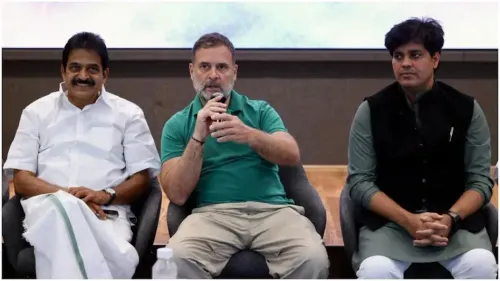
Goyal specifically names Rahul Gandhi, the most prominent face of the opposition in Parliament, as part of what he calls a 'topicless' front — vishayaheen, in his original word, meaning without substance or agenda. The implication is pointed: the opposition's disruptions are not driven by any legislative concern but by a singular goal of paralysis.
This is not a new accusation in Indian politics. Since 2014, successive parliamentary sessions in both the Lok Sabha and the Rajya Sabha have seen cycles of opposition demands followed by government counter-claims of deliberate obstruction. What changes session to session is the specific issue being cited; what does not change, the ruling party argues, is the underlying pattern.
Why the Rajya Sabha Is the Flashpoint
The Upper House has historically been the more contentious chamber when government and opposition numbers are closer. Procedural manoeuvres — adjournment motions, notices for short-duration discussions, zero hour — give a determined opposition real tools to stall business. Goyal's post signals that the government believes the opposition is using those tools not to secure debate, but to prevent it.
The next scheduled session business and any pending notices for discussion will be the immediate test of whether either side moves toward actual floor time on contested issues — or whether the standoff hardens further.
When a government that controls the agenda accuses the opposition of not wanting to use it, and the opposition accuses the government of offering debate on its own terms, the House itself loses. That is the real exposure Goyal is pointing at — even if he would rather it land on the other side of the aisle.
Point of View
Not an offhand remark — as Leader of the House, he controls the procedural record and is essentially daring the opposition to dispute his account of events on the floor. The 'vishayaheen' framing is significant: it shifts the government's defence from 'we are willing' to 'they have nothing to say', which is a harder charge to shake heading into any high-stakes session. The direct naming of Rahul Gandhi personalises what could have been a generic institutional critique, signalling that the BJP sees political advantage in tying the Congress leader to parliamentary dysfunction rather than policy opposition. If the opposition cannot produce a coherent counter-narrative on what debate they actually want and why they walked away, Goyal's framing risks sticking.
NationPress
12 Aug 2026
Frequently Asked Questions
What did Piyush Goyal say about the opposition in Parliament?
Goyal accused the opposition of demanding debates in Parliament and then changing their position once the government agrees to hold them, calling the pattern deliberate obstruction. He specifically named Rahul Gandhi as part of what he described as a 'topicless' opposition whose only goal is to prevent the House from functioning.
Why did Piyush Goyal name Rahul Gandhi in his post?
Goyal named Rahul Gandhi as the most prominent face of the opposition strategy he was criticising. By personalising the charge, the BJP is framing the Congress leader as directly responsible for parliamentary disruptions rather than attributing them to institutional opposition dynamics.
What does 'Leader of the House in Rajya Sabha' mean?
The Leader of the House in the Rajya Sabha is the senior minister responsible for managing the government's legislative business in the Upper House. Piyush Goyal holds this role, meaning he is directly involved in scheduling debates and negotiating with the opposition over parliamentary proceedings.
Has the opposition-government debate standoff happened before in Indian Parliament?
Yes. Since 2014, successive parliamentary sessions in both the Lok Sabha and the Rajya Sabha have seen recurring cycles where opposition parties demand discussions on specific issues and the ruling party accuses them of obstruction when proceedings are disrupted. The specific issues change but the pattern has persisted across sessions.
What is the significance of Goyal using the word 'vishayaheen' for the opposition?
'Vishayaheen' means 'without subject or agenda' in Hindi. By using this term, Goyal is making a pointed argument that the opposition's parliamentary behaviour is not driven by any substantive legislative concern but is purely tactical — aimed at disruption rather than debate.