Goyal Hails Bengal as Cradle of National Movements
Synopsis
Commerce Minister Piyush Goyal saluted West Bengal as the land where ideas found strength and national movements were born, invoking the state's deep roots in India's independence struggle and the Bengal Renaissance.
Key Takeaways
Piyush Goyal , Union Commerce and Industry Minister and senior BJP leader, posted a tribute to West Bengal on 21 November 2026 .
He described Bengal as the land 'where ideas found strength' and 'where national movements were born.' West Bengal was a central theatre of India's anti-colonial struggle, particularly through the Bengal Renaissance and the Swadeshi Movement of 1905 .
Goyal also serves as Leader of the House in the Rajya Sabha , giving his public statements national political weight.
The post reflects a broader BJP pattern of invoking regional historical legacies as part of political and cultural outreach in West Bengal.
The soil of West Bengal, Union Commerce and Industry Minister Piyush Goyal declared on Saturday, 21 November 2026, is where ideas found their force — the birthplace of national movements that shaped the destiny of a nation.
In a post on X, Goyal wrote in Hindi: 'बंगाल की ये धरती वो धरती है, जहां Ideas को बल मिला है। जहां से National Movements बने हैं।' — 'This land of Bengal is the land where ideas found strength. Where national movements were born.'
Bengal Renaissance and the roots of India's freedom struggle
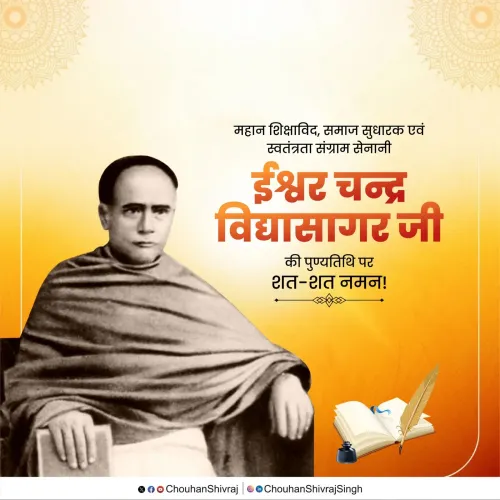
West Bengal's role in India's anti-colonial mobilisation is among the most documented in modern Indian history. The Bengal Renaissance — a sweeping 19th-century social and intellectual revival — produced thinkers, reformers, and agitators whose ideas travelled far beyond the state's borders. From the Swadeshi Movement of 1905, triggered by the first Partition of Bengal, to the revolutionary networks that rattled British authority across the subcontinent, Bengal was consistently the ideological engine of the independence struggle.
Figures who emerged from this soil — writers, philosophers, political organisers — helped translate the abstract yearning for freedom into organised mass action. The state's literary and cultural traditions gave the movement a vocabulary; its political boldness gave it momentum.
BJP's Bengal outreach and the politics of historical recognition
BJP leaders have periodically invoked Bengal's storied past as part of a broader political and cultural outreach in the state. Recognising Bengal's historical centrality serves a dual purpose: it honours a genuine and widely accepted legacy, and it signals respect for a region where the party has invested significant electoral energy over recent election cycles.
Goyal, who also serves as Leader of the House in the Rajya Sabha and is a senior member of the BJP's national leadership, carries particular weight when making such statements — they read not as social-media pleasantries but as deliberate political messaging.
Point of View
The timing and language of such posts are rarely accidental; they tend to accompany either a state visit, a cultural commemoration, or a renewed push to consolidate the party's footprint in Bengal. The broader pattern suggests this is as much political signalling as it is genuine homage.
NationPress
21 Nov 2026
Frequently Asked Questions
What did Piyush Goyal say about West Bengal?
Goyal said Bengal is the land where ideas found strength and where national movements were born, paying tribute to the state's central role in India's freedom struggle.
Why is West Bengal considered important to India's independence movement?
West Bengal was the epicentre of the Bengal Renaissance and the Swadeshi Movement of 1905, producing key thinkers, reformers, and political leaders who shaped India's anti-colonial struggle.
Who is Piyush Goyal?
Piyush Goyal is India's Union Minister of Commerce and Industry, a senior BJP leader, and the Leader of the House in the Rajya Sabha.
What is the Bengal Renaissance?
The Bengal Renaissance was a 19th-century intellectual and social reform movement centred in Bengal that produced influential thinkers and laid the ideological groundwork for India's independence movement.
Why does BJP frequently reference Bengal's history?
BJP leaders invoke Bengal's historical legacy as part of broader political and cultural outreach in the state, seeking to connect with its rich intellectual and nationalist heritage across voter communities.