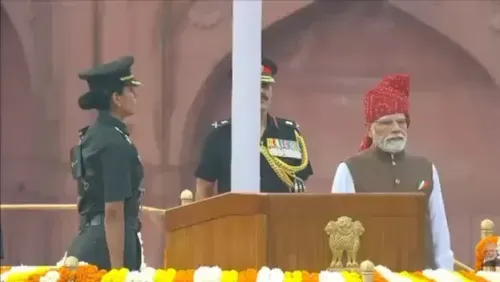
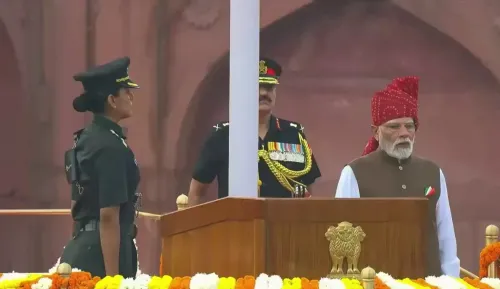
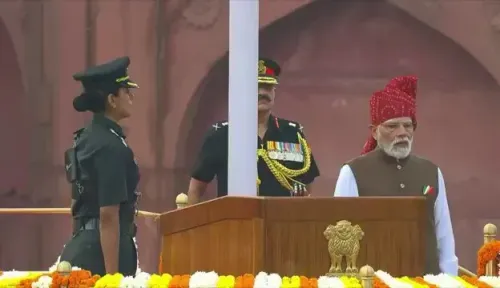
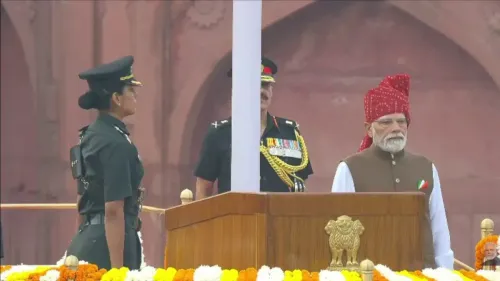
Piyush Goyal Hails Vande Mataram at Red Fort on Independence Day
Synopsis
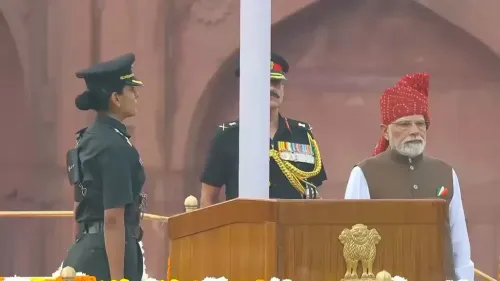
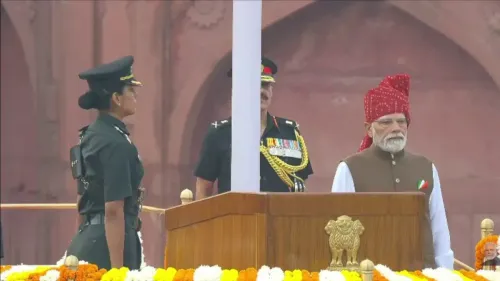
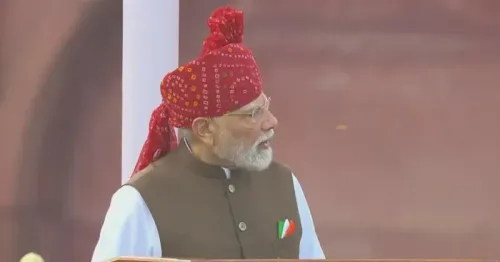
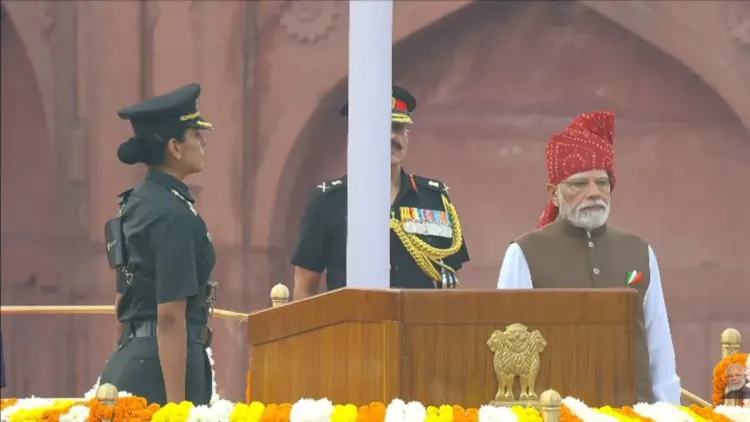
Union Commerce Minister Piyush Goyal marked India's Independence Day on 15 August 2026 by sharing a video of Vande Mataram resonating from the ramparts of Red Fort, Delhi — the ceremonial heart of the annual national observance since 1947.
Key Takeaways
Union Commerce and Industry Minister Piyush Goyal posted on X on 15 August 2026 to mark Independence Day.
His post highlighted Vande Mataram being performed at the Red Fort in Delhi, accompanied by a video.
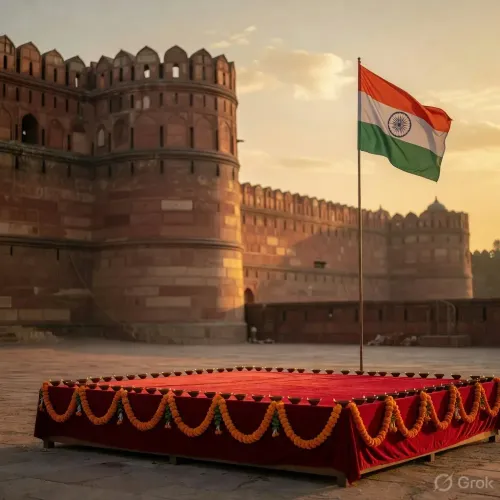
Red Fort has been the site of India's Independence Day flag hoisting and Prime Minister's address every year since 1947 .
Vande Mataram , composed by Bankim Chandra Chattopadhyay , is India's national song and a central element of the Red Fort ceremony.
Goyal serves as Leader of the House in the Rajya Sabha and is a senior BJP leader in the Union Cabinet.
As the tricolour unfurled over the ancient ramparts of Red Fort on 15 August 2026, the strains of Vande Mataram rang out across the historic grounds — and Union Commerce and Industry Minister Piyush Goyal marked the moment on X, capturing the national mood in a single line.
Goyal posted in Hindi: 'Lal Qile ki praacheer par goonja Vande Mataram' — 'Vande Mataram echoed from the ramparts of the Red Fort' — accompanied by the Indian flag emoji and the hashtag #IndiaIndependenceDay. The post carried a video, letting the moment speak for itself.
Red Fort's unbroken covenant with Independence Day
Red Fort, the 17th-century Mughal citadel on the banks of the Yamuna in Old Delhi, has served as the ceremonial heart of India's Independence Day since 1947. Every year on 15 August, the Prime Minister hoists the national flag from its ramparts and addresses the nation — a ritual that has held unbroken for nearly eight decades.
Vande Mataram, composed by Bankim Chandra Chattopadhyay in the 19th century, became a rallying cry of the independence movement and holds the status of India's national song. Its performance at the Red Fort ceremony is one of the most charged moments of the annual observance, linking present-day India to the long arc of its freedom struggle.
Ministerial voices amplifying a national moment
Senior ministers routinely take to social media on 15 August to amplify the patriotic mood, sharing images, videos, and messages tied to the Red Fort event. Goyal, as Leader of the House in the Rajya Sabha and a senior BJP leader, is among the most prominent voices in the Cabinet on such occasions. His post — spare, evocative, and anchored in a single vivid image — reflects the tone that dominates political discourse on Independence Day: pride without provocation.
The tradition of Vande Mataram at the Red Fort is one of the enduring constants in a ceremony that otherwise evolves each year with the Prime Minister's address, policy announcements, and thematic messaging. That constancy is precisely the point — a reminder that some threads run deeper than any single government or moment.
Point of View
But it fits a deliberate pattern: senior BJP leaders use Independence Day social media moments to reinforce nationalist cultural identity, with Red Fort as the symbolic anchor. The choice of Vande Mataram — a song with deep roots in the anti-colonial movement — over other national symbols is not accidental; it consistently resonates with the party's core base. For a minister who leads the government's legislative agenda in the Rajya Sabha, such posts also serve a softer public-facing function, projecting accessibility and patriotic solidarity on high-visibility national occasions. No policy signal should be read into this post beyond the standard annual observance.
NationPress
29 Sept 2026
Frequently Asked Questions
Why is Vande Mataram sung at Red Fort on Independence Day?
Vande Mataram is India's national song and was a rallying anthem during the independence movement; its performance at Red Fort on 15 August is a longstanding ceremonial tradition that connects the present celebration to the freedom struggle.
Who is Piyush Goyal?
Piyush Goyal is India's Union Minister of Commerce and Industry, a senior BJP leader, and the Leader of the House in the Rajya Sabha.
Why is Independence Day celebrated at Red Fort every year?
Red Fort in Delhi has been the site of India's Independence Day ceremony since 1947, when the national flag was first hoisted there; the Prime Minister addresses the nation from its ramparts every 15 August.
What is the significance of Red Fort for India?
Red Fort is a 17th-century Mughal fort in Old Delhi that has served as the ceremonial symbol of Indian sovereignty and independence since 15 August 1947, when the first flag hoisting took place there.
What did Piyush Goyal post on Independence Day 2026?
Goyal posted a video on X with the Hindi caption meaning 'Vande Mataram echoed from the ramparts of Red Fort,' marking India's Independence Day on 15 August 2026.