Piyush Goyal meets Bulgaria FM, pushes trade and investment ties
Synopsis
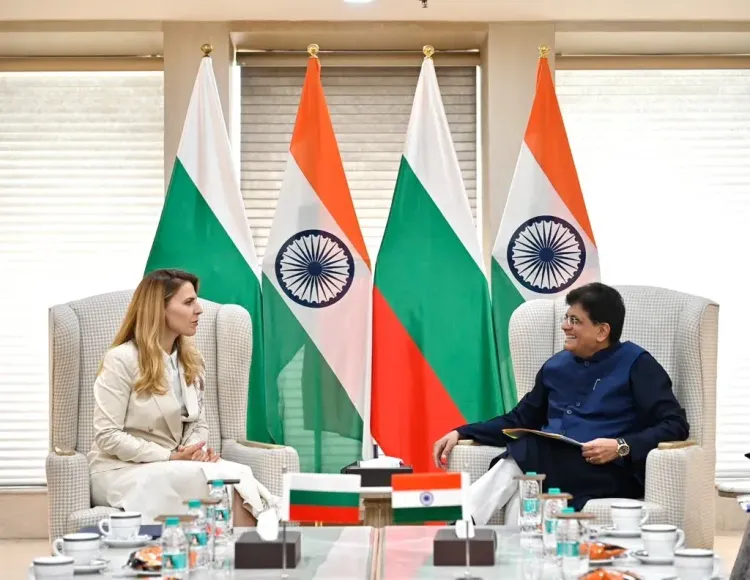
Commerce Minister Piyush Goyal met Bulgarian Foreign Minister Dr. Velislava Petrova-Chamova on November 20, 2026, to strengthen bilateral ties rooted in a 1954 partnership, with focus on trade, investment, and economic cooperation between India and Bulgaria.
Key Takeaways
Piyush Goyal held a bilateral meeting with Bulgarian Foreign Minister Dr.
Velislava Petrova-Chamova on November 20, 2026 .
Discussions centred on trade, investment, and economic engagement between India and Bulgaria .
India-Bulgaria diplomatic relations were formally established in 1954 — over seven decades of bilateral ties.
India has been systematically deepening commercial engagement with smaller EU member states to diversify trade partnerships.
The India-Bulgaria Joint Commission on Economic, Scientific and Technical Cooperation is the key institutional follow-up mechanism to watch.
Potential niche areas of cooperation include pharmaceuticals, IT services, and agricultural products.
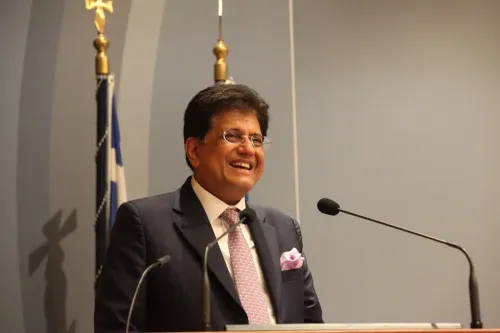
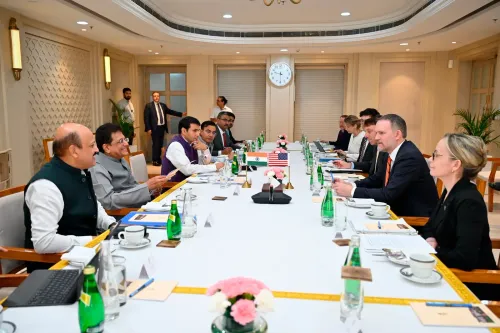
More than seven decades after India and Bulgaria first shook hands diplomatically, Union Commerce and Industry Minister Piyush Goyal sat down on Friday, November 20, 2026, with Bulgarian Foreign Minister Dr. Velislava Petrova-Chamova to chart a sharper, more commercially ambitious course for the relationship.
What the two sides put on the table
Goyal described the engagement as 'productive,' with both sides discussing ways to 'further strengthen India-Bulgaria bilateral relations and deepen cooperation across areas of mutual interest, including trade, investment, and economic engagement.' The two ministers also 'reaffirmed commitment to strengthening the longstanding friendship between India and Bulgaria and exploring new avenues of partnership.'
The meeting underlines a steady Indian push to deepen commercial footprints across smaller Eastern European economies — markets that sit squarely inside the European Union's single-market framework and therefore offer a gateway to that broader bloc.
Seventy-two years of diplomatic history, and where it goes next
Formal diplomatic ties between India and Bulgaria date to 1954 — a relationship that survived the Cold War's shifting alignments and Bulgaria's post-1989 transition to democracy and EU membership. Despite that history, the commercial dimension has remained modest relative to what complementarities in pharmaceuticals, IT services, and agricultural products could theoretically support.
The India-Bulgaria Joint Commission on Economic, Scientific and Technical Cooperation is the established institutional channel for follow-through on ministerial-level signals like Friday's meeting — and its convening will be one measure of whether this engagement produces concrete momentum or remains a diplomatic courtesty.
India's Eastern Europe play
Goyal's meeting with the Bulgarian foreign minister fits a recognisable pattern: India has worked methodically to diversify trade partnerships within the EU by cultivating bilateral relationships with mid-sized and smaller member states rather than waiting for a full India-EU Free Trade Agreement to unlock access. Each such meeting seeds the ground for exporter communities and investors on both sides who are watching for signals from the top.
For Indian pharmaceutical companies seeking European distribution footholds, and for Bulgarian firms eyeing India's technology and digital services market, a renewed ministerial push is the kind of political cover that gets deal rooms moving.
The flags are raised — now watch the joint commission for the real scorecard.
Point of View
The diplomatic optics carry weight beyond trade: they signal India's intent to be taken seriously as a partner across Europe's full geography, not just its major economies. The real test will come at the Joint Commission level, where rhetoric turns into working groups, timelines, and measurable trade targets. If that machinery activates within months, Friday's meeting will count as more than a photo opportunity.
NationPress
20 Nov 2026
Frequently Asked Questions
What did Piyush Goyal discuss with the Bulgarian Foreign Minister?
Piyush Goyal met Bulgarian Foreign Minister Dr. Velislava Petrova-Chamova on November 20, 2026, to discuss strengthening India-Bulgaria bilateral relations, with a focus on trade, investment, and broader economic cooperation.
When did India and Bulgaria establish diplomatic relations?
India and Bulgaria formally established diplomatic relations in 1954 , making it a partnership of over seven decades.
Why is India engaging with smaller EU member states like Bulgaria?
India has been methodically deepening ties with smaller EU economies as part of a strategy to diversify trade partnerships and gain broader access to the EU single market, even as a comprehensive India-EU Free Trade Agreement remains under negotiation.
What sectors could benefit from stronger India-Bulgaria ties?
Key sectors with identified complementarities include pharmaceuticals, IT services, and agricultural products, where Indian and Bulgarian capabilities are seen as mutually reinforcing.
What is the India-Bulgaria Joint Commission and why does it matter?
The India-Bulgaria Joint Commission on Economic, Scientific and Technical Cooperation is the institutional mechanism for translating ministerial-level meetings into concrete bilateral projects; its convening after this meeting will be a key indicator of follow-through.