Piyush Goyal meets Nokia CEO in Helsinki to boost India manufacturing
Synopsis
Commerce Minister Piyush Goyal met Nokia CEO Justin Hotard in Helsinki on 17 July 2026, pressing the Finnish telecom giant to expand manufacturing, boost exports, deepen R&D, and build trusted supply chains in India under the Make in India framework.
Key Takeaways
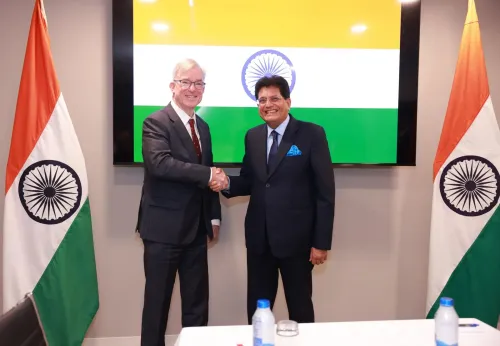
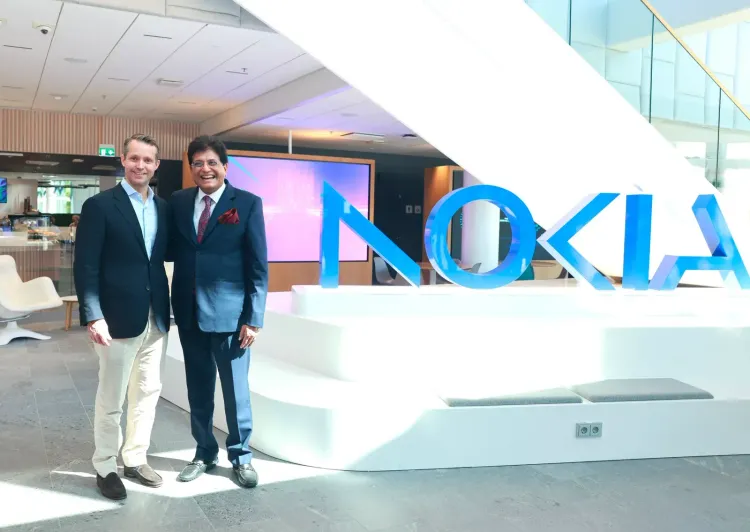
Union Commerce Minister Piyush Goyal held a bilateral meeting with Nokia Corporation President and CEO Justin Hotard in Helsinki on 17 July 2026 .
Discussions focused on expanding Nokia's manufacturing footprint in India , scaling up exports from India-based facilities, and increasing R&D investment in the country.
Goyal placed strong emphasis on telecom network security and building 'resilient, trusted supply chains.' The minister invited Nokia to leverage India's engineering talent , growing telecom market, and the Make in India ecosystem.
The meeting aligns with India's PLI scheme for telecom products (notified 2021) and the broader Atmanirbhar Bharat push to diversify telecom supply chains.
Follow-up announcements on new Nokia facilities or PLI-linked investments are expected to be watched closely.
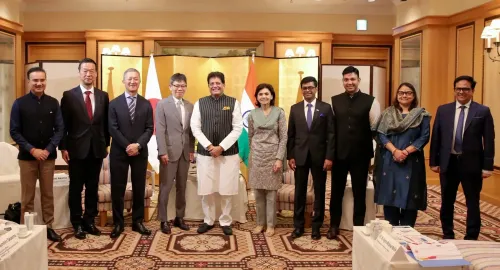
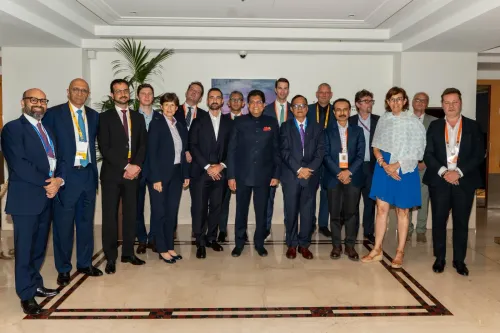
Union Commerce and Industry Minister Piyush Goyal met Nokia Corporation President and CEO Justin Hotard and the company's senior leadership in Helsinki, Finland, on 17 July 2026, in a meeting focused on deepening Nokia's industrial and research presence in India.
Context
Minister Goyal described the engagement as 'productive', with discussions centred on three pillars: expanding Nokia's manufacturing footprint in India, scaling up exports from India-based facilities, and increasing research and development investment in the country. He also placed strong emphasis on telecom network security and building 'resilient, trusted supply chains' — language that signals India's continued push to ensure its next-generation networks rely on vetted, non-adversarial vendors.
Goyal invited Nokia to tap into India's engineering talent pool and its growing telecom market, framing the engagement as an opportunity to strengthen the broader India-Finland innovation partnership.
Policy Backdrop
The meeting sits within a well-established policy architecture. The Make in India initiative, launched in September 2014, has been the centrepiece of India's effort to attract foreign manufacturers to set up domestic production and reduce import dependence. The Production Linked Incentive (PLI) scheme for telecom and networking products, notified in 2021, specifically targets companies like Nokia by offering financial incentives tied to incremental domestic production and exports.
Nokia is a Finnish multinational with prior manufacturing investments in India and a long history in the country's telecom infrastructure build-out, including participation in 4G and 5G network rollouts. Finland and India have maintained bilateral economic cooperation ties through the India-Finland Joint Commission on Economic Cooperation, which has met periodically since the 1990s to advance trade and technology collaboration.
India's broader strategic posture has involved diversifying telecom supply chains away from dependence on any single country, while actively courting Nordic and European technology firms seen as trusted partners. This approach is consistent with the Atmanirbhar Bharat (self-reliant India) framework, which seeks to build domestic capability while integrating with allied global supply chains.
Stakeholders and Impact
The primary beneficiaries of a deeper Nokia manufacturing and R&D presence would be Indian telecom equipment manufacturers, electronics exporters, and the country's large engineering workforce. An expanded Nokia facility could generate skilled employment and anchor supplier ecosystems around it. For Nokia, India represents one of the world's fastest-growing telecom markets, offering both domestic demand and a cost-competitive export base.
The emphasis on telecom network security is also significant for Indian mobile operators and government agencies deploying critical communications infrastructure. Trusted-vendor frameworks have become a central concern globally as nations upgrade to 5G, and India's push to embed security considerations into supply chain partnerships reflects that trend.
What's Next
Concrete follow-up will be watched closely — including any announcements of new Nokia manufacturing facilities, PLI-linked investment commitments, or expanded R&D centre plans in India. The India-Finland bilateral relationship and India-EU digital partnership forums provide natural venues where outcomes of this Helsinki engagement could be formalised. Minister Goyal's outreach to a major European telecom equipment maker during what appears to be a broader European visit underscores New Delhi's intent to diversify and secure its technology partnerships ahead of large-scale 5G and future network deployments.
Point of View
The minister is signalling that commercial and strategic considerations are now inseparable in India's technology diplomacy. Nokia, with its existing India footprint and 5G credentials, is a natural fit for PLI-linked manufacturing scale-up. The visit reinforces a pattern of senior ministerial outreach to global tech majors that has become a hallmark of India's industrial diplomacy under the current government.
NationPress
16 Oct 2026
Frequently Asked Questions
Why did Piyush Goyal meet Nokia CEO Justin Hotard in Helsinki?
Minister Goyal met Nokia CEO Justin Hotard in Helsinki on 17 July 2026 to discuss expanding Nokia's manufacturing operations in India, scaling up exports from India-based facilities, and deepening R&D investment — all aligned with the Make in India initiative.
What is Nokia's current presence in India?
Nokia is a Finnish telecom infrastructure company with existing manufacturing investments in India and a history of supplying equipment for the country's 4G and 5G network rollouts.
What is the PLI scheme for telecom products?
The Production Linked Incentive scheme for telecom and networking products was notified in 2021 to incentivise domestic manufacturing of telecom equipment and reduce India's import dependence by offering financial benefits tied to incremental production and exports.
What did Goyal mean by 'trusted supply chains' in the Nokia meeting?
The reference to trusted supply chains reflects India's policy of ensuring its telecom networks — especially 5G — are built using equipment from vendors considered secure and non-adversarial, a framework that explicitly favours partners from allied nations including Finland.
What is the India-Finland bilateral relationship in technology?
India and Finland have maintained economic and technology cooperation through the India-Finland Joint Commission on Economic Cooperation since the 1990s, with Nokia being a central player in ICT and telecom collaboration between the two countries.