Piyush Goyal pays tribute to Rajarshi Shahu Maharaj on Jayanti
Synopsis
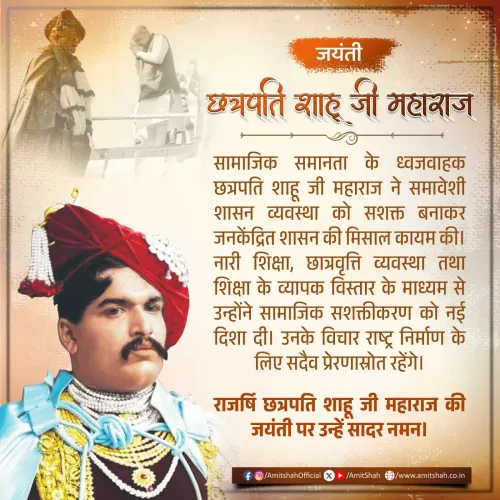
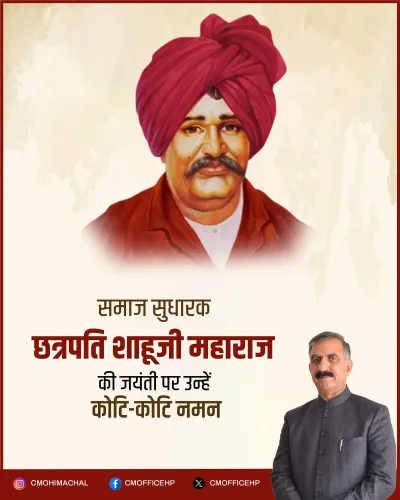
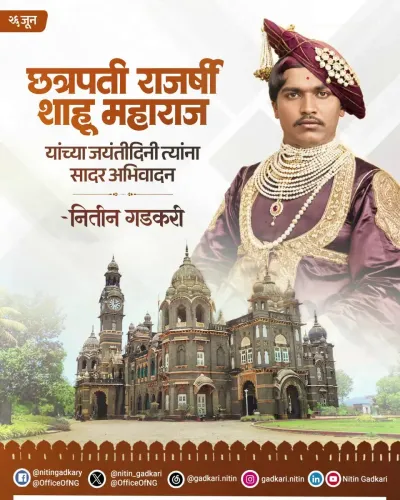
Union Minister Piyush Goyal on 26 June 2026 paid tribute to Rajarshi Chhatrapati Shahu Maharaj on Shahu Jayanti, honouring the Kolhapur ruler's legacy of anti-caste reform and his landmark 1902 reservation order for backward classes.
Key Takeaways
Union Commerce and Industry Minister Piyush Goyal posted a tribute to Rajarshi Chhatrapati Shahu Maharaj on his birth anniversary, 26 June 2026 .
Goyal described Shahu Maharaj as a 'people's welfare king' who dedicated his life to eliminating caste discrimination and untouchability.
Shahu Maharaj ruled the Kolhapur princely state from 1894 to 1922 and is a foundational figure in India's social-justice tradition.
His 1902 royal decree reserved 50 per cent of administrative posts and educational seats for backward classes — an early model for India's constitutional reservation framework.
The tribute is part of a wider BJP effort to engage Maharashtra's OBC and Maratha communities through historical reform icons.
Political leaders across parties routinely mark Shahu Jayanti , reflecting the enduring electoral and symbolic significance of the reformer-king's legacy.
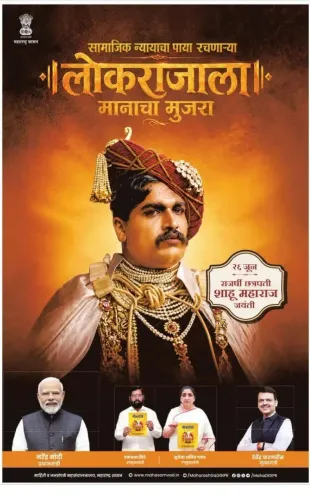
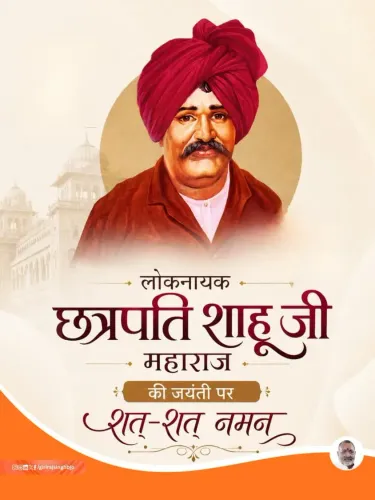
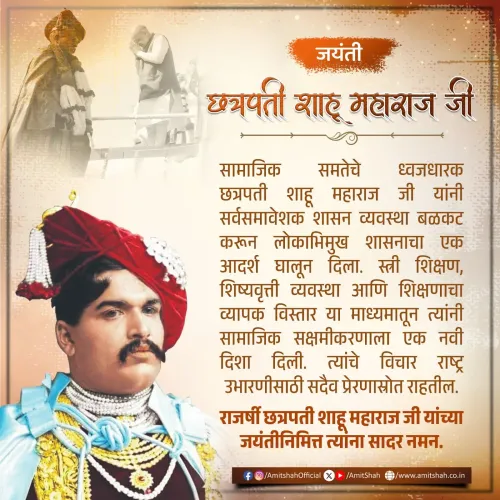
Union Commerce and Industry Minister Piyush Goyal on Friday, 26 June 2026, paid tribute to Rajarshi Chhatrapati Shahu Maharaj on the reformer-king's birth anniversary, honouring his lifelong work to eradicate caste discrimination and untouchability from Indian society.
In his post on X, Goyal offered a humble salute — 'विनम्र अभिवादन' (a humble salute) — to the ruler he described as a 'people's welfare king' (लोककल्याणकारी राजे) who dedicated his life to eliminating caste divisions and untouchability, and who charted a new direction for social transformation through his commitment to social justice and educational reform.
Context
Rajarshi Chhatrapati Shahu Maharaj was the ruler of the Kolhapur princely state from 1894 to 1922. He is regarded as a pioneering architect of social reform in pre-independence India, known for his personal campaigns against untouchability and for opening temples, wells, and public spaces to all communities irrespective of caste.
His 26 June birth anniversary is observed annually across Maharashtra and by communities nationwide as Shahu Jayanti, with political leaders and civil society groups marking the occasion with tributes and public programmes.
Policy Backdrop
Shahu Maharaj's most consequential policy act was a 1902 royal decree that reserved 50 per cent of administrative posts and educational seats in Kolhapur for backward classes — one of the earliest formal reservation orders in the subcontinent. This measure is widely cited as a precursor to the constitutional reservation framework that India adopted in 1950.
He was also a patron of Dr B.R. Ambedkar, funding the young scholar's education abroad and providing crucial early support for the Dalit rights movement. His legacy thus spans both OBC reservations and the broader anti-untouchability struggle that shaped modern India's social-justice architecture.
Stakeholders and Impact
Tributes to Shahu Maharaj carry particular resonance for OBC and Maratha communities in Maharashtra, as well as for backward-class students and social-justice advocates across the country. Political leaders from all major national parties routinely mark Shahu Jayanti, signalling alignment with the values of affirmative action and educational access.
For the BJP, such messaging forms part of a broader outreach to Maharashtra's OBC and Maratha voter base, particularly at a time when debates around expanding educational reservations and backward-class welfare remain active in public discourse. Goyal, as Leader of the House in the Rajya Sabha, lends the tribute additional institutional weight.
What's Next
State and central government events tied to Shahu Jayanti 2026 are expected to include cultural programmes and possibly scholarship or welfare announcements targeting backward-class students. Any parliamentary references to backward-class education schemes in the upcoming monsoon session could draw on the symbolic momentum of the anniversary.
The broader pattern of cross-party commemoration of reformers like Shahu Maharaj suggests that social-justice iconography will continue to shape political messaging in Maharashtra and at the national level ahead of future electoral cycles.
Point of View
The post signals the party's intent to claim the reformist legacy across both OBC and Dalit constituencies. As Leader of the House in the Rajya Sabha, Goyal's voice amplifies the message beyond Maharashtra, framing the BJP's affirmative-action credentials for a national audience. The timing — ahead of a monsoon parliamentary session likely to see backward-class welfare debates — gives the tribute added policy resonance.
NationPress
24 Sept 2026
Frequently Asked Questions
Who was Rajarshi Chhatrapati Shahu Maharaj?
Rajarshi Chhatrapati Shahu Maharaj was the ruler of the Kolhapur princely state from 1894 to 1922, celebrated for his campaigns against untouchability, caste discrimination, and his 1902 royal decree reserving 50 per cent of posts and educational seats for backward classes.
Why is 26 June celebrated as Shahu Jayanti?
26 June is the birth anniversary of Rajarshi Chhatrapati Shahu Maharaj and is observed as Shahu Jayanti across Maharashtra and by communities nationwide to honour his legacy of social reform and educational upliftment.
What was Shahu Maharaj's 1902 reservation order?
In 1902, Shahu Maharaj issued a royal decree in Kolhapur reserving 50 per cent of administrative posts and educational seats for backward classes, making it one of the earliest formal reservation orders in the subcontinent and a forerunner to India's constitutional reservation framework.
Why did Piyush Goyal pay tribute to Shahu Maharaj?
Union Minister Piyush Goyal paid tribute on 26 June 2026 to mark Shahu Jayanti, honouring the reformer-king's legacy of social justice, anti-caste reform, and educational access for backward communities.
What is the connection between Shahu Maharaj and Dr B.R. Ambedkar?
Shahu Maharaj was a patron of Dr B.R. Ambedkar, funding the young scholar's overseas education and providing early support for the Dalit rights movement, linking the two icons of India's social-justice tradition.