Gudalur Forest Division steps up monsoon wildlife vigil in Nilgiris
Synopsis
As the southwest monsoon intensifies, Tamil Nadu's Gudalur Forest Division has deployed thermal drones, 40 community monitors, and additional patrol vehicles to prevent elephant incursions into Nilgiris villages — a response sharpened by a fatal elephant attack on a 60-year-old farmer in Erode's Sathyamangalam Tiger Reserve. The deployment marks a notable technological upgrade in how forest authorities are managing one of India's most persistent human-wildlife conflict zones.
Key Takeaways
The Gudalur Forest Division has intensified monsoon surveillance across conflict-prone villages in Nilgiris district, Tamil Nadu .
40 local youths have been engaged to monitor elephant movements and alert communities in real time.
Three additional patrol vehicles from Mudumalai have been deployed for elephant-driving and emergency response.
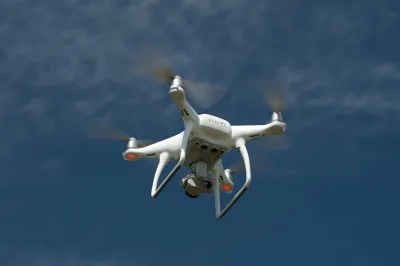
Thermal drones are being used for night and early-morning wildlife surveillance across multiple forest ranges.
Kalan , a 60-year-old farmer from Ramarana village , was killed in a reported elephant attack near his cattle shed in Erode district's Sathyamangalam Tiger Reserve .
Residents along forest fringes have been advised to avoid late-night and early-morning travel during the monsoon season.
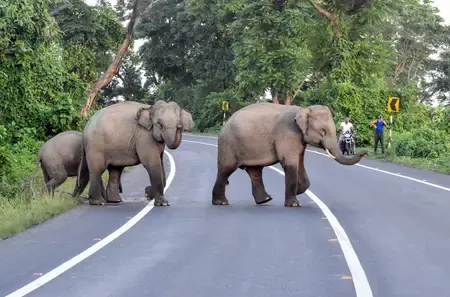
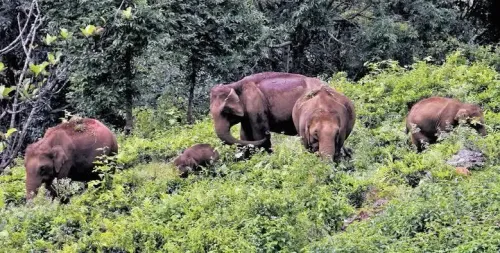
The Gudalur Forest Division in Tamil Nadu's Nilgiris district has intensified surveillance and conflict-prevention operations ahead of the southwest monsoon, deploying thermal drones, additional patrol vehicles, and community monitors to curb human-wildlife conflict in forest-fringe villages. The measures come as wildlife movement — particularly by wild elephants — typically rises sharply during the rainy season across western Tamil Nadu.
Key Deployments on the Ground
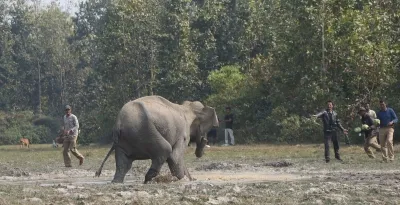
The Forest Department has engaged 40 local youths from conflict-prone villages to assist field personnel in tracking elephant movements and issuing early warnings to nearby communities. These community monitors are working alongside forest officials to prevent elephants from straying into residential areas.
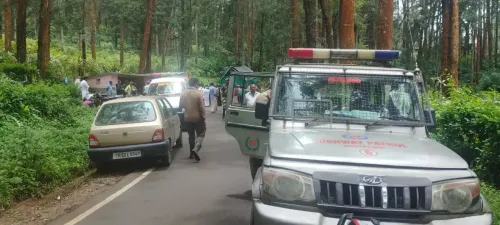
Three additional patrol vehicles have been brought in from Mudumalai to bolster elephant-driving operations and emergency response capacity in high-risk zones. Officials say the expanded fleet will allow teams to reach conflict sites significantly faster when animals are spotted near settlements.
Thermal Drones and Night Surveillance
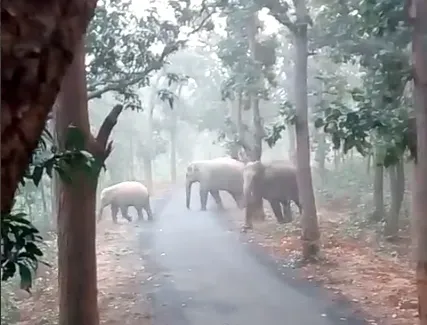
Thermal drones are being deployed extensively across forest ranges to monitor wildlife movement, with a focus on night and early morning hours — the period when elephant activity is at its peak. Data collected through drone surveillance is being used in real time to alert villages whenever elephants or other large animals are detected in proximity to human habitations.
The Forest Department has also advised residents living along forest fringes to avoid unnecessary travel during late-night and early-morning hours and to stay alert throughout the monsoon season.
Fatal Elephant Attack in Erode Underlines the Stakes
The urgency of these measures is underscored by a recent fatality in Erode district. Kalan, a 60-year-old farmer from Ramarana village under the Thalamalai forest range of the Sathyamangalam Tiger Reserve, lost his life after reportedly encountering a wild elephant near his cattle shed late at night. According to forest officials, the man is believed to have come face-to-face with the animal in poor visibility conditions, after which the elephant reportedly attacked him before moving away. His body was recovered and sent to the Government Hospital in Sathyamangalam for post-mortem examination.
A Recurring Challenge for Forest-Fringe Communities
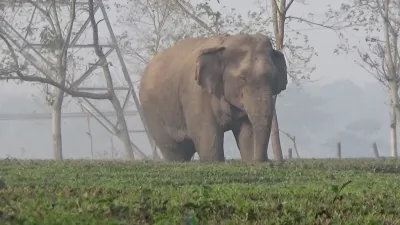
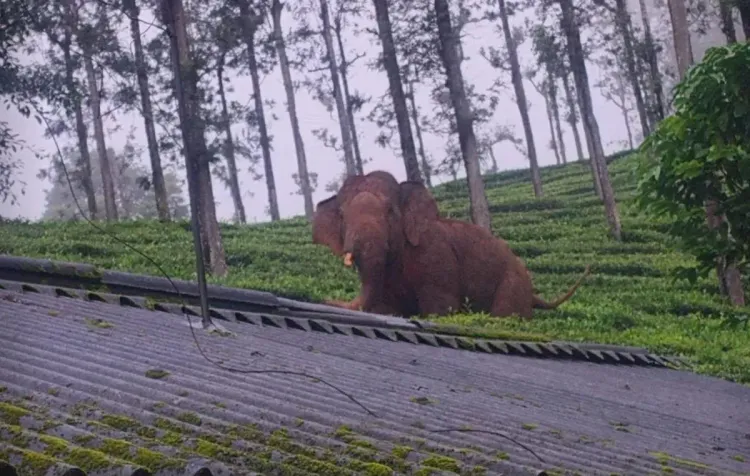
Human-wildlife conflict in the Nilgiris and adjoining districts is a chronic, seasonal problem that intensifies each monsoon as animals venture deeper into human-inhabited areas in search of food and water. This is not an isolated response — the Gudalur division has periodically scaled up operations during the monsoon in previous years, though the current deployment of thermal drones represents a technological step-up in monitoring capability.
The Erode fatality has renewed focus on the adequacy of early-warning infrastructure for the hundreds of families living along the forest boundary. With the southwest monsoon set to strengthen in the coming weeks, forest authorities are expected to maintain — and potentially expand — the current level of vigilance across the region.
Point of View
But technology alone does not resolve the structural tension at the heart of human-wildlife conflict in the Nilgiris — shrinking buffer zones, encroachment on wildlife corridors, and inadequate compensation for victims. The Erode fatality is a reminder that early-warning systems are only as effective as the last-mile response they trigger. The real question is whether the Forest Department has the personnel and resources to act on drone alerts within the narrow window that separates a sighting from a casualty. Seasonal intensification of monitoring is welcome; what the region needs is a year-round conflict-mitigation framework that treats affected communities as partners rather than passive recipients of advisories.
NationPress
21 Oct 2026
Frequently Asked Questions
Why has the Gudalur Forest Division intensified wildlife surveillance?
The division has stepped up operations ahead of the southwest monsoon, when elephant and wildlife movement into human settlements typically increases in the Nilgiris district. The measures aim to prevent human-wildlife conflict through early detection and rapid response.
What resources have been deployed for monsoon wildlife monitoring in Gudalur?
The Forest Department has engaged 40 local youths as community monitors, brought in three additional patrol vehicles from Mudumalai, and deployed thermal drones across forest ranges for night and early-morning surveillance.
Who was killed in the elephant attack in Erode district?
Kalan, a 60-year-old farmer from Ramarana village under the Thalamalai forest range of the Sathyamangalam Tiger Reserve, was reportedly killed after encountering a wild elephant near his cattle shed at night. His body was sent to the Government Hospital in Sathyamangalam for post-mortem examination.
How are thermal drones being used to prevent human-wildlife conflict?
Thermal drones are deployed across forest ranges during peak elephant activity hours — night and early morning — to detect wildlife movement. When elephants or large animals are spotted near settlements, the information is used to immediately alert nearby villages.
What precautions have authorities advised for residents near forests?
The Forest Department has advised residents living along forest fringes to avoid unnecessary travel during late-night and early-morning hours and to remain vigilant throughout the monsoon season, when wildlife intrusion risk is at its highest.