Did the Gujarat Assembly Just Pass the Shops and Establishments Amendment Bill?
Synopsis
The recent passage of the Gujarat Shops and Establishments Amendment Bill signifies a substantial change in labor regulations, aimed at accommodating the evolving economic landscape while prioritizing worker welfare. With increased working hours and revised provisions for women’s employment, this legislation marks a pivotal development in Gujarat's labor laws.
Key Takeaways
Threshold raised : Applicability now for establishments with 20+ workers.
Increased working hours : Daily limit raised from 9 to 10 hours.
Women’s employment provisions : Enhanced safety measures for women working night shifts.
Overtime limits expanded : Maximum overtime increased to 144 hours per quarter.
Support for small businesses : Compliance eased for smaller establishments.
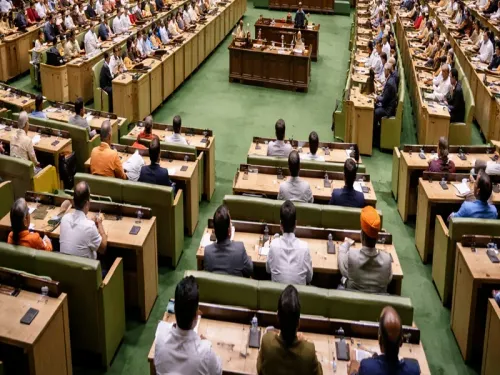
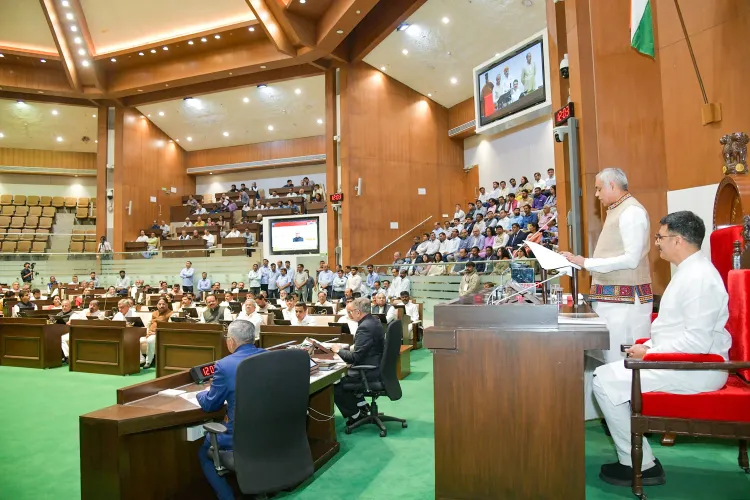
Gandhinagar, Feb 17 (NationPress) The Gujarat Legislative Assembly has unanimously approved the Gujarat Shops and Establishments (Regulation of Employment and Conditions of Service) (Amendment) Bill, 2026, which raises the applicability threshold and modifies provisions concerning working hours and overtime.
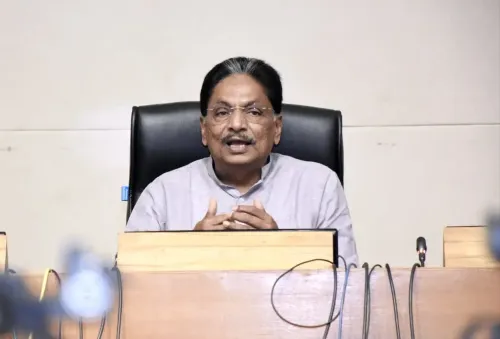
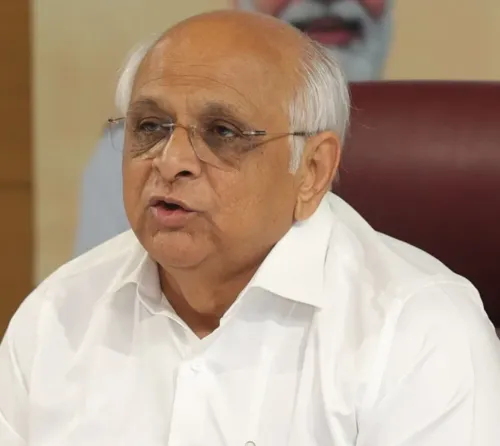
While presenting the Bill, Labour and Employment Minister Kunvarji Bavaliya highlighted that these amendments were made in response to evolving economic and social landscapes, aiming to strike a balance between the needs of workers, traders, employers, and the general public.
According to the newly revised provisions, the Act will now encompass shops and establishments that employ 20 or more workers, a change from the previous threshold of 10. Establishments with fewer than 20 workers will not be mandated to register under the Act, but they are still required to provide online notifications.
The minister stated that this adjustment will facilitate compliance for small businesses and startups. Additionally, the amendment raises the daily working hours cap from nine to ten hours.
Moreover, the maximum duration of continuous work without a break has been extended from 5 to 6 hours.
The maximum limit for overtime has been increased from 125 to 144 hours per quarter. Bavaliya emphasized that extending permissible working hours is aimed at enhancing customer convenience and stimulating economic activities.
“To boost economic activity and contribute to the country’s development, the daily working hours limit has been heightened from nine hours to ten hours,” he stated.
Regarding the increased overtime limits, he noted that higher productivity will benefit establishments and improve the economic conditions of workers.
The Bill also maintains and fortifies provisions concerning women’s employment.
The minister mentioned that female workers may be allowed to work between 9 p.m. and 6 a.m., contingent on their consent and the establishment providing adequate safeguards such as restrooms, crèche facilities, separate toilets, dignity and safety measures, protections against sexual harassment, and transportation arrangements between the workplace and home.
“The State Government has instituted comprehensive provisions in the Act to uphold the dignity, security, and safety of women in the workplace,” Bavaliya asserted, adding that expanding employment opportunities will enable women to engage more fully in economic activities.
He affirmed that the amendments align with the policy of “Minimum Government and Maximum Governance” as articulated by Narendra Modi and contribute to the broader vision of Viksit Bharat@2047.
Point of View
It is crucial to recognize the implications of the Gujarat Assembly's unanimous passage of the Amendment Bill. This legislative update reflects a commitment to adapt labor laws to the modern economy while ensuring the protection and dignity of workers, particularly women. It represents a step towards enhancing economic activity in the region, aligning with national goals for development.
NationPress
30 Sept 2026
Frequently Asked Questions
What are the key changes in the Gujarat Shops and Establishments Amendment Bill?
The key changes include raising the applicability threshold from 10 to 20 workers, increasing daily working hours from 9 to 10, and extending maximum overtime limits from 125 to 144 hours per quarter.
How does this bill affect small businesses?
The bill eases compliance requirements for small traders and startups by raising the threshold for registration under the act, allowing many smaller establishments to operate without the burden of mandatory registration.
What provisions are included for women workers?
The bill retains and strengthens provisions concerning women's employment, allowing them to work night shifts if they consent, and mandates the provision of adequate safety measures at workplaces.
What is the rationale behind increasing working hours?
The increase in working hours is aimed at enhancing customer convenience and stimulating economic activity in Gujarat, reflecting the government's commitment to fostering a more dynamic economy.