Gujarat CM Bhupendra Patel warns: deliberate errors in infrastructure work won't be tolerated
Synopsis
Gujarat CM Bhupendra Patel drew a sharp line at the state's inaugural R&B Chintan Shibir: unintentional errors are forgivable, but deliberate lapses in road and infrastructure quality will not be. With the department's budget already doubled to ₹30,000 crore and a mandate to deliver 11 times more construction by 2047, the stakes — and the accountability bar — have never been higher.
Key Takeaways
Gujarat CM Bhupendra Patel inaugurated the first two-day R&B Chintan Shibir in Gandhinagar on 8 October 2026 .
Patel warned that deliberate mistakes in infrastructure works will not be tolerated; unintentional errors remain rectifiable.
The R&B Department manages 1.29 lakh km of roads, over 11,000 bridges , and covers 18,000 villages and 14,000 hamlets .
The department's budget has grown from ₹12,000 crore to ₹30,000 crore ; achieving Viksit Gujarat 2047 will require 11 times more construction than in all previous centuries.
New accountability tools include the Governance Performance Index (GPI) for officials, Performance-Based Rating for contractors, and the QCBS system for tenders.
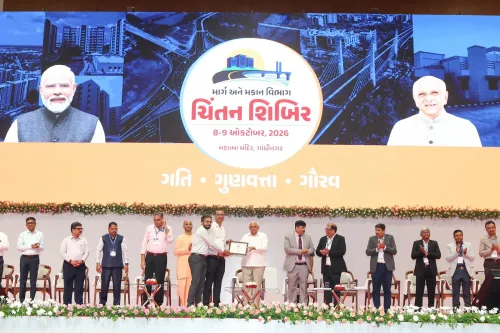
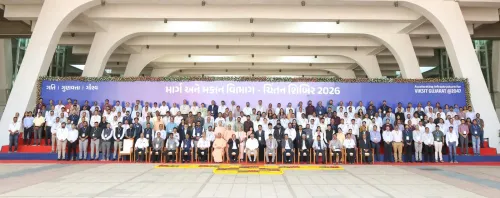
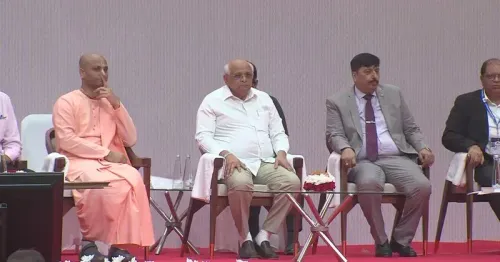
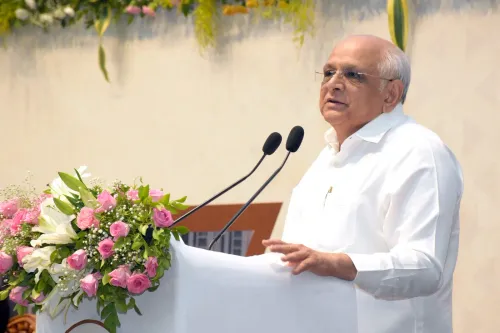
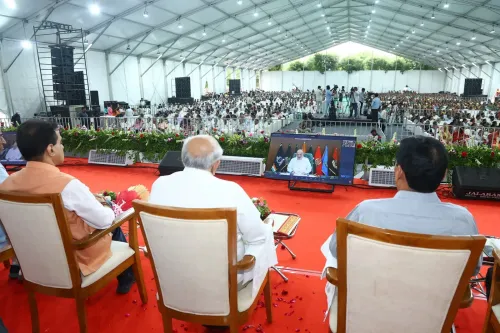
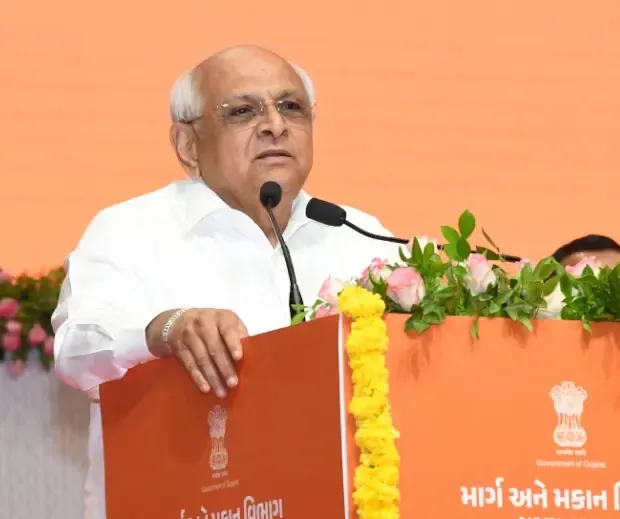
Gujarat Chief Minister Bhupendra Patel on Thursday, 8 October 2026, issued a clear warning to Roads and Buildings (R&B) Department officials in Gandhinagar: while unintentional errors can be corrected, deliberate mistakes in road and infrastructure works will face zero tolerance. He was speaking at the inauguration of the state R&B Department's first two-day Chintan Shibir, organised under the theme 'Gati-Gunvatta-Gaurav – Accelerating Infrastructure for Viksit Gujarat 2047'.
What the Chief Minister Said
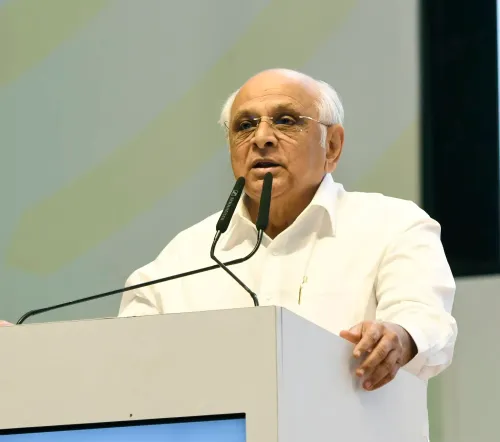
"Unintentional errors can be rectified, but deliberate mistakes will not be tolerated," Patel declared, stressing that quality must remain non-negotiable across all public works. He specifically called for rigorous adherence to tender procedures and standard operating procedures (SOPs), and emphasised the timely completion of projects through collective effort.
The Chief Minister noted that the R&B Department's work on roads, bridges, and public buildings directly affects citizens' daily lives, making accountability essential. He pointed out that citizens are quick to raise concerns when shortcomings emerge, placing a clear responsibility on officials to deliver their best at all times.
Chintan Shibir: Spirit and Purpose
Invoking the tradition of Chintan Shibirs initiated by Prime Minister Narendra Modi in 2003, Patel said: "Coming together is the beginning, thinking together is progress, and working together is success." He aligned the exercise with the philosophy of 'Main Nahin, Hum' and the personal discipline of 'Swayam thi Vyam', urging officials to use the gathering for genuine self-reflection that could bring positive change both in personal conduct and official functioning.
Patel also reiterated his resolve to keep Gujarat at the forefront of Prime Minister Modi's vision of 'Viksit Bharat @2047', calling on the department to work towards 'Viksit Gujarat for Viksit Bharat' through sustainable development.
Scale of the Department's Mandate
The R&B Department manages a road network of 1.29 lakh km, over 11,000 bridges, and government buildings across villages and cities in Gujarat. Under the 'Mukhyamantri Gram Sadak Yojana', it covers more than 18,000 villages and 14,000 hamlets.
Chief Secretary M K Das described the department as a "key driver" of Gujarat's development, noting its critical role during disasters and emergencies. He cited historical precedents for road infrastructure — from Maharaja Prithu, described in the Shrimad Bhagavata Purana as the first builder of level roads, to the Ram Setu of the Ramayana and the Grand Trunk Road built by Sher Shah Suri — to underscore infrastructure's enduring role in public service.
Budget Growth and the 2047 Target
Das revealed that the department's budget had grown from ₹12,000 crore to ₹30,000 crore in a short period. He stressed that achieving the 'Viksit Gujarat @2047' goal and building a USD 3.5 trillion economy would require 11 times more construction work over the next 20 years than had been undertaken in all previous centuries. He called for faster, stronger and higher-quality roads and demanded greater field presence and accountability among contractors.
Transparency and Accountability Measures
R&B Secretary P R Patelia said the Chintan Shibir was designed to go beyond routine departmental functioning by encouraging innovation and self-reflection. He outlined a set of reforms already introduced: a Governance Performance Index (GPI) for officials, a Performance-Based Rating system for contractors, and the Quality and Cost Based Selection (QCBS) framework to improve transparency and efficiency. Tender approval timelines have also been shortened to accelerate project implementation.
At the inaugural session, Patel released publications on Building Health Monitoring and Bridge Asset Management, and felicitated engineers and officials for outstanding performance under the GPI. The Chintan Shibir is expected to conclude with a clear Action Plan for 2047.
Point of View
But the real test lies in enforcement — Gujarat's road network is vast and contractor accountability has historically been uneven. The introduction of GPI, performance-based ratings and QCBS is a structural step forward, yet such frameworks have existed in other states without meaningfully reducing quality failures at the last mile. The 11x construction target by 2047 also raises a genuine capacity question: can oversight mechanisms scale at the same pace as contracts? The Chintan Shibir's worth will be judged not by its inaugurated publications, but by whether the Action Plan it produces contains measurable, time-bound outcomes with independent verification.
NationPress
8 Oct 2026
Frequently Asked Questions
What did Gujarat CM Bhupendra Patel say at the R&B Chintan Shibir?
Patel declared that unintentional errors in road and infrastructure works can be rectified, but deliberate mistakes will not be tolerated. He called for strict adherence to tender procedures and SOPs, and urged timely project completion through collective effort.
What is the Gujarat R&B Chintan Shibir and what is its theme?
It is the first two-day brainstorming conclave of Gujarat's Roads and Buildings Department, held on 8 October 2026 in Gandhinagar. The theme is 'Gati-Gunvatta-Gaurav – Accelerating Infrastructure for Viksit Gujarat 2047', focused on faster, safer and sustainable infrastructure delivery.
How large is Gujarat's R&B Department in terms of infrastructure managed?
The department manages a road network of 1.29 lakh km, over 11,000 bridges, and government buildings across the state. Under the Mukhyamantri Gram Sadak Yojana, it also covers more than 18,000 villages and 14,000 hamlets.
What accountability measures has the Gujarat R&B Department introduced?
The department has introduced a Governance Performance Index (GPI) for officials, a Performance-Based Rating system for contractors, and the Quality and Cost Based Selection (QCBS) framework to improve transparency. Tender approval timelines have also been shortened to speed up implementation.
What is Gujarat's infrastructure target for 2047?
Chief Secretary M K Das stated that achieving the Viksit Gujarat @2047 goal and a USD 3.5 trillion economy would require 11 times more construction over the next 20 years than was undertaken in all previous centuries. The department's budget has already grown from ₹12,000 crore to ₹30,000 crore as part of this scale-up.