Gujarat CM inaugurates NIFT's 'Chhaap' craft expo at Sabarmati
Synopsis
Gujarat's Chief Minister inaugurated the 'Chhaap Pradarshan' at Sabarmati Riverfront, Ahmedabad — a NIFT-led exhibition organised by the Union Ministry of Textiles, where students have redesigned the traditional crafts of over 92 artisans from across India into contemporary, market-ready forms.
Key Takeaways
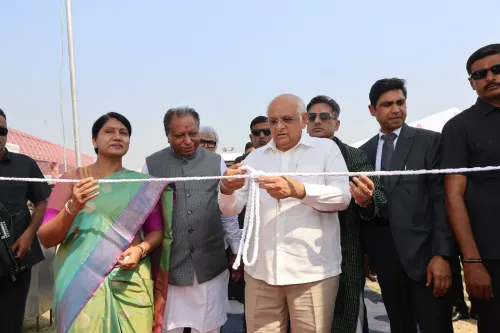
The Chief Minister of Gujarat inaugurated the 'Chhaap Pradarshan' at Sabarmati Riverfront, Ahmedabad .
The exhibition is organised by NIFT under the Union Ministry of Textiles .
More than 92 traditional artisans from across India are participating.
NIFT students have redesigned artisans' traditional crafts into contemporary, visually compelling formats.
The event is part of a broader national effort to modernise handloom and handicraft value chains while preserving traditional techniques.
The Sabarmati Riverfront serves as a high-visibility civic venue, reinforcing Gujarat's role as a hub for textile promotion.
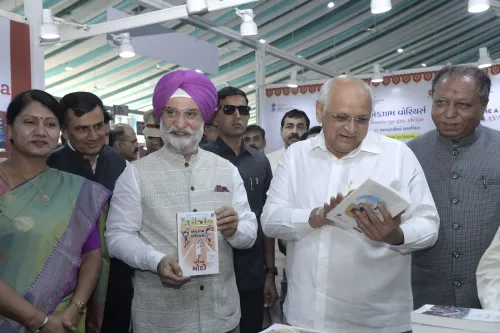
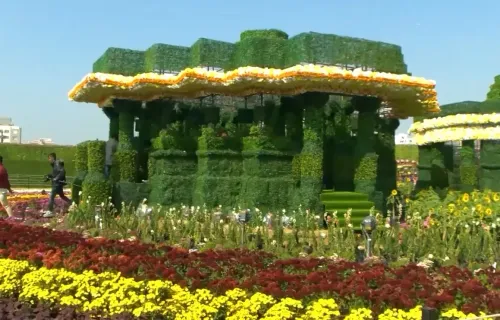
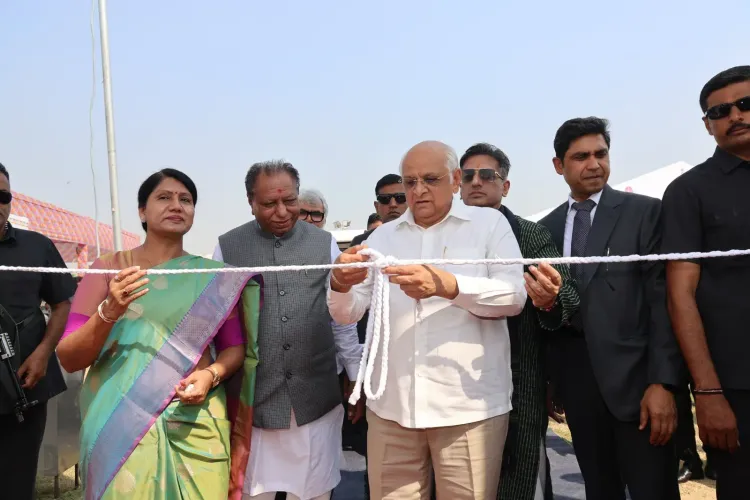
Where the Sabarmati River meets the city skyline, over 92 traditional artisans from across India found a new stage — and it was the Gujarat Chief Minister who raised the curtain. The Chief Minister's Office of Gujarat announced on Saturday, 25 October 2026, that the Chief Minister inaugurated the 'Chhaap Pradarshan' ('Chhaap Exhibition') at the Sabarmati Riverfront, Ahmedabad, an event organised by the National Institute of Fashion Technology (NIFT) under the aegis of the Union Ministry of Textiles.
What 'Chhaap' puts on display — and why it matters
The exhibition is not a conventional craft bazaar. NIFT students have taken the raw vocabulary of traditional Indian craft — block prints, weaves, embroideries — and reimagined it through contemporary design, presenting the work in what the CMO described as an 'akarshak svarupe' (attractive, modern form). The result is a live dialogue between centuries-old technique and twenty-first-century aesthetics, staged at one of Gujarat's most prominent civic venues.
The Sabarmati Riverfront, developed in phases from the early 2010s as Ahmedabad's signature urban-renewal project, has become a preferred backdrop for exactly this kind of cultural-economic showcase — visible, accessible, and symbolically loaded as a space where old city and new ambition meet.
92-plus artisans, one design institute, a national mandate
The Union Ministry of Textiles organised 'Chhaap' as part of a long-running national push to modernise India's handloom and handicraft value chains without erasing their identity. NIFT, established in 1986 as an autonomous institute under the same ministry, was built precisely for this bridge-building role — training designers who can speak both the language of the loom and the language of the market.
With artisans drawn from across the country, the exhibition concentrates regional craft traditions — block printing, hand-weaving, textile embroidery — into a single curated space, giving craftspeople direct exposure to design thinking and, crucially, to urban consumers and buyers who might otherwise never encounter their work.
Gujarat's place in India's textile story
Gujarat has long anchored India's textile economy, from the mill towns of Ahmedabad's industrial past to the globally recognised crafts of Kutch and Patan. Hosting 'Chhaap' at the Sabarmati Riverfront is consistent with the state's pattern of positioning itself as a natural hub for textile promotion — blending heritage craft, design education, and high-footfall public infrastructure into a single policy pitch.
The Chief Minister's personal presence at the inauguration signals that the event carries weight beyond the ceremonial — it is a statement about where Gujarat sees craft, design, and the creative economy fitting into its broader development narrative.
When a Chief Minister inaugurates an artisan exhibition, it is also an argument: that traditional craft, given the right design partnership and the right platform, is not a relic to be preserved but an industry to be grown.
Point of View
Rather than a trade fair ground, is a deliberate act of place-making: it embeds craft promotion into the state's urban identity. The Chief Minister's personal inauguration elevates what could have been a departmental event into a political signal about the creative economy's place in Gujarat's growth story. Whether the artisans who exhibit here gain durable market access — not just a weekend of visibility — will be the real measure of the initiative's impact.
NationPress
24 Oct 2026
Frequently Asked Questions
What is the 'Chhaap Pradarshan' exhibition in Ahmedabad?
'Chhaap Pradarshan' is a textile and handicraft exhibition organised by NIFT and the Union Ministry of Textiles at the Sabarmati Riverfront in Ahmedabad, where traditional crafts of over 92 artisans from across India have been reimagined by NIFT students into contemporary designs.
Who inaugurated the Chhaap exhibition at Sabarmati Riverfront?
The Chief Minister of Gujarat inaugurated the 'Chhaap Pradarshan' exhibition at the Sabarmati Riverfront, Ahmedabad, as announced by the Chief Minister's Office of Gujarat.
What is NIFT and what is its role in this exhibition?
The National Institute of Fashion Technology (NIFT) is an autonomous institute established in 1986 under India's Ministry of Textiles. For 'Chhaap', NIFT students redesigned traditional crafts submitted by artisans from across the country, giving them a modern, market-ready presentation.
How many artisans are part of the Chhaap exhibition?
More than 92 traditional artisans from across India are participating in the 'Chhaap Pradarshan' exhibition, representing a wide range of regional craft traditions.
Why is the Sabarmati Riverfront used for textile exhibitions in Gujarat?
The Sabarmati Riverfront is a major urban public space in Ahmedabad developed from the early 2010s, offering high footfall and civic visibility, making it a preferred venue for cultural, economic, and promotional events in Gujarat.