Gujarat CM Patel greets nation on Samvidhan Gaurav Diwas
Synopsis
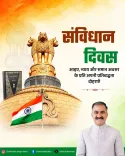
Gujarat Chief Minister Bhupendra Patel greeted Indians on Samvidhan Gaurav Diwas, calling the Constitution the soul of the world's largest democracy. He paid homage to Dr Babasaheb Ambedkar and the Constituent Assembly and asked citizens to imbibe constitutional values in building Viksit Bharat.
Key Takeaways
Gujarat Chief Minister Bhupendra Patel greeted citizens on Samvidhan Gaurav Diwas on 26 November.
He described the Constitution as the soul of the world's largest democracy, granting equal rights, justice and dignity.
He paid homage to Bharat Ratna Dr Babasaheb Ambedkar and all members of the Constituent Assembly.
The Constituent Assembly adopted the Constitution on 26 November 1949; 26 November has been Constitution Day since 2015.
Patel asked citizens to imbibe those values and join the building of Viksit Bharat, the developed-India vision for 2047.
On 26 November, Gujarat Chief Minister Bhupendra Patel turned Constitution Day into a civic summons, greeting every Indian on Samvidhan Gaurav Diwas and placing the charter at the heart of the world's largest democracy. The Constitution, he said, is its soul — and it still promises every citizen equal rights, justice and honour.
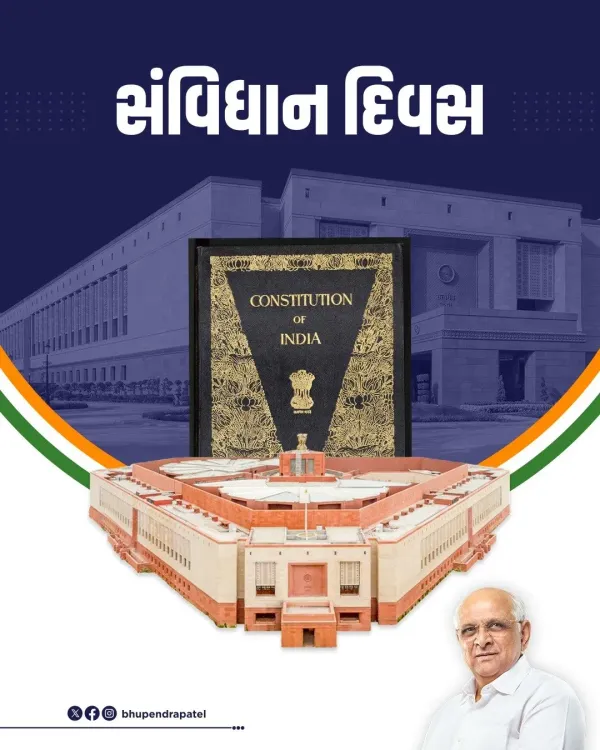
In a Gujarati message, Patel offered hearty greetings to all countrymen on Samvidhan Gaurav Diwas (Constitution Pride Day). He wrote that the document, like the soul of the world's largest democracy, gives every citizen of the country equal rights, justice and dignity.
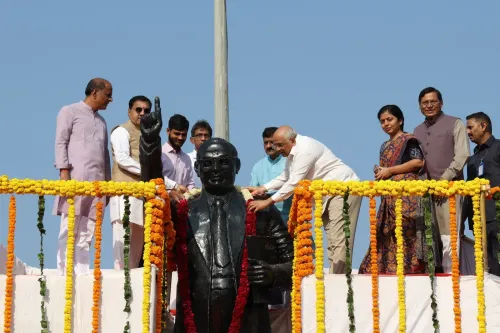
On this sacred occasion he paid a hundredfold homage — shat shat naman — to Bharat Ratna Dr Babasaheb Ambedkar, the chief architect of the Indian Constitution, and to every great personality of the Constituent Assembly. He then asked Indians to imbibe those values and take part in building a Viksit Bharat.
Ambedkar, the Drafting Committee and 26 November 1949
Dr B.R. Ambedkar chaired the Drafting Committee that shaped the text the Constituent Assembly adopted on 26 November 1949. That assembly sat from 1946 to 1949. The Republic came into force on 26 January 1950, but the adoption date is the one now observed as Constitution Day.
In 2015 the Government of India designated 26 November as Constitution Day to commemorate that adoption. Annual messages from political leaders have since become a fixture, recalling equality, justice and dignity as living promises rather than museum text.
Viksit Bharat as the next constitutional task
Patel tied those founding values to Viksit Bharat, the vision of a developed India by 2047. The close is familiar across BJP-led states: treat the Constitution as a brief for national development, not only as heritage.
Similar greetings typically follow from other chief ministers around the anniversary, often paired with awareness programmes in schools and public offices. Gujarat's note sits in that yearly pattern — homage first, then a forward ask.
The charter still names the rights. The question Patel left for the country is whether citizens will carry them into the India they are now being asked to build.
Point of View
Name equality and justice, then fold those values into the Viksit Bharat 2047 project. Patel's message fits that pattern without announcing a new scheme or a state event. It keeps the document in the political conversation as both heritage and a development brief. Matching greetings and school-level awareness drives across states are the usual next beat on this calendar date.
NationPress
26 Nov 2026
Frequently Asked Questions
What is Samvidhan Gaurav Diwas?
Samvidhan Gaurav Diwas is the observance of Constitution Day on 26 November, marking the Constituent Assembly's adoption of the Indian Constitution in 1949. Gujarat CM Bhupendra Patel used the occasion to greet citizens and hail the charter's promise of equal rights, justice and dignity.
What did Gujarat CM Bhupendra Patel say on Constitution Day?
He greeted all countrymen, called the Constitution the soul of the world's largest democracy, paid homage to Dr Babasaheb Ambedkar and the Constituent Assembly, and asked people to help build Viksit Bharat. The message was posted in Gujarati with the hashtag SamvidhanGauravDiwas.
Who is called the chief architect of the Indian Constitution?
Bharat Ratna Dr B.R. Ambedkar, who chaired the Drafting Committee of the Constituent Assembly. Patel offered him a hundredfold homage along with all members of that assembly.
When did India start observing Constitution Day?
The Government of India designated 26 November as Constitution Day in 2015 to commemorate the adoption of the Constitution on that date in 1949. The Republic itself came into force later, on 26 January 1950.
What is Viksit Bharat in Patel's Constitution Day message?
Viksit Bharat is the vision of a developed India by 2047. Patel linked it to living the Constitution's values of equality, justice and dignity rather than treating the document as heritage alone.