26/11 at 18: Fadnavis says India better equipped to hit back
Synopsis
Eighteen years after 26/11, Devendra Fadnavis used the memorial to send a pointed message: India will no longer just absorb terror strikes. Citing the Pahalgam response, the Maharashtra CM said India will enter Pakistan to avenge such attacks. He also credited Tukaram Omble's capture of Kasab with exposing Pakistan's role to the world.
Key Takeaways
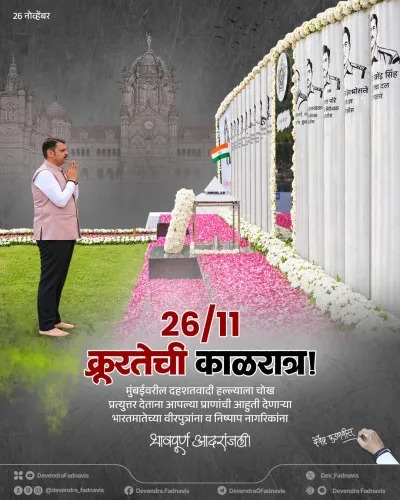
Maharashtra CM Devendra Fadnavis paid tributes on the 18th anniversary of the 26 November 2008 Mumbai attacks.
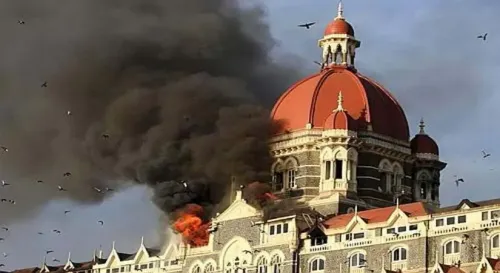
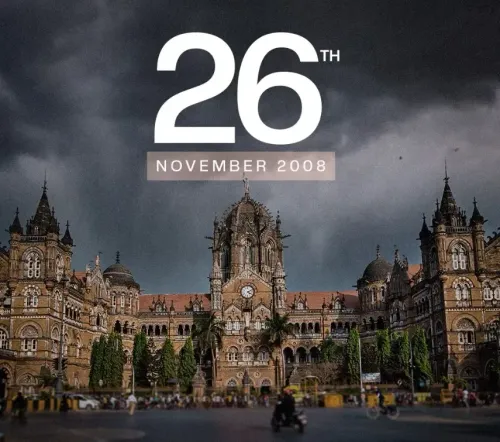
He called 26/11 an attack on India's sovereignty and the Constitution , not just on the Taj, Trident or CSMT.
Fadnavis credited ASI Tukaram Omble 's capture of Ajmal Kasab with helping India prove Pakistan's involvement.
Citing the Pahalgam attack response, he said India will enter Pakistan to avenge terror strikes.
Deputy CM Sunetra Pawar and Governor Jishnu Deo Verma also paid homage to the victims and security personnel.
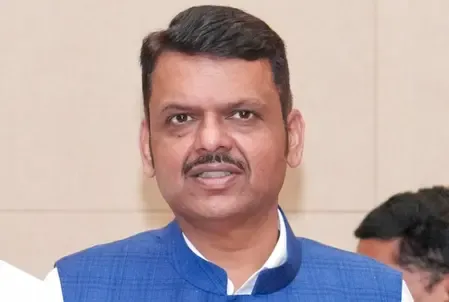
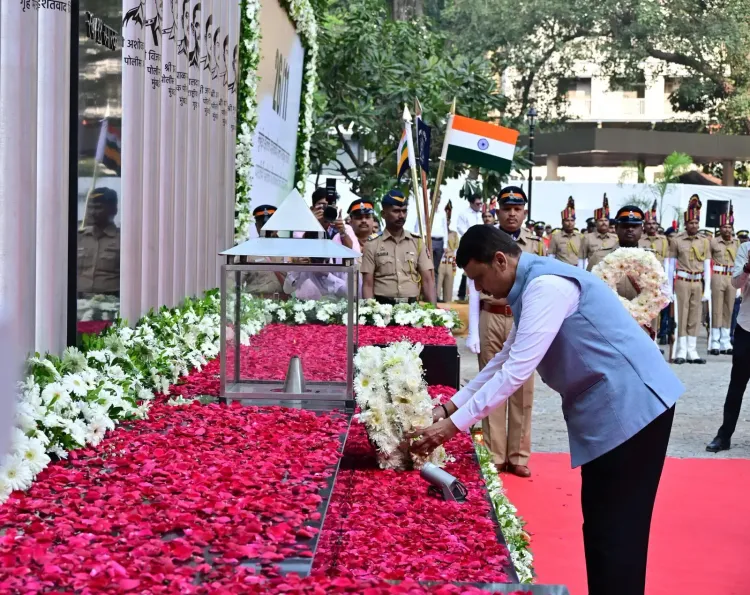
On the 18th anniversary of the 26/11 Mumbai terror attacks, Maharashtra Chief Minister Devendra Fadnavis said India is now far better equipped to deter and retaliate against cross-border terrorism. He paid tributes to the security personnel and civilians who died in the 26 November 2008 attacks at a memorial ceremony in Mumbai on Thursday.
Fadnavis also greeted citizens on Constitution Day, which falls on the same date. He framed the 2008 siege as a direct assault on the country's constitutional values.
An Attack on Sovereignty, Not Just Landmarks
Addressing the gathering, Fadnavis said the attacks went beyond targeting prominent buildings in the city. “We pay tribute today to the martyrs of the cowardly attack on Mumbai on 26/11. This attack was not on the Taj Hotel, Trident, or CSMT. It was an attack on India's sovereignty,” he said.
He added that the attackers sought to challenge India's sovereignty and strike at the Constitution of India. According to the Chief Minister, the terrorists deliberately chose crowded locations frequented by large numbers of foreign nationals. Their aim, he said, was to maximise casualties and signal to the world that they had struck India, before security forces confronted them.
Tributes to the Fallen Heroes
Fadnavis paid homage to the security personnel killed during the siege. They included senior police officers Hemant Karkare, Vijay Salaskar and Ashok Kamte, and NSG commando Sandeep Unnikrishnan.
He singled out Assistant Sub-Inspector Tukaram Omble, who confronted Ajmal Kasab armed only with a baton. Kasab was the lone terrorist captured alive. “Even as bullets struck his body, Tukaram Omble held on to Kasab without caring for his own life,” Fadnavis said.
Fadnavis said Kasab's capture allowed India to present evidence of Pakistan's involvement to the international community. “The world accepted that this attack was state-sponsored by Pakistan. We could show the world that Pakistan is a terrorist nation. That is why we can never forget this day, and we must never allow such an attack to happen again,” he said.
From 26/11 to Pahalgam: The Security Message
Fadnavis said Mumbai, Maharashtra and India had shown an unbreakable resolve. He added that major terror incidents in Mumbai and across the country have been curbed over the past 12 years, and attempted attacks have been foiled through the vigilance of the police and armed forces.
He then linked that record to India's present security doctrine, citing the country's response after the Pahalgam attack. He said India had shown its fierce resolve and made clear that it will not tolerate such strikes and will enter Pakistan to avenge them.
“Therefore, one must learn from history and look toward the future,” he said. “Societies that forget their history may have a present, but they have no future,” he remarked.
In a post on X, the Chief Minister wrote: “Humble tributes to the brave heroes who laid down their lives defending Mumbai against the 26/11 terror attacks, and to the innocent civilians who lost their lives.”
Other Leaders Pay Homage
Deputy Chief Minister Sunetra Pawar also attended the memorial ceremony. “26 November, 2008… The cowardly terrorist attack on Mumbai shook the entire nation. In this horrific attack, many innocent citizens lost their lives. Many brave soldiers, police officers and personnel made the ultimate sacrifice while fighting valiantly against the terrorists to defend the country,” she said. “Their courage, dedication to duty and sacrifice for the nation will always be remembered.”
Maharashtra Governor Jishnu Deo Verma paid tribute to the police officers, personnel and army soldiers who died while fighting the terrorists in Mumbai.
Eighteen years on, the anniversary remains both a day of remembrance and a reference point for how India's leaders describe the country's counter-terror posture.
Point of View
Drawing a direct line from 26/11 to the post-Pahalgam message that India will cross into Pakistan to retaliate. That reflects a real shift from the restraint-heavy posture of 2008, when diplomatic dossiers were India's main weapon. But his claim that major terror incidents have been curbed for 12 years sits uneasily beside Pahalgam itself. Deterrence is measured by attacks prevented, not attacks avenged. The harder accountability question is whether intelligence and coastal-security gaps exposed in 2008 have been fully closed, and anniversary speeches rarely address it.
NationPress
26 Nov 2026
Frequently Asked Questions
What did Devendra Fadnavis say on the 26/11 anniversary?
Fadnavis said India is now far better equipped to deter and retaliate against cross-border terrorism. He called the 2008 attacks an assault on India's sovereignty and the Constitution, not just on Mumbai landmarks.
Which 26/11 heroes did Fadnavis pay tribute to?
He honoured police officers Hemant Karkare, Vijay Salaskar and Ashok Kamte, and NSG commando Sandeep Unnikrishnan. He specially recalled ASI Tukaram Omble, who held on to Ajmal Kasab armed only with a baton.
Why was Ajmal Kasab's capture significant?
According to Fadnavis, Kasab's capture enabled India to present evidence of Pakistan's involvement to the international community. He said the world accepted that the attack was state-sponsored by Pakistan.
How did Fadnavis link 26/11 to the Pahalgam attack?
Fadnavis said India's response after the Pahalgam attack showed its fierce resolve. He said India made clear it will not tolerate such strikes and will enter Pakistan to avenge them.
Which other leaders paid tribute on the 26/11 anniversary?
Deputy Chief Minister Sunetra Pawar attended the memorial ceremony in Mumbai and paid tribute to the victims and security personnel. Maharashtra Governor Jishnu Deo Verma also honoured the police and army personnel who died fighting the terrorists.