CM Fadnavis pays tribute to 26/11 Mumbai heroes
Synopsis
Maharashtra Chief Minister Devendra Fadnavis offered humble tributes on the 26/11 anniversary to security personnel who died defending Mumbai and to civilians killed in the 2008 attacks, calling it a dark night of cruelty.
Key Takeaways
Maharashtra Chief Minister Devendra Fadnavis paid humble tributes on 26 November to those killed defending Mumbai in the 26/11 attacks and to innocent civilians.
In Marathi he called 26/11 the dark night of cruelty and honoured those who gave a fitting reply to the assault on the city.
The 26 November 2008 strikes hit hotels, a railway station and other Mumbai sites, killing more than 170 people.
The plot was traced to Pakistan-based Lashkar-e-Taiba, which used sea routes and local handlers.
The attacks led to the National Investigation Agency via the NIA Act, 2008, and a lasting coastal-security brief for Maharashtra.
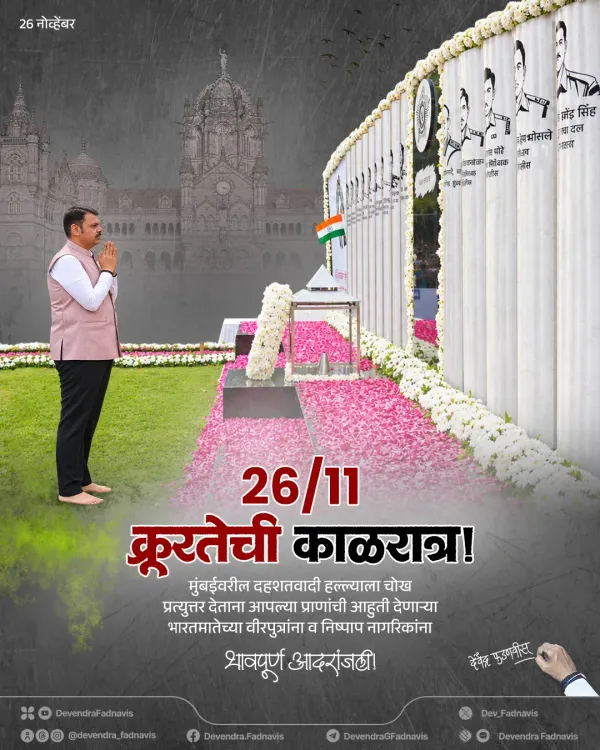
On the anniversary of the 26/11 assault, Maharashtra Chief Minister Devendra Fadnavis paid humble tributes to the security personnel who died defending Mumbai and to the civilians killed in the 2008 terror attacks. Posting on Thursday, 26 November, he remembered those who laid down their lives in India's financial capital and described the night as a dark hour of cruelty.
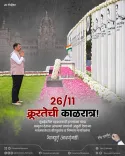
In English, Fadnavis wrote, 'Humble tributes to the brave heroes who laid down their lives defending Mumbai against the 26/11 terror attacks, and to the innocent civilians who lost their lives.' In Marathi he called the date क्रूरतेची काळरात्र (the dark night of cruelty) and offered heartfelt homage to the brave sons of Mother India who, he said, gave a fitting reply to the terrorist attack on Mumbai, and to innocent citizens.
Hotels, a station, and a city under fire
The coordinated strikes of 26 November 2008 targeted hotels, a railway station and other sites across Mumbai. More than 170 people were killed, including security personnel who fought the gunmen through a siege that stretched into the following days.
Investigators traced the plot to the Pakistan-based militant group Lashkar-e-Taiba, which used sea routes and local handlers to land a team on the city's coast. For Mumbai, already scarred by earlier bombings, 26/11 remains the deadliest single attack.
The NIA Act and a coastal security reset
The carnage forced a rewrite of India's terror architecture. Parliament created the National Investigation Agency through the NIA Act, 2008, a federal body empowered to take up terror cases across states. Maharashtra's commemorations have since paired remembrance with coastal watch and urban counter-terror drills, a standing brief for a city that can be reached from the sea.
Maharashtra's annual roll call
Leaders across parties mark 26 November with tributes to victims of cross-border terrorism. For residents, for the families of those who died, and for the forces who still patrol the waterfront, the date is a public ledger of names, not a ceremonial footnote.
Devendra Fadnavis, a senior BJP leader who has served multiple terms as Maharashtra Chief Minister, regularly issues such messages on security anniversaries. The attacks remain a reference point in India's diplomatic and security debate on Pakistan-based militant groups, including discussion of pending extradition questions tied to the case.
Each year the city lights its memorials. The test that follows is whether the watch on the water stays as sharp as the memory of those who fell.
Point of View
Not as a closed chapter but as the event that produced the NIA and a standing coastal-security brief. Fadnavis's bilingual homage follows a cross-party pattern: honour the fallen, name the cruelty, and keep Pakistan-based groups such as Lashkar-e-Taiba in the public frame. The political signal is continuity of remembrance. The policy test is whether that memory still drives urban and sea-facing defence, and whether case-related extradition questions stay on the diplomatic table.
NationPress
26 Nov 2026
Frequently Asked Questions
What did Devendra Fadnavis say on the 26/11 anniversary?
Maharashtra Chief Minister Devendra Fadnavis offered humble tributes to the brave heroes who died defending Mumbai in the 26/11 terror attacks and to innocent civilians who lost their lives. In Marathi he called 26/11 a dark night of cruelty and honoured those who gave a fitting reply to the assault.
What were the 26/11 Mumbai attacks?
The 26/11 Mumbai attacks were coordinated terrorist strikes on 26 November 2008 that targeted hotels, a railway station and other sites in Mumbai. They remain the deadliest single terror attack on India's financial capital.
Who carried out the 26/11 Mumbai terror attacks?
The attacks were planned and executed by the Pakistan-based militant group Lashkar-e-Taiba, which used sea routes and local handlers to reach Mumbai.
How many people died in the 26/11 attacks?
More than 170 people were killed, including security personnel and civilians. The siege stretched across multiple sites in Mumbai into the following days.
Why was the NIA set up after 26/11?
The 26/11 attacks led to the creation of the National Investigation Agency through the NIA Act, 2008, so a federal body could handle terror cases across states. Coastal security and urban counter-terror preparedness also became lasting priorities in Maharashtra.