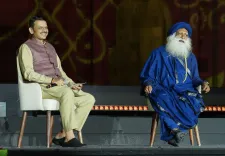
CM Fadnavis leads Global Peace Honours 2026 at Gateway of India
Synopsis
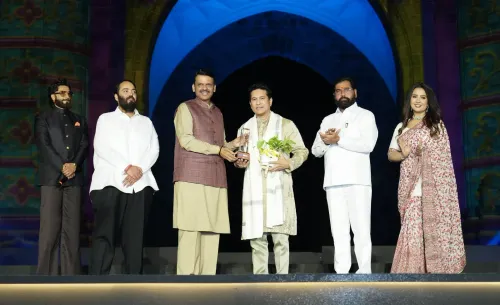
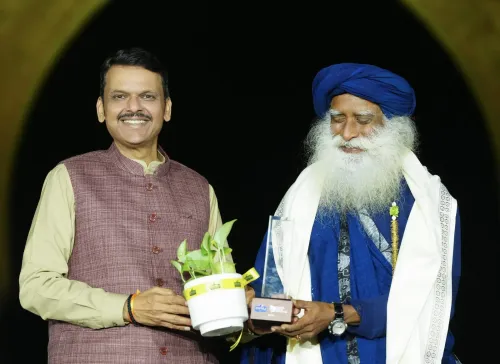
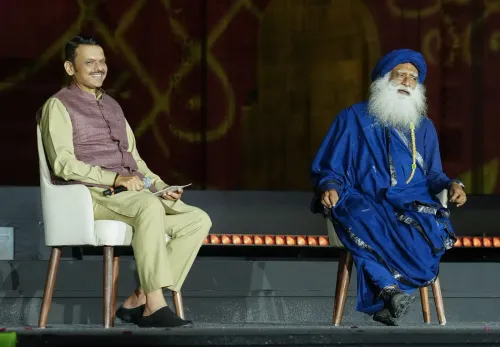
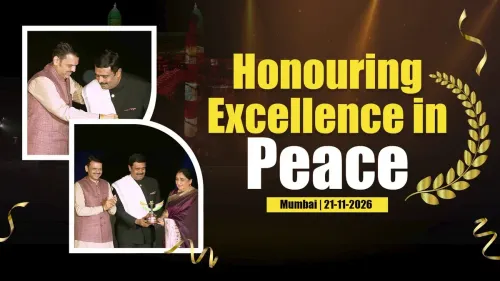
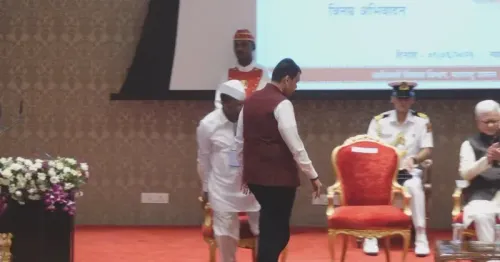
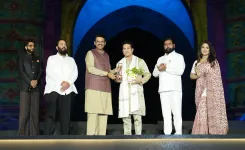
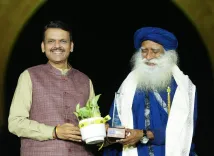
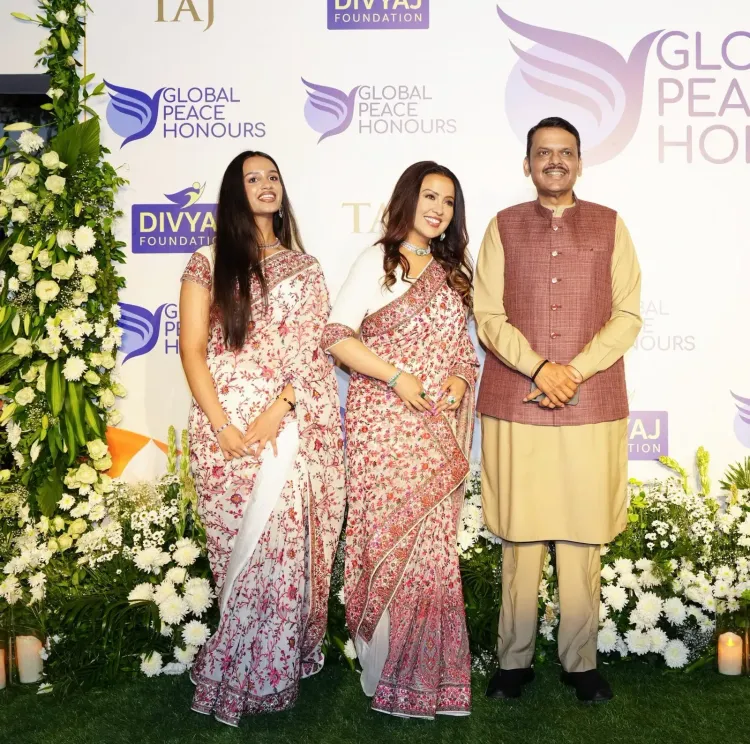
Chief Minister Devendra Fadnavis led the Global Peace Honours 2026 at the Gateway of India on 21 November, hosted by Divyaj Foundation. Deputy CMs, Sadhguru, diplomats, and families of 26/11 attack martyrs attended the solemn, symbolically charged Mumbai ceremony.
Key Takeaways
CM Devendra Fadnavis was the chief guest at Global Peace Honours 2026 organised by Divyaj Foundation at the Gateway of India, Mumbai on 21 November 2026 .
Deputy CMs Eknath Shinde and Sunetra Ajit Pawar , along with central and state ministers, attended the ceremony.
Families of the martyrs of the 26 November 2008 Mumbai attacks — which killed 166 people — were present at the event.
Padma Vibhushan Sadhguru Jaggi Vasudev and Smt.
Amruta Fadnavis participated alongside Consuls General, diplomats, business leaders, actors, and artists.
The event was held five days before the 18th anniversary of the 26/11 attacks, reinforcing Maharashtra's tradition of combining remembrance with messages of peace and resilience.
Eighteen years after terrorists tore through Mumbai's most iconic landmarks, the city gathered once again at the Gateway of India — this time not in grief alone, but in solemn, deliberate celebration of peace. Chief Minister Devendra Fadnavis was the chief guest at the 'Global Peace Honours 2026', organised by the Divyaj Foundation on the evening of 21 November 2026, with the ceremony beginning at 7:10 PM.
Who filled the Gateway of India's grounds
The gathering brought together a striking cross-section of Maharashtra's political leadership and civil society. Deputy Chief Minister Eknath Shinde and Deputy Chief Minister Sunetra Ajit Pawar were present alongside Smt. Amruta Fadnavis, ministers from both the Government of India and the Government of Maharashtra, and a contingent of Consuls General and diplomats from multiple countries.
Padma Vibhushan Sadhguru Jaggi Vasudev, the spiritual leader and founder of the Isha Foundation, lent the event its signature blend of contemplative weight and global outreach. Business leaders, actors, and artists rounded out an audience that was anything but ceremonial window-dressing.
Most poignantly, 26/11 हल्ल्यातील हुतात्म्यांचे कुटुंबीय — the families of the martyrs of the 26 November 2008 Mumbai attacks — were seated in the gathering. Their presence transformed what might otherwise have been a diplomatic function into something far more grounded: a reckoning with loss, held in the very city that bore it.
26/11's long shadow over Mumbai's peace discourse
The 2008 Mumbai attacks claimed 166 lives over four days of coordinated terror, targeting sites including the Taj Mahal Palace hotel, Chhatrapati Shivaji Maharaj Terminus, and Nariman House — all within walking distance of the Gateway of India. Every November since 2009, Maharashtra's state governments have marked the anniversary with commemorations that blend security remembrance with messages of resilience.
The choice of the Gateway of India as the venue for the Global Peace Honours is not incidental. The monument, built during the colonial era as a formal point of arrival, has in recent decades become a site of civic memory — a place where the city comes to remember, to mourn, and, occasions like this, to assert that it endures. Hosting the event just five days before the 18th anniversary of the attacks — which falls on 26 November — deepens the symbolic register considerably.
Maharashtra's tradition of cultural diplomacy around the anniversary
Maharashtra governments across administrations have made it a pattern to combine 26/11 remembrance with outward-facing messages — inviting spiritual voices, international diplomats, and civil society to publicly reaffirm Mumbai's character as an open, cosmopolitan city. The presence of Consuls General and ambassadors at this edition of the Global Peace Honours follows that established template, signalling that the state intends its counter-terrorism memory to carry diplomatic weight, not just domestic resonance.
Sadhguru's participation adds a dimension the format has increasingly embraced — the idea that peace, in the aftermath of terror, is not simply the absence of violence but an active civilisational assertion. Whether that assertion translates into policy — on victim support, on security infrastructure, on diplomatic coalitions — is the question the families seated in that audience carry home every year.
Mumbai raised its lamp at the Gateway once again. The question it always asks on evenings like this is whether the light reaches far enough.
Point of View
The Fadnavis administration is consciously fusing counter-terrorism memory with cultural diplomacy — a formula Maharashtra has refined across successive governments. The presence of foreign diplomats and Consuls General signals an intent to internationalise the city's remembrance, projecting Mumbai not as a wound but as a resilient global hub. Including the martyrs' families alongside Sadhguru and business elites also reflects the coalition government's balancing act: emotional legitimacy with an aspirational, outward-looking register. Whether this translates into substantive victim-support policy or remains ceremonial is the persistent test such events set for themselves.
NationPress
22 Nov 2026
Frequently Asked Questions
What is the Global Peace Honours 2026?
The Global Peace Honours 2026 is an event organised by the Divyaj Foundation to honour individuals and groups committed to peace. The 2026 edition was held at the Gateway of India, Mumbai, on 21 November 2026, with CM Devendra Fadnavis as the chief guest.
Why were 26/11 martyrs' families at the Global Peace Honours 2026?
The event was held days before the 18th anniversary of the 26 November 2008 Mumbai terror attacks, which killed 166 people. Including the martyrs' families connected the peace ceremony to Maharashtra's tradition of remembrance for the victims of that attack.
Who attended the Global Peace Honours 2026 in Mumbai?
CM Devendra Fadnavis, Deputy CMs Eknath Shinde and Sunetra Ajit Pawar, Padma Vibhushan Sadhguru, Smt. Amruta Fadnavis, central and state ministers, 26/11 martyrs' families, Consuls General, ambassadors, business leaders, actors, and artists attended the event.
What is the Divyaj Foundation?
The Divyaj Foundation is the organisation that organised the Global Peace Honours 2026 event in Mumbai. Specific details about its broader activities and founding cannot be independently confirmed from verified public records.
Where and when was the Global Peace Honours 2026 held?
The event was held at the Gateway of India, Mumbai, on the evening of 21 November 2026, beginning at 7:10 PM.