Gujarat CM unveils books on 20 years of urban growth and Vadnagar legacy
Synopsis
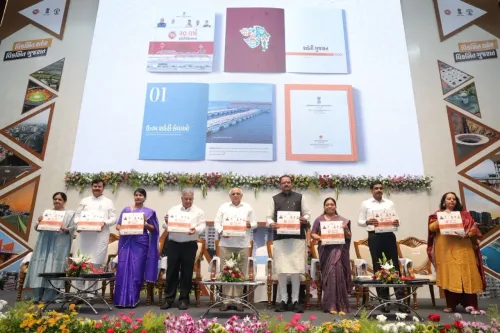
Gujarat's Chief Minister unveiled two coffee-table books on 11 August 2026 — '20 Years of Urban Development' tracing two decades of state urban growth, and 'Vadnagar — The Making of Modern Legacy' celebrating the historic Mehsana-district town's cultural heritage and modern transformation.
Key Takeaways
The Chief Minister of Gujarat unveiled two coffee-table books on 11 August 2026 . '20 વર્ષ શહેરી વિકાસનાં' documents 20 years of Gujarat's urban development journey. 'Vadnagar — The Making of Modern Legacy' celebrates the heritage and transformation of Vadnagar , a historically significant town in Mehsana district .
Vadnagar is among Gujarat's most archaeologically layered towns and has been a focus of heritage-tourism investment.
The dual launch reflects Gujarat's consistent strategy of framing urban policy as both an infrastructure and a civilisational achievement.
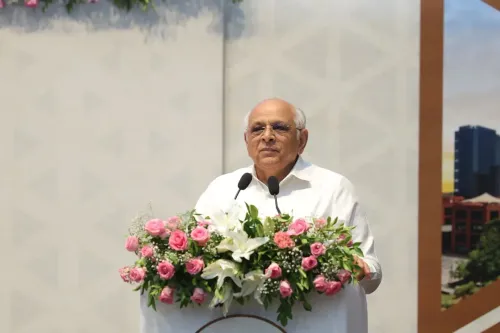
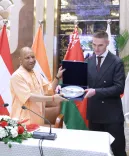
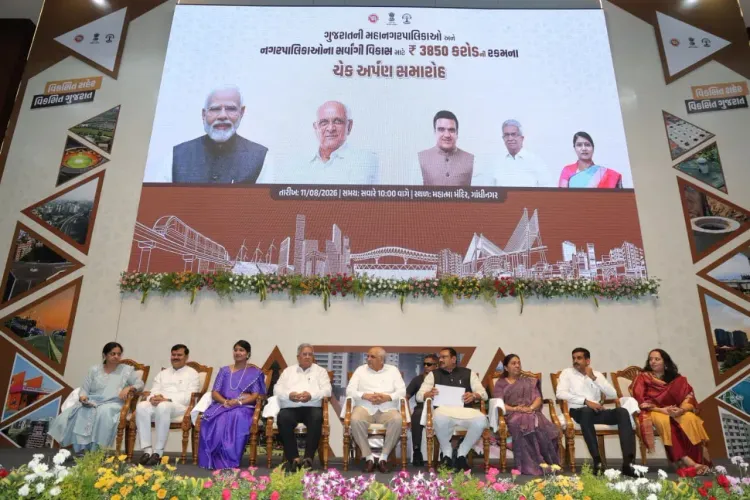
Two coffee-table books capturing a quarter-century of Gujarat's urban ambition were unveiled on Tuesday, 11 August 2026, as the state's Chief Minister marked a milestone in the state's long march from municipal reform to modern infrastructure — and paid tribute to the ancient town that has become a symbol of that journey.
The Chief Minister's Office of Gujarat announced that the Chief Minister presided over the launch of '20 વર્ષ શહેરી વિકાસનાં' ('20 Varsh Shaheri Vikasna' — '20 Years of Urban Development'), a volume tracing the arc of Gujarat's urban growth from aspiration to achievement, alongside 'Vadnagar — The Making of Modern Legacy', a tribute to one of north Gujarat's most historically layered towns.
Two books, one larger argument about Gujarat's urban story
The pairing of the two volumes is deliberate. The first book documents two decades of urban policy, infrastructure investment, and municipal transformation across Gujarat's cities — a period that saw the state emerge as a benchmark for urban planning reforms in India. The second zooms into Vadnagar, a town in Mehsana district whose roots stretch back millennia but which has been repositioned in recent years as a site of cultural pride and heritage-linked development.
Together, they make a single argument: that Gujarat's urban story is both a policy achievement and a civilisational statement. Coffee-table documentation of this kind has been a consistent tool in the state's public communication playbook — anchoring long-term development narratives in tangible, visual form.
Vadnagar's place in Gujarat's heritage push
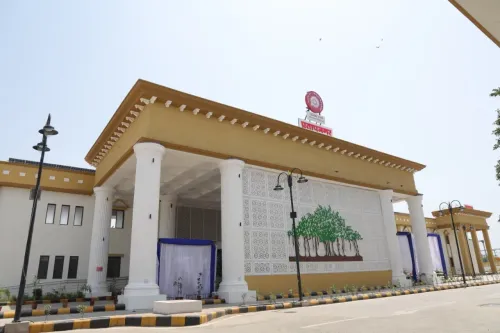
Vadnagar carries weight beyond its modest size. An archaeological site with layers dating back over two thousand years, it has been the focus of excavation and heritage-tourism investment in recent years. Its profile has risen sharply as a destination where Gujarat's ancient past meets its modern development ambitions — making it a natural centrepiece for a book framed around legacy.
The state's parallel focus on cultural heritage alongside physical infrastructure reflects a broader pattern in Gujarat's governance model: urban development is presented not merely as roads and buildings, but as a continuum of civilisation. The unveiling of 'Vadnagar — The Making of Modern Legacy' reinforces that framing at a moment when heritage corridors and cultural tourism are gaining policy traction across India.
Gujarat's urban development record — from city bus rapid transit systems to smart-city designations — now has a published chronicle. The question is whether the books become reference documents for the next phase of planning, or opening statements in a longer political conversation about who built modern Gujarat.
Point of View
Making the development record harder to debate on purely technocratic terms. Gujarat has long used documentation and branding as governance tools, and these books extend that tradition into the heritage-tourism era. The Vadnagar focus also signals that north Gujarat's historical assets are being actively woven into the state's identity pitch ahead of future electoral and investment cycles. Taken together, the launches position Gujarat's urban story as both a policy legacy and a civilisational inheritance — a framing that travels well beyond state borders.
NationPress
25 Sept 2026
Frequently Asked Questions
What books did the Gujarat Chief Minister unveil on 11 August 2026?
The Gujarat Chief Minister unveiled two coffee-table books: '20 Years of Urban Development' ( 20 Varsh Shaheri Vikasna ), chronicling two decades of urban growth in Gujarat, and 'Vadnagar — The Making of Modern Legacy', celebrating the heritage and transformation of Vadnagar town in Mehsana district.
What is Vadnagar and why is it significant in Gujarat?
Vadnagar is a town in Mehsana district, Gujarat, with archaeological layers dating back over two thousand years. It is one of Gujarat's most historically significant sites and has been a focus of heritage-tourism investment and cultural promotion in recent years.
What does the '20 Years of Urban Development' book cover?
The book traces Gujarat's urban development journey over two decades, documenting the state's municipal reforms, infrastructure expansion, and city-planning milestones since the early 2000s. The exact content and authors have not been officially detailed beyond the CMO announcement.
Why is Gujarat releasing coffee-table books on urban development?
Gujarat governments have consistently used coffee-table publications as public-communication tools to document and promote long-term development achievements. The books serve as official records of state milestones and help frame governance narratives for citizens, investors, and policymakers.
What is the broader significance of the Vadnagar book launch?
The launch reflects Gujarat's strategy of linking physical urban development to cultural and civilisational heritage. Vadnagar's growing profile as a heritage-tourism destination makes it central to the state's effort to present its development story as both modern and historically rooted.