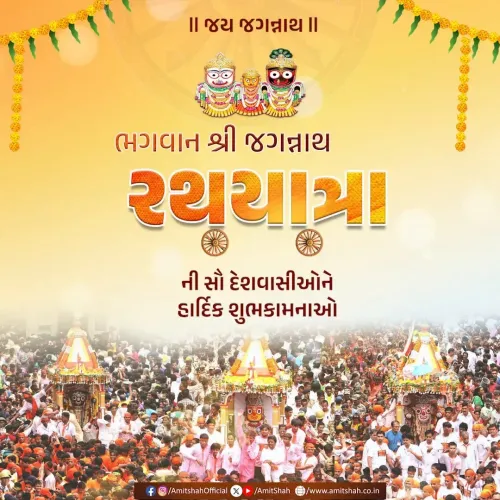
Gujarat CMO Extends Rath Yatra Greetings, Hails Festival as Symbol of Unity
Synopsis
The Chief Minister's Office of Gujarat on July 16, 2026, extended greetings on Mahaprabhu Shri Jagannath Rath Yatra, describing the ancient chariot festival as a symbol of the state's religious-cultural heritage, glorious tradition, and social unity, in keeping with the administration's practice of marking major Hindu festivals publicly.
Key Takeaways
The Chief Minister's Office of Gujarat posted Rath Yatra greetings on July 16, 2026 .
The message was shared in Gujarati and described Rath Yatra as a symbol of religious-cultural heritage, glorious tradition, and social unity.
Rath Yatra is a centuries-old chariot procession festival associated with Lord Jagannath , observed across India with large-scale participation in Gujarat .
Gujarat has a long-standing state policy of supporting the public observance of pan-Hindu festivals, including security and logistics for processions.
The messaging follows a broader pattern among BJP -led state governments of framing religious festivals as symbols of cultural heritage and social unity.
Logistics, crowd management, and official state participation in Gujarat's 2026 Rath Yatra processions will be the next points to watch.
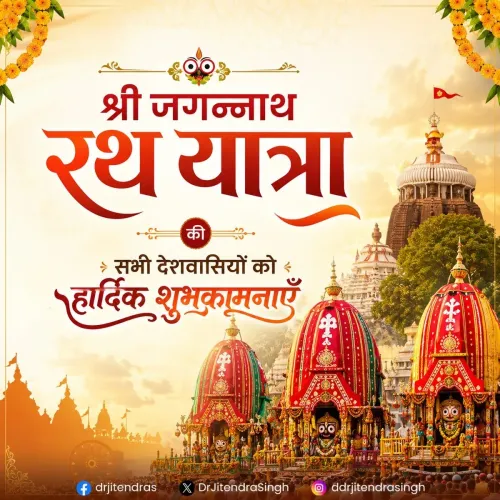
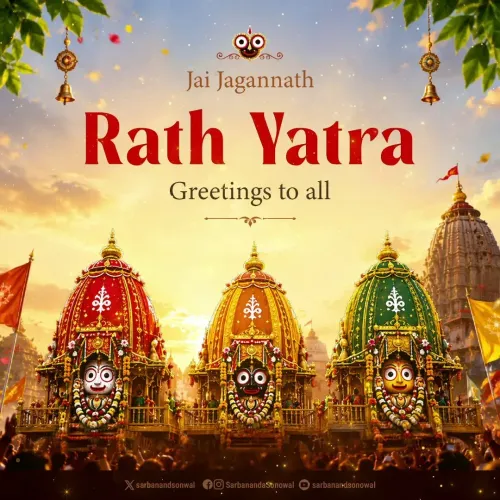
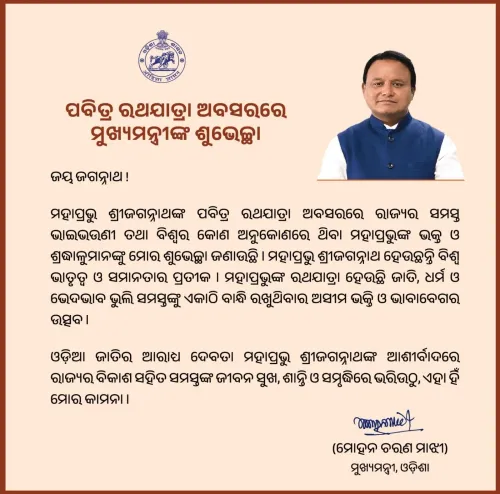
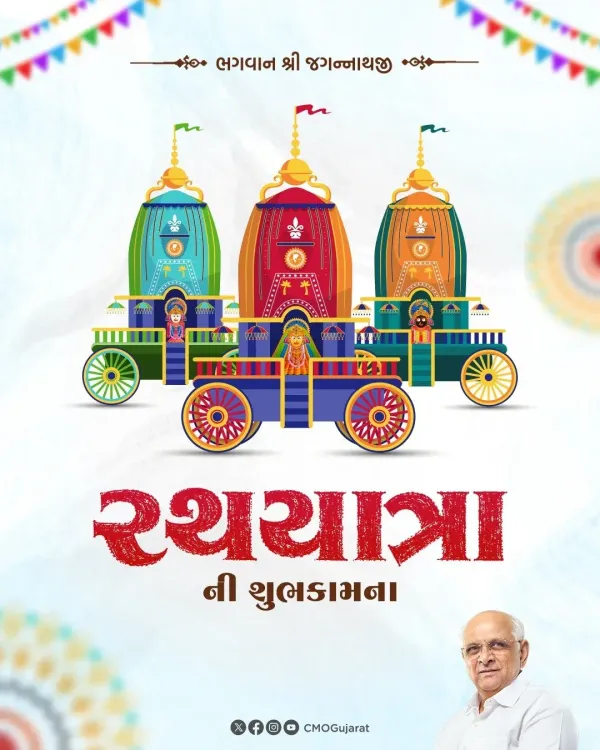
The Chief Minister's Office of Gujarat on Thursday, July 16, 2026, extended greetings on the occasion of Mahaprabhu Shri Jagannath Rath Yatra, describing the centuries-old chariot festival as a symbol of the state's religious and cultural heritage, glorious tradition, and social unity.
The post, shared in Gujarati, reads: 'આપણી ધાર્મિક-સાંસ્કૃતિક વિરાસત, ગૌરવશાળી પરંપરા અને સામાજિક એકતાના પ્રતીક સમાન મહાપ્રભુ શ્રી જગન્નાથ રથયાત્રાની શુભકામનાઓ..!' — translated: 'Best wishes on the Rath Yatra of Mahaprabhu Shri Jagannath, which is a symbol of our religious-cultural heritage, glorious tradition, and social unity!'
Context
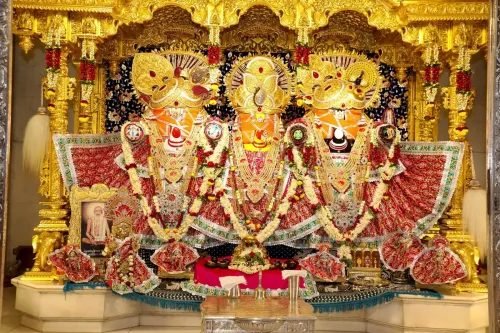
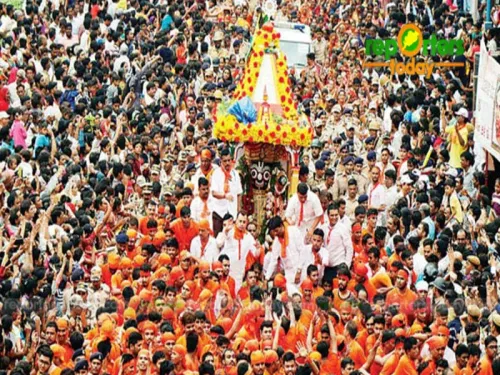
Rath Yatra is one of India's most ancient and widely observed chariot procession festivals, primarily associated with Lord Jagannath, the presiding deity of the famed Jagannath Temple in Puri, Odisha. The festival draws millions of devotees across the country each year. In Gujarat, particularly in Ahmedabad, the Rath Yatra procession has a distinct and deeply rooted tradition, attracting large crowds of Hindu devotees and cultural groups.
The Gujarat CMO's message frames the festival not merely as a religious occasion but as a broader marker of social cohesion and cultural pride — themes that resonate strongly with the state's diverse communities of devotees.
Policy Backdrop
Gujarat's state administration has historically supported the public observance of pan-Hindu festivals, including facilitating processions and coordinating security arrangements for large-scale events. Issuing official greetings on such occasions is consistent with the state government's long-standing cultural policy of recognising religious festivals as part of the public heritage.
Indian state governments — particularly those led by the BJP — regularly issue festival greetings on social media that frame religious events as symbols of heritage, tradition, and national unity. Such messaging mirrors similar communications issued by other state administrations during the Rath Yatra season, including from Odisha, where the festival holds its most prominent observance.
Stakeholders and Impact
The message is directed at Hindu devotees, Gujarati cultural organisations, and citizens who participate in or observe the annual Rath Yatra processions across the state. By invoking the themes of dharmic-sanskrutik virasat (religious-cultural heritage) and samajik ekta (social unity), the CMO's communication underscores the administration's intent to associate the festival with inclusive civic identity rather than narrow religious observance.
For the large communities that participate in Rath Yatra processions across Gujarati cities, official recognition from the state government reinforces the public and civic significance of the event.
What's Next
Attention will now turn to the logistics and crowd management arrangements for Rath Yatra processions in Gujarat's major cities, as state authorities are expected to coordinate security and civic infrastructure for the celebrations. Official state events and participation by government representatives during the procession will be closely watched as indicators of the administration's level of engagement with the festival this year.
The broader pattern of state-backed cultural messaging around Rath Yatra signals that the festival will continue to occupy a prominent place in Gujarat's public calendar, with official support likely to shape both the scale and the civic character of the celebrations.
Point of View
Which have consistently sought to mainstream pan-Hindu festivals within the language of civic identity rather than sectarian observance. The message also reflects a broader competition among state governments to visibly align with high-footfall religious events, particularly as Rath Yatra draws growing national attention. For Gujarat, where the Ahmedabad procession carries deep historical roots, official endorsement reinforces the state's claim to cultural leadership on a festival that transcends any single region.
NationPress
16 Jul 2026
Frequently Asked Questions
What is Jagannath Rath Yatra and why is it celebrated?
Rath Yatra is a centuries-old Hindu chariot festival celebrating Lord Jagannath , in which the deity's idol is placed on a large wooden chariot and pulled through the streets by devotees. It is observed across India, with the most prominent celebration at the Jagannath Temple in Puri, Odisha , and a major procession in Ahmedabad, Gujarat .
Why did the Gujarat CMO post Rath Yatra greetings?
The Chief Minister's Office of Gujarat issued the greetings on July 16, 2026 , as part of the state government's practice of publicly marking major religious and cultural festivals, framing them as symbols of heritage and social unity.
When is Rath Yatra 2026?
The Gujarat CMO's post was made on July 16, 2026 , indicating that Rath Yatra was being observed around that date. Specific verified dates for the 2026 festival are subject to official announcements.
Where is Rath Yatra celebrated in Gujarat?
Ahmedabad hosts one of the most prominent Rath Yatra processions in Gujarat , with a long-standing tradition that draws large crowds of Hindu devotees and cultural groups from across the state.
What does the Gujarat government's Rath Yatra message mean?
The message describes Rath Yatra as a symbol of 'religious-cultural heritage, glorious tradition, and social unity,' reflecting the Gujarat administration's framing of the festival as both a spiritual occasion and a marker of civic and cultural identity.