Gujarat CMO marks 80th Independence Day, flags Amreli ceremony
Synopsis
On India's 80th Independence Day, Gujarat's Chief Minister's Office named Amreli as the venue for the state-level flag hoisting and framed Gujarat's record on farming, tribal welfare, healthcare, urban growth, women's empowerment and youth development as the state's gift to the nation.
Key Takeaways
Gujarat's Chief Minister's Office posted its 80th Independence Day message on 15 August 2026 , calling the occasion a festival of national pride and progress.
Amreli , a district in the Saurashtra region, is the designated venue for this year's state-level flag hoisting ceremony.
The message credits PM Narendra Modi 's guidance and CM Bhupendra Patel 's leadership for Gujarat's development trajectory.
Six priority areas are highlighted: farmer welfare, tribal prosperity, healthcare, urban development, women's self-reliance, and youth empowerment.
Gujarat has rotated its annual state-level Independence Day ceremony across different districts since 1947.
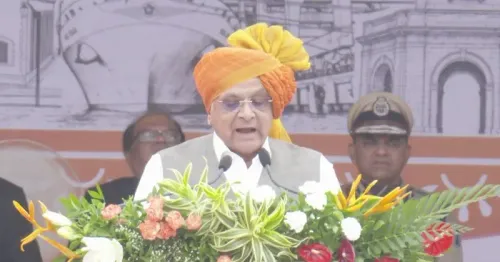
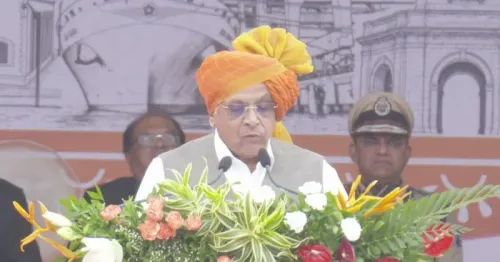
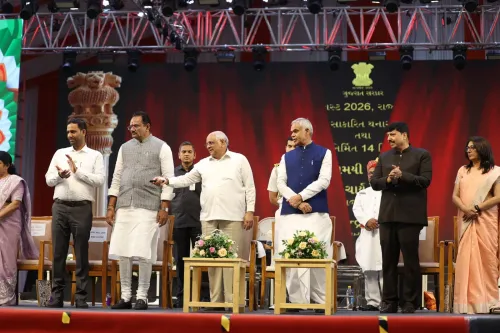
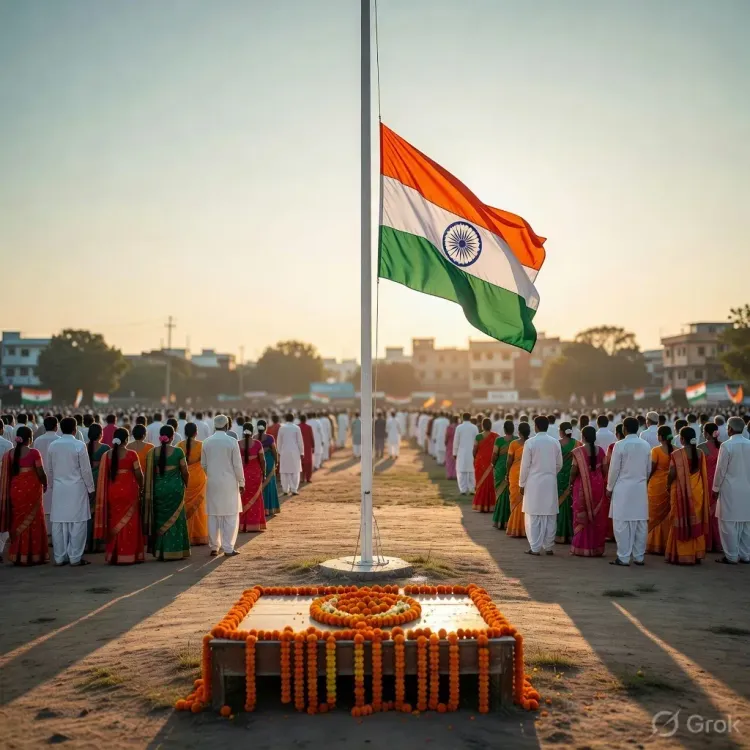
On the morning of India's 80th Independence Day, the Chief Minister's Office of Gujarat declared the state a 'pathfinder of progress' — and named Amreli as the site of this year's state-level flag hoisting. The message, posted on Saturday, 15 August 2026, frames Gujarat's development journey as a celebration of national pride, unity, and forward momentum.
The post, written in Gujarati, calls the occasion a mahotsav — a festival — of 'national pride, unity and progress.' It credits the guidance of Prime Minister Narendra Modi and the leadership of Chief Minister Bhupendra Patel for what it describes as Gujarat's emergence as a model state, citing gains in farmer welfare, tribal prosperity, healthcare, urban development, women's self-reliance, and youth empowerment.
Amreli chosen for state-level flag hoisting
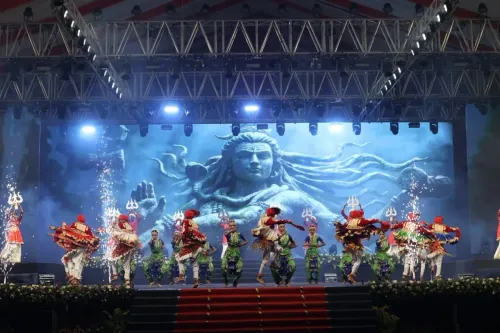
The selection of Amreli — a district in Gujarat's Saurashtra region — as the venue for the state-level dhwajvandan samaroh (flag hoisting ceremony) follows a long-standing Gujarat government tradition of rotating the annual Independence Day state function across different districts. The practice, maintained by successive administrations since 1947, is intended to bring the symbolic weight of the national occasion to different parts of the state each year.
Amreli, historically an agrarian district with a significant farming and pastoral community, sits in a region that has seen both drought vulnerability and infrastructure investment over the past decade. Its selection this year carries symbolic resonance with the post's emphasis on farmer welfare and rural progress.
The development narrative Gujarat is flying its flag on
The CMO's Independence Day message is not merely ceremonial — it is a deliberate inventory of the state government's claimed policy record. The six pillars named — farmer welfare, tribal community prosperity, healthcare, urban development, women's empowerment, and youth development — map closely onto both state-level schemes and central government flagship programmes that Gujarat has positioned itself as an early and enthusiastic adopter of.
Gujarat's BJP administrations, stretching back through the mid-1990s, have consistently built their political identity around a 'Gujarat model' of governance — one that prioritises infrastructure, investor confidence, and social welfare delivery. That narrative has been most prominently associated with Narendra Modi's tenure as Chief Minister from 2001 to 2014, and successive administrations have maintained and extended it. Bhupendra Patel, in office since September 2021, has continued to align state priorities with New Delhi's policy directions in health, urban planning, and women's economic inclusion.
The post closes with an open invitation — 'Aavo, aapne sau pan... gaurvannvit thaeye' ('Come, let us all participate in celebrating this precious festival of the country's freedom and feel proud') — a rhetorical flourish designed to make the state's official celebration feel like a collective, citizen-owned moment rather than a government event.
Whether the Amreli ceremony yields new scheme announcements or fresh policy commitments will be the real measure of the day's significance beyond the symbolism.
Point of View
The CMO post reinforces a dual-credit political architecture that has defined Gujarat BJP communications for over two decades. Choosing Amreli — a Saurashtra farming district — as the ceremony venue is unlikely to be incidental given the post's explicit emphasis on farmer welfare, signalling continued attention to a constituency that has historically been a pressure point for the government. The broader pattern is one of continuity: Gujarat positions itself not just as a beneficiary of central policy but as its model implementer, a framing that serves both state and national political narratives ahead of any electoral cycle.
NationPress
15 Aug 2026
Frequently Asked Questions
Where is Gujarat's Independence Day 2026 state-level ceremony being held?
The state-level flag hoisting ceremony for Independence Day 2026 is being held at Amreli , a district in Gujarat's Saurashtra region.
What did Gujarat's CMO post on Independence Day 2026?
The Chief Minister's Office of Gujarat posted a message in Gujarati celebrating India's 80th Independence Day , highlighting the state's progress in farming, tribal welfare, healthcare, urban development, women's empowerment and youth development, and announcing the Amreli ceremony.
Who is the Chief Minister of Gujarat in 2026?
Bhupendra Patel has been Chief Minister of Gujarat since September 2021 and is named in the CMO's Independence Day post as the leader under whose guidance the state has progressed.
Why does Gujarat rotate its Independence Day ceremony across districts?
Gujarat has maintained a tradition since 1947 of rotating the annual state-level Independence Day flag hoisting to different districts, ensuring the national occasion is marked across various parts of the state rather than always in the capital.
What is the 'Gujarat model' of governance?
The 'Gujarat model' refers to the development narrative built by successive BJP administrations in Gujarat since the mid-1990s, emphasising infrastructure growth, investor-friendly policy, agriculture support, and social welfare delivery — most closely associated with Narendra Modi 's tenure as Chief Minister from 2001 to 2014.