Gujarat CMO Lauds Police for 'Seva, Suraksha, Shanti' Duty
Synopsis
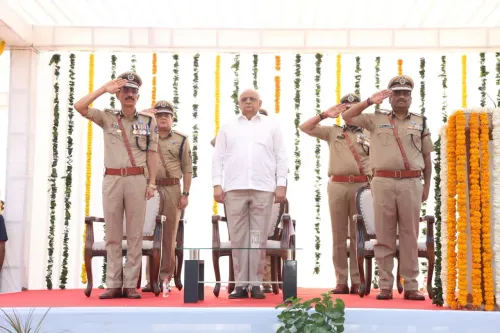
The Chief Minister's Office of Gujarat on 24 July 2026 praised state police personnel for their round-the-clock commitment to citizens, calling their work a true reflection of the force's 'Seva, Suraksha, Shanti' — Service, Security, Peace — motto.
Key Takeaways
The Chief Minister's Office of Gujarat posted a public commendation of Gujarat Police on 24 July 2026 .
Police personnel were praised for being 'always ready to help citizens in every situation.' The tribute centres on the force's official motto: Seva, Suraksha, Shanti (Service, Security, Peace).
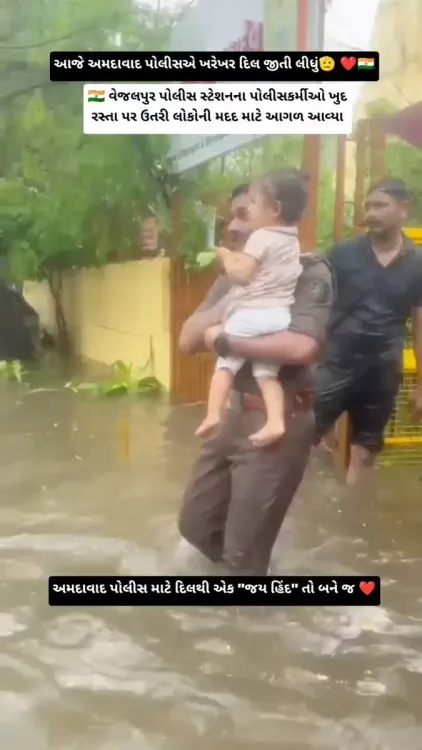
The post was accompanied by a video, indicating specific examples of police service may have been highlighted.
Chief Minister Bhupendra Patel has led Gujarat since 2021 , continuing the state's tradition of publicly recognising law enforcement contributions.
Analysts will watch for follow-up policy moves such as police modernisation budgets or new community-policing schemes.
The Chief Minister's Office of Gujarat on Friday, 24 July 2026 publicly commended the state's police personnel for their unwavering commitment to citizen welfare, praising their work as a living embodiment of the force's official motto — Seva, Suraksha, Shanti (Service, Security, Peace).
The post, shared on the CMO's official X account, described police personnel as those who remain 'always standing ready to help citizens in every situation,' calling their work 'praiseworthy' in upholding the three-word credo. In Gujarati, the tribute read: 'પ્રત્યેક પરિસ્થિતિમાં નાગરિકોની મદદ માટે સદૈવ ખડે પગે રહેનાર' — meaning those who stand on their feet at all times to assist citizens in every circumstance.
Context
Gujarat Police operates under the mandate of Seva, Suraksha, Shanti — a motto that encapsulates the force's three operational priorities: service to the public, protection of life and property, and maintenance of social peace. The CMO's acknowledgement reinforces the state government's public positioning of its police force as a citizen-first institution. Such official recognition from the Chief Minister's Office carries symbolic weight, signalling administrative approval of the force's on-ground conduct. The tribute was accompanied by a video, suggesting the post may highlight specific instances of police assistance or a compilation of community-service efforts, though the precise content of the video was not independently detailed in the post text.Policy Backdrop
Gujarat has, over successive state governments since the early 2000s, periodically spotlighted police contributions as part of broader administrative reform narratives. The state has sought to project itself as a model of efficient governance, where internal security and industrial growth are presented as complementary pillars. Commendations of this nature from the Chief Minister's Office fit within a long-standing pattern of using official communication channels to reinforce public trust in law enforcement. Chief Minister Bhupendra Patel, who has helmed the state since 2021, has continued this tradition, with the CMO's digital presence regularly amplifying stories of governance delivery and public-safety initiatives.Stakeholders and Impact
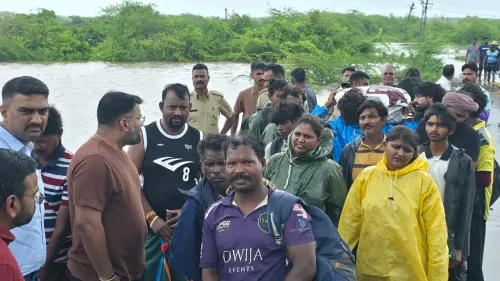
The primary beneficiaries of such recognition are Gujarat Police personnel themselves — a workforce that operates across routine law-and-order duties, disaster response, and community assistance. Public acknowledgement from the highest office in the state serves as a morale signal to officers across ranks. For Gujarat's citizens, the messaging reinforces the government's stated commitment to accessible and responsive policing. Community-policing initiatives and disaster-response deployments are among the visible touchpoints where the Seva, Suraksha, Shanti motto is most directly tested.What's Next
Observers will watch for concrete follow-through in the form of state budget allocations toward police modernisation, new recruitment drives, or the announcement of structured community-policing schemes in upcoming Gujarat Assembly sessions. Symbolic commendations from the CMO tend to precede or accompany policy announcements related to the police force, making this post a potential indicator of forthcoming administrative action on public safety. Whether this tribute is tied to a specific incident, a departmental milestone, or a broader campaign will become clearer as the state government's communications continue in the coming days.Point of View
Citizen-centric state administration. Gujarat has long cultivated a dual narrative of economic dynamism and administrative efficiency, and spotlighting police service fits squarely within that communications strategy. The invocation of the Seva, Suraksha, Shanti motto is also a soft signal to the force itself, reaffirming institutional values at a time when police-public relations remain a politically sensitive metric across Indian states. Whether this post is a standalone gesture or a prelude to a policy announcement will define its actual significance.
NationPress
23 Oct 2026
Frequently Asked Questions
What is the motto of Gujarat Police?
The official motto of Gujarat Police is 'Seva, Suraksha, Shanti,' which translates to Service, Security, and Peace in English.
Why did the Gujarat CMO praise police personnel on 24 July 2026?
The Chief Minister's Office of Gujarat commended police personnel for their consistent readiness to assist citizens in all situations, calling it a true embodiment of the force's Seva, Suraksha, Shanti motto. No specific incident was cited in the post.
Who is the Chief Minister of Gujarat in 2026?
Bhupendra Patel is the Chief Minister of Gujarat, a position he has held since 2021.
What does 'Seva Suraksha Shanti' mean?
'Seva Suraksha Shanti' is a Gujarati and Hindi phrase meaning Service, Security, and Peace — the guiding operational motto of the Gujarat Police force.
Does the Gujarat government regularly recognise police contributions?
Yes, Gujarat state governments have periodically used official channels to acknowledge police contributions to internal security and citizen services as part of broader administrative messaging, a pattern that has continued since the early 2000s.