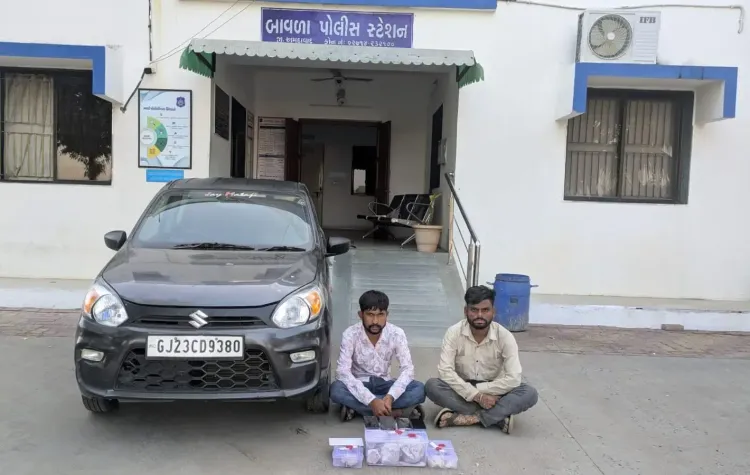
Gujarat Police seize ₹4.35 crore 'whale vomit' in Bavla raid, two arrested
Synopsis
Gujarat Police's State Monitoring Cell seized over 4 kg of ambergris — the rare whale-derived substance worth a fortune in global perfume markets — from two men in Bavla, uncovering an alleged supply chain linking multiple individuals across Khambhat and Ahmedabad. The haul, valued at ₹4.35 crore, is one of the larger such seizures in the state in recent memory.
Key Takeaways
The Gujarat Police's State Monitoring Cell seized 4.354 kg of ambergris valued at ₹4,35,40,000 in Bavla, Ahmedabad Rural on 1 October 2026 .
Total value of all confiscated items, including other seized material, was ₹4,38,17,770 .
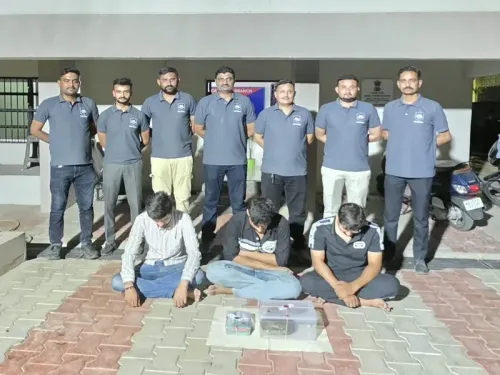
Two men — Ajay Chavda of Khambhat and Hitesh Chauhan of Dholka — were detained and handed to Bavla Police Station .
The alleged supply chain involves at least four named individuals, including Mehul Dabhi , Kishan Gohel , and Ashok Vaghela .
Ambergris trade is illegal in India as it derives from the sperm whale , listed under Schedule I of the Wildlife Protection Act.
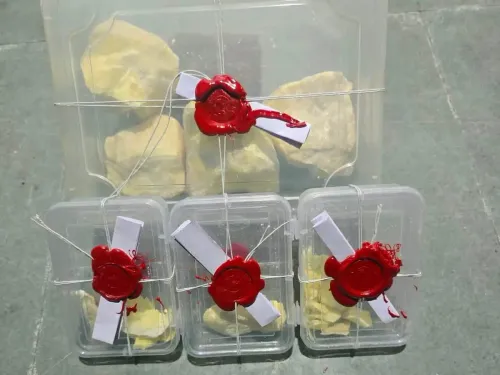
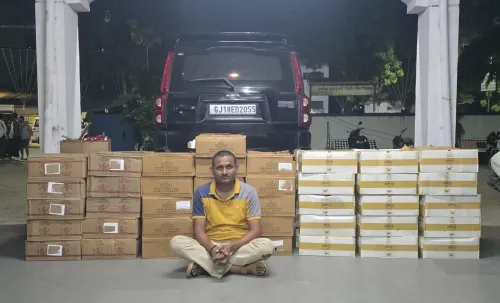
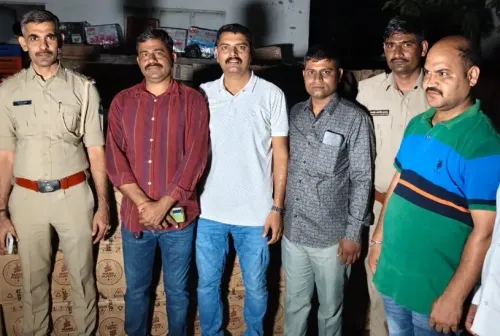
The Gujarat Police's State Monitoring Cell (SMC) seized 4.354 kg of ambergris — commonly known as 'whale vomit' — valued at ₹4.35 crore during a raid at Bavla, Ahmedabad Rural, on 1 October 2026. Two men were detained in the operation, which was conducted following directives from Director General of Police G.S. Malik to crack down on illegal activities across the state.
How the Raid Unfolded
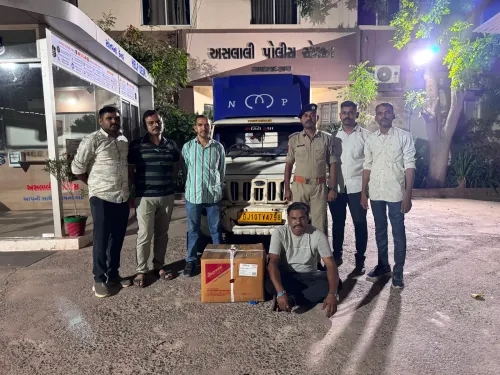
The seizure took place at the parking area of Akriti Arcade Complex on the Rajkot-Ahmedabad Highway. The operation was led by Police Sub-Inspector V.K. Rathod of the State Monitoring Cell. The team recovered pieces of ambergris in varying sizes and shapes — described as hard, solid material in white, cream, golden, and brown shades. Officials from the Forest Department and the Forensic Science Laboratory subsequently examined the confiscated material.
The seized ambergris weighed 4 kg 354 grams and was valued at ₹4,35,40,000. Including other items seized during the same operation, the total value of confiscated material stood at ₹4,38,17,770, according to police.
Who Was Detained
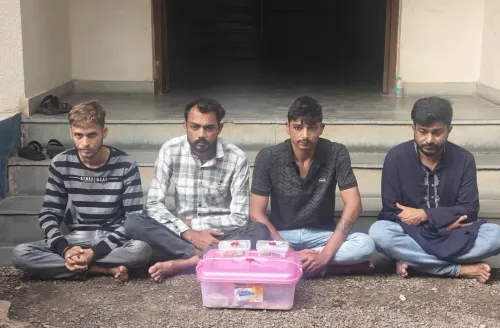
Police identified the two detained individuals as Ajay Chavda, a resident of Tarkpur in Anand district's Khambhat taluka, and Hitesh Chauhan, a resident of Bhetawada in Ahmedabad district's Dholka taluka. The material was seized for investigation under Section 106 of the Bharatiya Nagarik Suraksha Sanhita, 2023, while both men were detained under Section 35(1)(e) of the same law. They were subsequently handed over to Bavla Police Station for further legal proceedings under the Wildlife Protection Act.
The Alleged Supply Chain
During questioning, Chavda allegedly told police that Mehul Dabhi, also from Tarkpur in Khambhat, had called him to Bavla to assist in selling the ambergris. Chavda reportedly travelled there with Kishan Gohel and another individual. According to the statement recorded by police, the group met near Gawaliya Hotel, where Chauhan arrived with ambergris obtained from Ashok Vaghela of Hedalpara in Khambhat — allegedly on the instructions of a person identified only as Sachin. The group then proceeded to the Akriti Arcade Complex parking area to hand over the substance to Gohel for sale, when the two men were apprehended.
Why Ambergris Is Illegal to Trade in India
Ambergris is a waxy substance produced in the digestive system of the sperm whale (Physeter macrocephalus), which is listed under Schedule I of the Wildlife Protection Act — the highest category of protection under Indian law. Its trade, possession, and sale are therefore prohibited. Despite this, ambergris commands exceptionally high prices in international markets due to its use as a fixative in high-end perfumes, where it helps fragrances last longer and enhances their scent profile. Historically, it has also been used in incense, scented oils, and — in some cultures — as a purported medicinal substance and aphrodisiac.
Notably, this is one of the larger ambergris seizures reported in Gujarat in recent years, underscoring persistent demand in illicit wildlife trade networks operating across the state. Further legal proceedings are being carried out through Bavla Police Station, and investigators have not ruled out more arrests as the alleged supply chain is traced.
Point of View
Yet each case reveals the same pattern: a fragmented supply chain of small-time handlers who are rarely connected to the international buyers actually driving demand. The Gujarat seizure names multiple individuals but the alleged chain leads to a person identified only as 'Sachin' — underscoring how investigations routinely terminate at the local transporter rather than the end buyer. Schedule I protection for the sperm whale is robust on paper, but enforcement is episodic. Until investigations are routinely extended to trace international trade routes and financial flows, large-value wildlife seizures will remain headline events without systemic deterrence.
NationPress
1 Oct 2026
Frequently Asked Questions
What is ambergris and why is it so valuable?
Ambergris is a rare, waxy substance produced in the digestive tract of the sperm whale and expelled as waste. It is highly prized in the global perfume industry as a fixative — a component that helps fragrances last longer and enhances their scent — and has historically been used in incense, scented oils, and as a purported aphrodisiac in some cultures, all of which drive its high international market value.
Why is possessing or selling ambergris illegal in India?
In India, ambergris trade is prohibited because it originates from the sperm whale (Physeter macrocephalus), which is listed under Schedule I of the Wildlife Protection Act — the highest level of legal protection for any species. Possession, sale, or transport of ambergris can result in serious criminal charges under the Act.
Who were the two men arrested in the Bavla raid?
Police detained Ajay Chavda, a resident of Tarkpur in Anand district's Khambhat taluka, and Hitesh Chauhan, a resident of Bhetawada in Ahmedabad district's Dholka taluka. Both were handed over to Bavla Police Station for further legal action under the Wildlife Protection Act.
How much ambergris was seized and what was its value?
The Gujarat Police's State Monitoring Cell seized 4 kg 354 grams of ambergris valued at ₹4,35,40,000 (approximately ₹4.35 crore). Including other items confiscated during the same operation, the total value of seized material was ₹4,38,17,770.
What happens next in the case?
Further legal proceedings are being carried out through Bavla Police Station. Investigators are tracing the alleged supply chain, which reportedly involves multiple individuals including Mehul Dabhi, Kishan Gohel, Ashok Vaghela, and a person identified as Sachin. More arrests have not been ruled out.