Gujarat DGP orders NDPS crackdown, all police stations to enforce drug laws
Synopsis
Gujarat has fundamentally restructured its anti-drug enforcement by moving NDPS responsibility from specialised units down to every local police station — with accountability fixed on officers if external agencies have to step in. Paired with a rewards system for personnel and rehabilitation support for addicts, this is one of the most operationally detailed state-level drug crackdowns in recent memory.
Key Takeaways
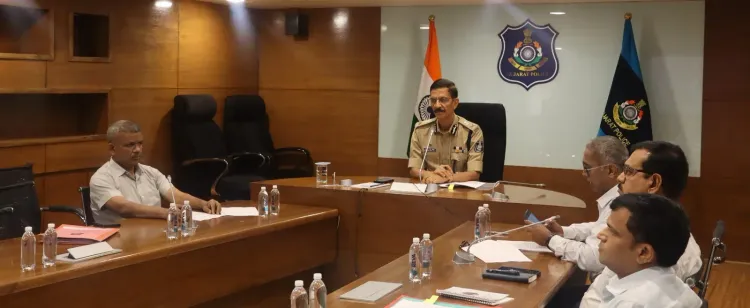
Malik chaired a high-level review in Gandhinagar on 17 June , ordering all police stations to enforce the NDPS Act directly.
Enforcement responsibility has been extended beyond specialised units like the Crime Branch and SOG to every local station.
Officers will be held accountable if NDPS cases in their jurisdiction are registered by external agencies instead.
Personnel will be directed to interrogate arrested individuals to trace full drug supply chains and dismantle trafficking networks.
A rewards-and-recognition system has been approved for police personnel excelling in NDPS detection and investigation.
Home Minister Harsh Sanghavi reaffirmed Gujarat's zero-tolerance policy, with counselling and rehabilitation support to complement enforcement.
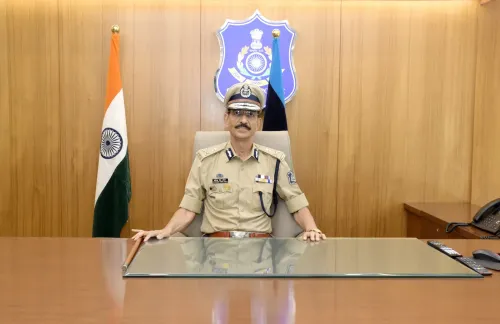
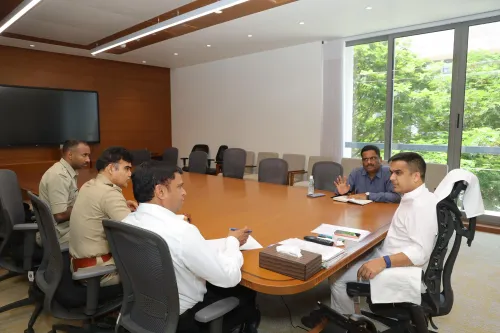
Gujarat Police has significantly widened its anti-narcotics enforcement framework, directing every police station across the state to independently detect, register, and investigate offences under the Narcotic Drugs and Psychotropic Substances (NDPS) Act. The directive follows a high-level review meeting held in Gandhinagar on 17 June, chaired by Director General of Police (DGP) G.S. Malik, marking a structural shift in how Gujarat tackles drug-related crime at the grassroots level.
Key Directives from the DGP Review
DGP Malik instructed all units to adopt a proactive enforcement posture and pursue strict action in every NDPS case — including those involving small quantities of narcotic substances. 'The fight against drugs requires consistent vigilance and decisive action at every level. All units must act proactively and ensure strict enforcement under the NDPS Act,' he said, directing officers to maintain continuous surveillance over drug traffickers and peddlers.
He further called for sustained intelligence-based operations aimed at dismantling distribution networks and curbing the spread of narcotics across the state.
Expanding Responsibility Beyond Specialised Units
A significant administrative change announced at the meeting extends NDPS enforcement responsibility beyond specialised agencies such as the Crime Branch and the Special Operations Group (SOG). All local police stations have now been tasked with directly detecting, intercepting, and registering drug-related offences within their jurisdictions, making anti-drug enforcement a core function at the station level.
Notably, accountability will be fixed in cases where NDPS offences within a station's jurisdiction are registered by external agencies — responsibility will be determined at the level of the concerned officers. This is a pointed administrative accountability measure designed to prevent enforcement gaps.
Operational Strategy and Supply Chain Focus
As part of the operational rollout, police personnel have been directed to conduct detailed interrogations of arrested individuals to trace supply chains, identify suppliers, and expose larger trafficking networks. Strict legal action will be pursued against all those involved in the sale, distribution, and transportation of narcotic substances.
The state police leadership has also approved a rewards-and-recognition system for personnel who demonstrate effective performance in detecting and investigating NDPS cases, with the objective of strengthening enforcement outcomes across all districts.
Government's Zero-Tolerance Stance
Reiterating the state's policy position, Deputy Chief Minister and Home Minister Harsh Sanghavi said: 'Gujarat continues to follow a zero-tolerance policy towards drug-related offences and remains committed to strict action against both trafficking and abuse of narcotic substances.'
Alongside enforcement, Gujarat Police will also extend support for counselling and rehabilitation services for individuals affected by drug addiction — complementing punitive action with recovery-focused interventions. This comes amid a broader national push to address the demand side of the drug problem, not just supply interdiction.
What Comes Next
With accountability mechanisms now in place at the station level and a formal incentive structure for enforcement personnel, the Gujarat model could serve as a template for other states grappling with rising NDPS caseloads. Implementation across all districts and the pace of supply-chain prosecutions will be the key metrics to watch in the months ahead.
Point of View
The concerned officer faces consequences. That is a structural incentive shift, not just a policy statement. Gujarat has consistently ranked among states with high drug seizure volumes, yet distribution networks have proven resilient — suggesting that specialised-unit-only enforcement has ceiling effects. Whether pushing responsibility to every station produces more convictions or merely more FIRs will be the true test. The rehabilitation component is welcome, but a single line in a directive rarely translates to funded, scaled services without a separate budget and monitoring mechanism.
NationPress
19 Sept 2026
Frequently Asked Questions
What did Gujarat DGP G.S. Malik order regarding NDPS enforcement?
DGP G.S. Malik directed all police stations across Gujarat to independently detect, register, and investigate NDPS Act offences, moving anti-drug enforcement beyond specialised units like the Crime Branch and SOG. The order came during a high-level review meeting held in Gandhinagar on 17 June.
Why is Gujarat expanding NDPS enforcement to all police stations?
The move is aimed at closing enforcement gaps where drug offences in a station's jurisdiction were being registered by external agencies rather than local officers. By making anti-drug enforcement a core station-level function, the Gujarat Police seeks to ensure no jurisdictional blind spots in NDPS cases.
What accountability measures have been introduced?
Officers will be held accountable if NDPS offences within their station's jurisdiction are registered by an external agency. Responsibility will be fixed at the level of the concerned officer, creating a direct performance incentive for local enforcement.
What is Gujarat's stance on drug offences?
Deputy Chief Minister and Home Minister Harsh Sanghavi reaffirmed that Gujarat follows a zero-tolerance policy towards drug-related offences, committing to strict action against both trafficking and abuse of narcotic substances.
Will there be any support for drug addicts under this framework?
Yes. Alongside enforcement, Gujarat Police will extend support for counselling and rehabilitation services for individuals affected by drug addiction, aiming to complement punitive legal action with recovery-focused interventions.