How Does the Fifth GARC Report Plan to Enhance Digital Governance in Gujarat?
Click to start listening
Synopsis
Gujarat's latest GARC report proposes transformative strategies for digital governance, advocating for a unified platform that exemplifies the Citizen First ethos. Discover how these recommendations aim to enhance efficiency and accessibility in public services.
Key Takeaways
- Unified Digital Platform: A centralized system for all government services.
- Proactive Governance: Transitioning from reactive to proactive service delivery.
- Efficiency Improvements: Real-time updates on applications to boost transparency.
- Less Paper: Emphasis on digital integration and standardized forms.
- Modernization of Services: Upgrading Jan Seva Kendras for better citizen experiences.
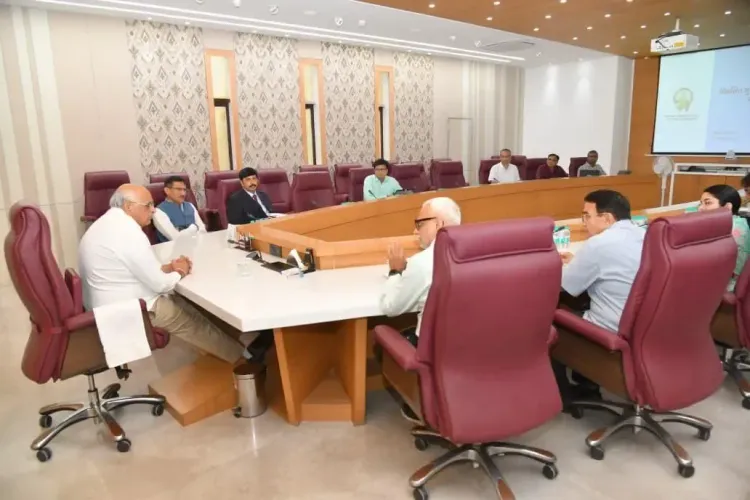
Gandhinagar, Oct 29 (NationPress) The Gujarat Administrative Reforms Commission (GARC) has presented its fifth report to Chief Minister Bhupendra Patel, detailing 12 pivotal recommendations to realize Prime Minister Narendra Modi’s ‘Nagarik Devo Bhav’ (Citizen First) philosophy through technology-driven administrative enhancements.
The report aims to reshape Gujarat’s governance landscape with the slogan ‘Government at the Doorstep of the Citizen’ and the vision of ‘One State – One Portal’.
It advocates for a centralized digital platform where citizens can access all government services via a Single Sign-On (SSO) system using a single user ID.
This system would allow citizens to submit personal details only once, which can then be reused for various services — achieving the objective of “Provide information once – receive benefits repeatedly.”
A standout feature of the report is the proposed Digital Gujarat 2.0 portal, aimed at evolving governance from a reactive to a proactive approach.
The upgraded portal is set to incorporate smart alerts that will automatically grant social welfare benefits and lifecycle guidance to eligible citizens without necessitating separate applications.
The report also suggests implementing end-to-end digital workflows for essential citizen services, providing real-time updates on applications and approvals to boost transparency, accountability, and efficiency.
In alignment with the government’s “Less Paper – More Facilities” initiative, GARC recommends standardized forms, eliminating unnecessary documents and stamps, and digital integration with Aadhaar and DigiLocker.
Additionally, the report proposes modernizing all Jan Seva Kendras (JSKs) across Gujarat, establishing guidance desks, minimizing waiting times, and enhancing the citizen experience.
To bolster service delivery in both rural and urban settings, it suggests empowering Village Computer Entrepreneurs (VCEs) and leveraging Public-Private Partnership (PPP) models for urban initiatives.
Furthermore, it advocates for regular audits and updates under the Right to Citizen Public Service Act, along with staff capacity building and clear civil service timings to ensure Ease of Governance.
Presenting the report, Hasmukh Adhia, Principal Advisor to the Chief Minister and Chairman of GARC, highlighted that this initiative transcends technology — it aims to cultivate a new culture of citizen-first governance.
“This report reflects the Prime Minister’s vision of ‘Nagarik Devo Bhav’ and Chief Minister Shri Bhupendra Patel’s mission of ‘Sarkar pahochshe nagrik sudhi, nagrik nahi sarkar sudhi’ — the government will reach the citizen, not the other way around,” he stated.
Point of View
I believe that the recommendations laid out in the GARC report signify a significant shift towards a more accessible and efficient governance framework. This aligns with the national goal of enhancing service delivery through technology. Ensuring that citizens are prioritized in this digital transformation is essential for sustainable development.
NationPress
30/10/2025
Frequently Asked Questions
What is the purpose of the GARC report?
The GARC report aims to provide recommendations for improving digital governance in Gujarat, emphasizing a citizen-first approach through technology.
How will the proposed digital platform benefit citizens?
The proposed digital platform will allow citizens to access government services through a unified system, enhancing efficiency and reducing the need for repetitive information submission.
What are the key features of Digital Gujarat 2.0?
Digital Gujarat 2.0 is designed to facilitate proactive governance, featuring smart alerts and automatic benefits distribution without separate applications.
How does the report plan to enhance transparency?
The report recommends end-to-end digital workflows for citizen services, providing real-time updates on applications to improve transparency and accountability.
What initiatives will modernize Jan Seva Kendras?
The report suggests establishing guidance desks, reducing waiting times, and enhancing the overall citizen experience at Jan Seva Kendras across Gujarat.