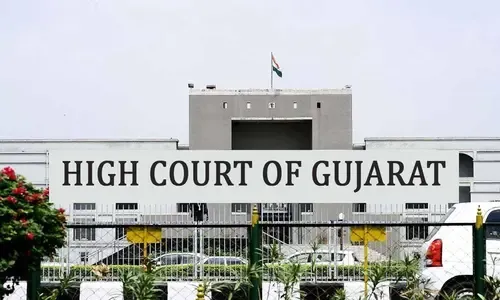
Gujarat High Court Dismisses Asaram Bapu's Appeal, Enables Government to Reclaim Encroached Land
Synopsis
In a significant ruling, the Gujarat High Court has dismissed the Asaram Ashram Trust's appeal, allowing the state government to reclaim over 45,000 square metres of encroached land in Motera. This decision is pivotal for future sports infrastructure linked to the 2030 Commonwealth Games.
Key Takeaways
The Gujarat High Court dismissed the Asaram Ashram Trust's appeal.
The court affirmed the government's right to reclaim over 45,000 square metres of encroached land.
Evidence showed persistent violations by the Ashram.
The land is crucial for future sports infrastructure linked to the 2030 Commonwealth Games.
No interim relief was granted to the Ashram for an appeal.
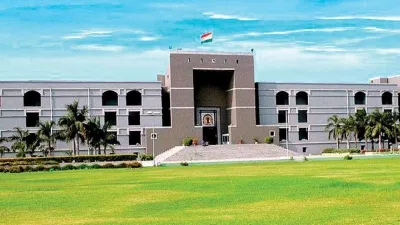
Ahmedabad, April 17 (NationPress) The Gujarat High Court on Friday rejected an appeal made by the Asaram Ashram Trust concerning a prolonged land dispute in the Motera region of Ahmedabad. This ruling reinstates orders for the government to reclaim over 45,000 square metres of valuable land.
A division bench, which included Chief Justice Sunita Agarwal and Justice D.N. Ray, upheld a prior judgment by a single judge that supported the Ahmedabad Collector’s directive to reclaim the land due to violations of allotment conditions and illegal encroachments.
The bench noted that the Ashram had “consistently violated” the conditions set by the government and emphasized that “no chance of regularization of illegal occupation exists.”
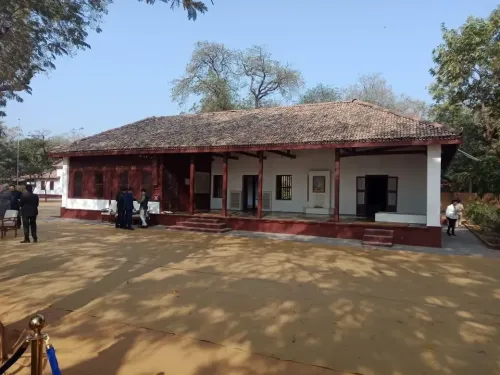
This land was initially allocated several decades ago for specific religious purposes, covering approximately 33,980 square metres.
The government reported that the Ashram had expanded its claim to nearly 50,000 square metres.
Evidence presented by the government, including GPS and satellite mapping, illustrated that the Ashram's occupation extended into adjacent government property and into areas of the Sabarmati riverbed.
The court observed that the petitioner engaged in ongoing violations and determined that “no equity favors the petitioner in this case.”
It further clarified that land adjacent to the river “cannot be regularized under any circumstances.”
Representing the state, government pleader G.H. Virk indicated that reclaiming the land followed a thorough process involving notices, inspections, and over 20 hearings.
According to Virk, the applications made by the Ashram for regularizing unauthorized constructions were tacit acknowledgments of these violations.
He also informed the bench that new actions would be initiated under Section 202 of the Land Revenue Code, with a fresh notice to be issued for reclaiming possession.
The Ashram requested a four-week stay on the order to allow time for an appeal to the Supreme Court.
The bench suggested that any interim relief would depend on the submission of an undertaking to vacate the premises.
No stay was granted following the state's assurance to undertake further legal actions for recovery of the land.
This ruling follows a legal challenge by the Ashram against the Collector’s decision, previously upheld by a single judge in February.
The matter had also been reviewed by revenue authorities and the Gujarat Revenue Tribunal.
The land in question is situated adjacent to the Narendra Modi Stadium and the Sardar Patel Sports Complex in Motera.
State officials have indicated that the recovery of this land is crucial for upcoming sports infrastructure projects, which are linked to the anticipated hosting of the 2030 Commonwealth Games and future Olympic considerations.
With the appeals dismissed, the state government is now poised to proceed with reclaiming the land in accordance with legal guidelines.
Point of View
The swift reclamation of this land is critical for the state's strategic planning.
NationPress
19 Sept 2026
Frequently Asked Questions
What was the main issue in the Gujarat High Court case?
The case revolved around the Asaram Ashram Trust's illegal encroachment of government land in Motera, leading to the court's decision to allow the state to reclaim over 45,000 square metres.
What did the court's ruling entail?
The ruling upheld the government's right to reclaim the land, citing repeated breaches of conditions by the Ashram and denying the possibility of regularizing illegal occupation.
Why is this land important?
The land is adjacent to significant sports facilities and is crucial for future infrastructure developments, particularly in relation to the upcoming 2030 Commonwealth Games.
What could be the next steps after this ruling?
The state government is expected to initiate further legal actions to reclaim possession of the land in accordance with statutory guidelines.
Is there any possibility for the Ashram to appeal this decision?
The Ashram has requested a stay to appeal to the Supreme Court, but the bench indicated that any relief would depend on specific conditions.