Gujarat grants B.Sc Natural Farming degree parity with Agriculture
Synopsis
Gujarat has quietly made a landmark academic call: the B.Sc. Natural Farming degree from Gujarat Natural Farming Science University now carries the same weight as a conventional B.Sc. Agriculture degree. Benchmarked against ICAR standards and NEP 2020, the move could reshape enrolment in natural farming education and signal a template for other states.
Key Takeaways
Gujarat Cabinet , chaired by CM Bhupendra Patel , approved degree equivalence on 1 July .
B.Sc. (Honours) Natural Farming from Gujarat Natural Farming Science University is now equivalent to B.Sc. (Honours) Agriculture from other state agricultural universities.
Equivalence was determined after evaluating course structure, credit system, curriculum, practical training, benchmarked against ICAR standards, NEP 2020 , and the Sixth Deans' Committee recommendations.
The natural farming curriculum emphasises indigenous seed varieties, cow-based practices, and sustainable, self-reliant agriculture.
Minister Jitu Vaghani linked the decision to PM Narendra Modi 's national push for natural farming as a people's movement.
The Gujarat government has decided to recognise the B.Sc. (Honours) Natural Farming degree offered by Gujarat Natural Farming Science University as equivalent to the B.Sc. (Honours) Agriculture degree conferred by the state's other agricultural universities. The decision, taken at a Cabinet meeting on Wednesday, 1 July chaired by Chief Minister Bhupendra Patel, is aimed at ensuring students pursuing natural farming receive the same academic standing and career opportunities as those graduating in conventional agriculture.
What the Cabinet Decided
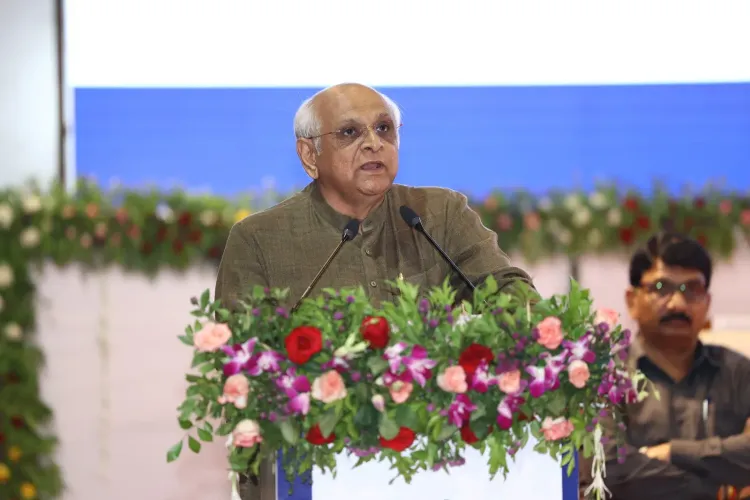
Government spokesperson and Minister Jitu Vaghani announced the equivalence after the Cabinet meeting, confirming that the two undergraduate programmes will now be treated as academically equal. 'The state government has decided to grant equivalence to the B.Sc (Honours) Natural Farming programme conducted by Gujarat Natural Farming Science University with the B.Sc (Honours) Agriculture programme offered by other agricultural universities in the state,' Vaghani said.
He added that the move was intended to encourage natural farming while ensuring graduates in the discipline are not disadvantaged in higher education or employment pathways compared to peers from conventional agricultural streams.
How the Equivalence Was Established
The equivalence was not granted arbitrarily. According to Vaghani, a detailed evaluation examined the course structure, credit system, curriculum, practical training, and academic qualifications of both programmes. The assessment was benchmarked against standards set by the Indian Council of Agricultural Research (ICAR), the National Education Policy 2020, and the recommendations of the Sixth Deans' Committee.
The natural farming curriculum is grounded in an Indian natural farming system and a 'Back to Basics' philosophy, with emphasis on nature-based cultivation, indigenous knowledge systems, indigenous seed varieties, cow-based agricultural practices, optimal use of local resources, and sustainable agriculture.
Policy Context and National Push
Vaghani situated the decision within a broader national policy direction, noting that natural farming is being promoted as a nationwide people's movement under the guidance of Prime Minister Narendra Modi. He said Gujarat has emerged as one of the leading states in implementing natural farming, and that formalising academic recognition in the field would benefit both farmers and young people entering the sector.
The state government also described natural farming as a scientific approach designed to reduce farmers' production costs while promoting conservation of soil, water, the environment, and human health — alongside encouraging self-reliant agriculture.
Impact on Students and the Sector
The Cabinet's decision is expected to give prospective students greater confidence in choosing natural farming as a field of study, knowing their degree will carry the same institutional weight as a conventional agriculture qualification. Notably, this is a significant step in mainstreaming natural farming education within India's formal academic framework — a shift that could influence enrolment trends at Gujarat Natural Farming Science University and potentially prompt other states to follow suit.
As natural farming gains policy momentum nationally, Gujarat's move to anchor it within the mainstream degree equivalence system may set a precedent for how India's agricultural education landscape evolves in the years ahead.
Point of View
Defensible framework that other states could adopt. The harder question is whether the job market and postgraduate institutions will follow the government's lead, or whether natural farming graduates will still find doors closed in practice. Degree parity on paper is a necessary condition, but not a sufficient one. The real measure will be whether recruitment in agricultural extension services, banks, and research institutions updates its eligibility criteria to reflect the new equivalence.
NationPress
30 Sept 2026
Frequently Asked Questions
What did the Gujarat Cabinet decide regarding the B.Sc. Natural Farming degree?
The Gujarat Cabinet decided on 1 July to grant equivalence between the B.Sc. (Honours) Natural Farming degree from Gujarat Natural Farming Science University and the B.Sc. (Honours) Agriculture degree from other state agricultural universities. This means natural farming graduates will have the same academic recognition and opportunities as conventional agriculture graduates.
How was the equivalence between the two degrees determined?
The equivalence was established after a detailed evaluation of both programmes covering course structure, credit system, curriculum, and practical training. The assessment was benchmarked against standards set by the Indian Council of Agricultural Research (ICAR), the National Education Policy 2020, and the Sixth Deans' Committee recommendations.
What is the B.Sc. Natural Farming programme based on?
The programme is grounded in the Indian natural farming system and a 'Back to Basics' approach. It emphasises nature-based cultivation, indigenous knowledge systems, indigenous seed varieties, cow-based agricultural practices, optimal use of local resources, and sustainable agriculture.
Why did Gujarat grant this equivalence?
The state government said the move was intended to encourage natural farming while ensuring students in the discipline receive equal academic recognition. It also fits within a broader national push for natural farming as a people's movement, with Gujarat positioning itself as a leading implementing state.
Who will benefit from this decision?
Students enrolled in or considering the B.Sc. (Honours) Natural Farming programme at Gujarat Natural Farming Science University are the direct beneficiaries, as they will now hold a degree equivalent to conventional agriculture graduates for purposes of higher education and employment.