Gujarat tribal package: ₹2,283 crore for 14 districts on Janjatiya Gaurav Diwas
Synopsis
On Janjatiya Gaurav Diwas, Gujarat Chief Minister Bhupendra Patel announced a ₹2,283.97 crore package for 14 tribal districts — combining land rights for 18,828 families, new livelihood schemes for tribal women, and an ambition to turn Chhota Udepur into a sports and food processing hub. With over 1.11 crore people in the beneficiary pool, the scale of the announcement is hard to miss; the execution will be the real test.
Key Takeaways
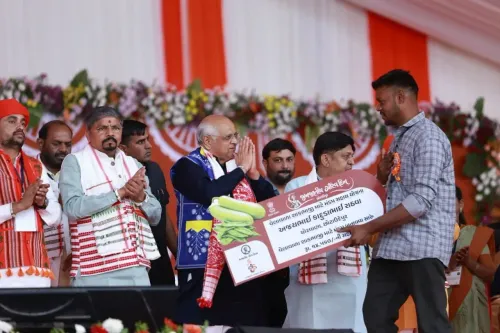
Chief Minister Bhupendra Patel unveiled a ₹2,283.97 crore tribal development package on 15 November 2026 in Chhota Udepur .
18,828 tribal beneficiaries are to receive Forest Rights Certificates recognising their claims over forest land.
The package covers 14 tribal districts and spans water supply, irrigation, roads, healthcare, education, and animal husbandry.
New schemes include 'Prakruti Krushi Aadharit Vadi Sahay Yojana' , 'Shabari Booths' , and 'Johar Cafes' to support tribal women and artisans.
More than 1.11 crore tribal people across the belt from Umargam to Ambaji are identified as beneficiaries.
Deputy CM Harsh Sanghavi amplified the announcements via a post on social media platform X on Monday.
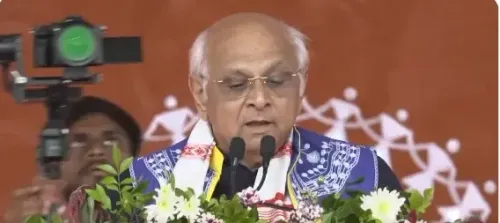
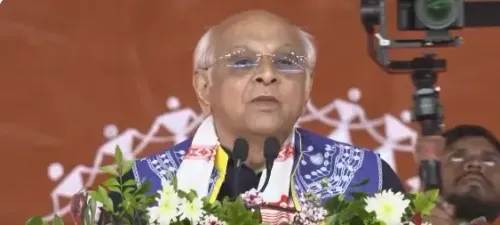
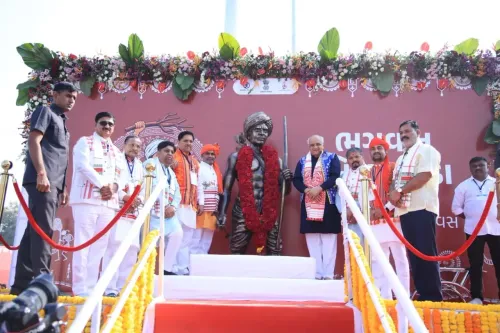
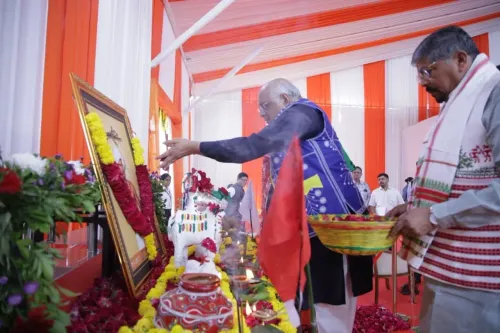
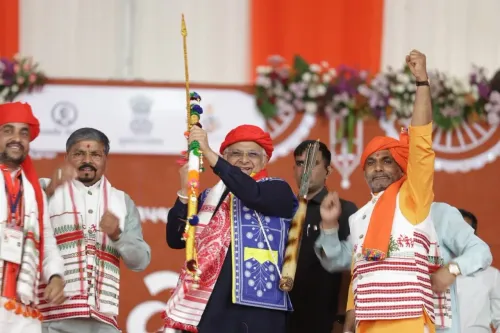
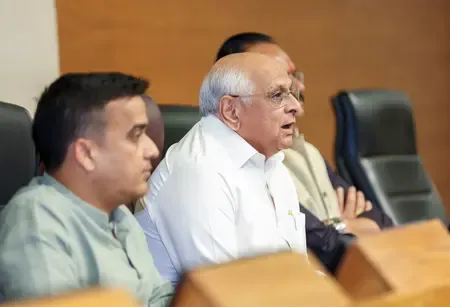
Gujarat Chief Minister Bhupendra Patel on 15 November 2026 unveiled a ₹2,283.97 crore development package for the state's 14 tribal districts during the Janjatiya Gaurav Diwas celebrations in Chhota Udepur, marking the 151st birth anniversary of tribal freedom fighter Birsa Munda. The package spans drinking water, irrigation, road infrastructure, education, healthcare, and forest rights, with 18,828 tribal beneficiaries set to receive Forest Rights Certificates recognising their claims over forest land.
Key Announcements and Projects
Chief Minister Patel virtually inaugurated and laid foundation stones for multiple projects spread across the tribal belt. Among the centrepiece initiatives is the approval of Forest Rights Certificates for 18,828 beneficiaries — a move aimed at formally recognising the land rights of eligible tribal families and communities. The package also includes water supply and irrigation schemes, road connectivity upgrades, animal husbandry support, and forest and environment-related programmes.
Educational infrastructure features prominently, with the package covering Adarsh Residential Schools, Eklavya Model Residential Schools, and hostels. Patel noted that the tribal belt already has 12 science colleges, two universities, 12 medical colleges, and 57 Eklavya Model Residential Schools in operation, alongside more than 22,500 smart classrooms.
New Livelihood Schemes for Tribal Women and Artisans
The package introduced the 'Prakruti Krushi Aadharit Vadi Sahay Yojana' across the 14 tribal districts to promote nature-based agriculture. The government also launched 'Shabari Booths' and 'Johar Cafes' as livelihood platforms targeting tribal women and local artisans. Patel separately announced plans to develop Chhota Udepur as a sports and food processing hub, with the stated aim of generating employment for local youth.
Scale of the Beneficiary Population
The state government estimates that more than 1.11 crore tribal people — spread across a belt stretching from Umargam in south Gujarat to Ambaji in the north — stand to benefit from the broader tribal development initiative. This positions the package as one of the more expansive state-level tribal welfare announcements in recent years.
What Was Said and Who Highlighted It
Deputy Chief Minister Harsh Sanghavi amplified the announcements in a post on social media platform X on Monday, reiterating the scale of the package. In his post, Sanghavi said the projects covered 'water supply and irrigation, road infrastructure, healthcare, animal husbandry, and forest and environment-related initiatives.' The state-level event in Chhota Udepur was held a day before Sanghavi's post, on 15 November.
Background: Janjatiya Gaurav Diwas and Birsa Munda
Janjatiya Gaurav Diwas was instituted by the Centre in 2021 to commemorate the birth anniversary of Birsa Munda, who led the Ulgulan movement against British rule and the exploitation of tribal communities in the late 19th century. The annual observance has since become a focal point for state governments to announce tribal welfare measures. This year's Gujarat event underlines the ruling Bharatiya Janata Party (BJP)'s sustained outreach to tribal constituencies, which account for a significant share of the state's electoral geography. How effectively the announced projects translate into on-ground delivery will be closely watched by tribal rights groups and opposition parties alike.
Point of View
283.97 crore announcement is politically timed and electorally legible — tribal constituencies form a critical vote bloc in the state, and Janjatiya Gaurav Diwas provides a high-visibility platform. The Forest Rights Certificates for 18,828 families are the most substantive element, since land titles create durable economic security in a way that soft infrastructure alone cannot. What the package glosses over is a monitoring framework: past tribal welfare schemes in multiple states have seen fund utilisation lag targets significantly. The real question is whether this package, anchored to forest rights and new livelihood schemes, is built to verify outcomes — or built to generate headlines.
NationPress
16 Nov 2026
Frequently Asked Questions
What is the Gujarat tribal development package announced on Janjatiya Gaurav Diwas 2026?
It is a ₹2,283.97 crore package announced by Chief Minister Bhupendra Patel on 15 November 2026 in Chhota Udepur, covering 14 tribal districts. The package includes forest rights certificates, water supply, roads, healthcare, educational infrastructure, and new livelihood schemes for tribal women and artisans.
What are the Forest Rights Certificates announced for Gujarat tribal families?
The Gujarat government approved Forest Rights Certificates for 18,828 beneficiaries, formally recognising eligible tribal families' and communities' rights over forest land. This is among the most significant land rights initiatives in the package.
What new livelihood schemes were launched for tribal women in Gujarat?
'Shabari Booths' and 'Johar Cafes' were launched to strengthen livelihood opportunities for tribal women and local artisans. The government also introduced the 'Prakruti Krushi Aadharit Vadi Sahay Yojana' to support nature-based agriculture across the 14 tribal districts.
What is Janjatiya Gaurav Diwas and why is it observed?
Janjatiya Gaurav Diwas is observed on 15 November each year to commemorate the birth anniversary of tribal freedom fighter Birsa Munda. It was instituted by the Centre in 2021 to recognise the contributions of tribal freedom fighters to India's independence struggle.
How many tribal people does the Gujarat government identify as beneficiaries of its development programmes?
The Gujarat state government has identified more than 1.11 crore tribal people as beneficiaries, spread across a belt stretching from Umargam in south Gujarat to Ambaji in the north. Chief Minister Patel noted that tribal development has expanded well beyond basic infrastructure in recent years.