How Are Gujarat's Revenue Reforms Enhancing Service Delivery?

Synopsis
Gujarat's recent revenue reforms have transformed service delivery for citizens. Under Chief Minister Bhupendra Patel's leadership, over three dozen services have been digitized, enhancing accessibility and transparency. This article explores how these changes are reshaping governance and improving the lives of residents.
Key Takeaways
Digitization of over three dozen services in Gujarat.
Establishment of Jan Seva Kendras for public convenience.
Significant number of applications processed since 2022.
Advanced mapping technology aiding in land clearance.
Enhancement of online platforms for better accessibility.
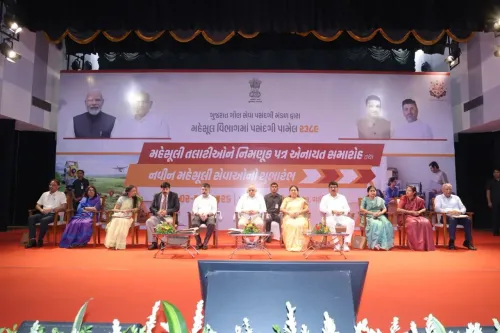
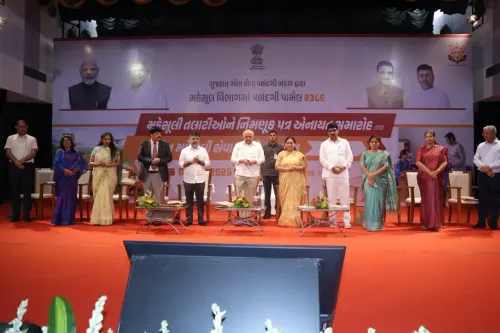
Gandhinagar, Dec 29 (NationPress) A comprehensive set of revenue reforms has been implemented in Gujarat, spearheaded by Chief Minister Bhupendra Patel. This initiative has resulted in the digitization of over three dozen services, enabling the delivery of services that are efficient, accessible, and transparent for the citizens.
The digitization of land records and landholdings belonging to farmers and urban residents simplifies the process of accessing ownership details, making it easier to manage sales, transfers, and maintain records of ownership changes.
Jan Seva Kendras (Citizen Service Centres) have been established throughout the state to enhance convenience for the public, allowing easier access to property records.
Many citizens of Gandhinagar visiting their local Jan Seva Kendra have expressed their appreciation for the reforms implemented by the current government, commending the simplification of procedures.
According to official data, since 2022, approximately 1.79 million applications have been processed, over 40,000 queries resolved, and 1.15 million property cards distributed through drone surveys. Advanced mapping has also facilitated the clearance of more than 3,990 hectares of encroachment.
Online resources, such as the Revenue Department's iORA portal and e-Dhara, have been enhanced, easing the process for citizens to access land records, mutations, and required approvals from various government departments.
The standout feature is that over 36 revenue services, including hereditary records, non-agricultural land approvals, and land measurements, can now be accessed from the comfort of home via the iORA portal.
These initiatives significantly bolster the ease of living and the ease of doing business, positioning Gujarat as a model for effective governance.
By employing cutting-edge technology for land mapping, more than 3,990 hectares of land valued at Rs 3,339 crore have been liberated from encroachment.
Undoubtedly, these revenue reforms have invigorated the state's development, enhanced the ease of living index, and honored the promise of minimum government, maximum governance.
Point of View
I recognize the significant strides made by the Gujarat government in enhancing service delivery through revenue reforms. These initiatives reflect a commitment to transparency and accessibility, which are essential for effective governance. By leveraging technology, Gujarat is not only improving the ease of living for its citizens but also serving as a model for other states to follow.
NationPress
1 Oct 2026
Frequently Asked Questions
What are the key features of Gujarat's revenue reforms?
Gujarat's revenue reforms include the digitization of over three dozen services, the establishment of Jan Seva Kendras for easier access to property records, and enhanced online platforms such as the iORA portal and e-Dhara.
How many applications have been processed since the reforms began?
Since 2022, approximately 1.79 million applications have been processed, with over 40,000 queries addressed and 1.15 million property cards distributed.
What is the impact of these reforms on land encroachment?
Advanced mapping technology has allowed for the clearance of more than 3,990 hectares of encroached land, valued at Rs 3,339 crore.