What are the Key Features of Mukhyamantri Antyodaya Parivar Utthan Yojana 2.0?
Synopsis
Haryana CM Nayab Singh Saini has launched the Mukhyamantri Antyodaya Parivar Utthan Yojana 2.0, aiming to elevate the living standards of the poorest families in the state. This initiative, inspired by PM Modi, is set to provide new employment opportunities and essential services to uplift the underprivileged.
Key Takeaways
Mukhyamantri Antyodaya Parivar Utthan Yojana 2.0 launched to uplift impoverished families.
The initiative aims for an annual income of Rs 180,000 for the poorest families.
Integration of 49 programs across 19 departments .
Immediate access to services such as healthcare and employment .
Focus on women’s empowerment and social security.
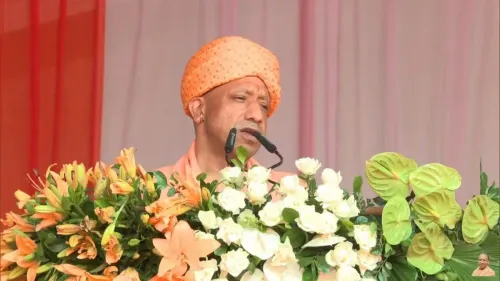
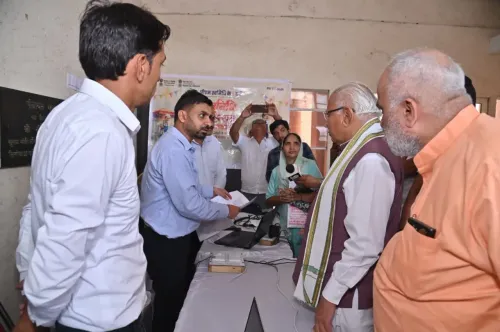
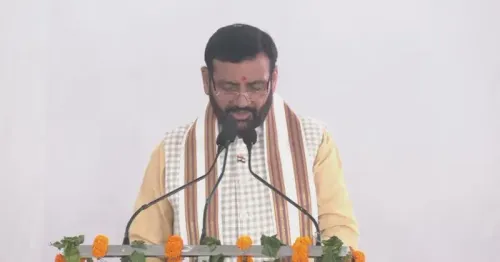
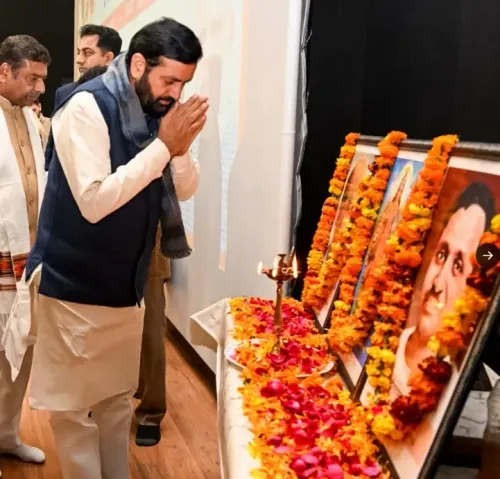
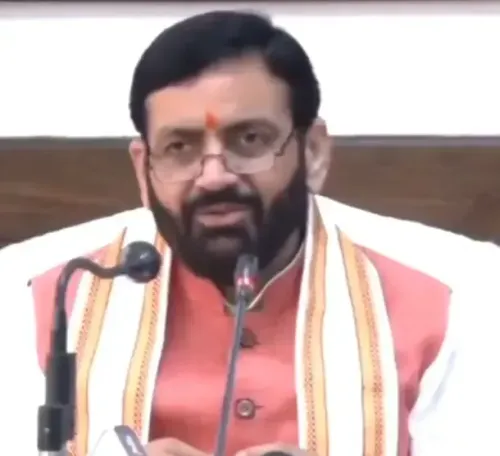
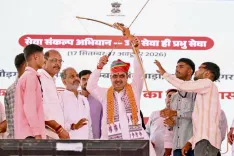
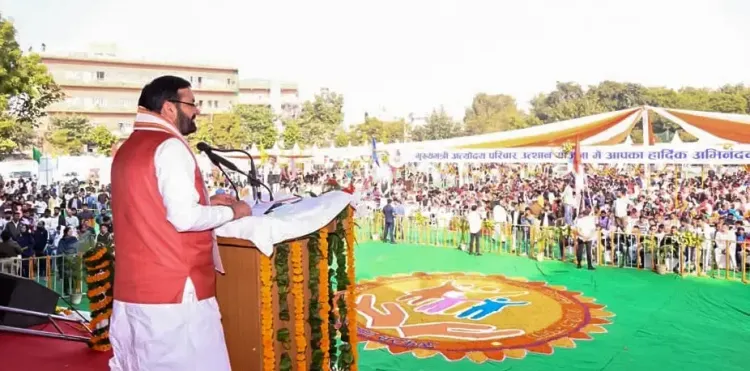
Sonipat, Dec 11 (NationPress) The Chief Minister of Haryana, Nayab Singh Saini, officially launched the Mukhyamantri Antyodaya Parivar Utthan Yojana 2.0 and inaugurated the state-level Antyodaya Utthan Mela on Thursday.
During the event, the Chief Minister expressed that, under the guidance of Prime Minister Narendra Modi and inspired by the principles of Antyodaya as articulated by Pandit Deendayal Upadhyaya, the government is dedicated to uplifting the living conditions of the most impoverished families.
He stated, “The Antyodaya Mela serves not merely as a venue for disseminating information about various schemes, but as a hub of development, engagement, and excitement. The optimism reflected in the faces of families attending is the true indicator of our endeavors.”
CM Saini elaborated that the initiative aims to enhance the income of underprivileged families, offering them equal chances, skill enhancement, employment, respect, and improved living conditions.
In its initial phase, Antyodaya Melas were conducted at 166 sites, while the second phase will extend these fairs throughout the state systematically. He emphasized that the backbone of any society is the strength of its families.
“Educated and empowered families inherently lead the state towards prosperity. Our administration is committed to ensuring that the advantages of all programs reach every deserving individual without bias or delay,” stated the Chief Minister.
He continued by saying that the scheme focuses on equipping families with capabilities through loans, training, and skill development, facilitating their journey towards self-sufficiency.
“This initiative creates new pathways in employment, self-employment, education, and health. Departments offering services like pensions, BPL, ration cards, self-employment loans, women’s empowerment, agriculture, and animal husbandry are available on-site, providing immediate assistance to eligible beneficiaries,” he noted.
The government aims to elevate the annual income of the poorest families to a minimum of Rs 180,000 through this scheme.
Families will have access to loan programs, skill development initiatives, daily wage opportunities, and additional facilities.
The program consolidates 49 initiatives from 19 departments, with a dedicated portal established for providing information, eligibility requirements, benefits, and online application services.
CM Saini asserted the government's commitment to women's empowerment.
Referring to the Deendayal Lado Lakshmi Yojana, he mentioned that this scheme is designed to ensure economic and social security for women. To date, Rs 258 crore has been allocated to over 7 lakh women and girls across two installments.
The Chief Minister underscored the state's social welfare initiatives, revealing that over 41 lakh families have had their ration cards automated.
Under the Chirayu Yojana, free medical services are being provided to BPL families. Through the Ayushman Bharat-Chirayu Yojana, medical treatment worth Rs 4,126 crore has been administered to 25.39 lakh patients.
In the first phase of the Nirogi Haryana Yojana, health check-ups have been performed for 96.72 lakh beneficiaries from Antyodaya families, along with 5.60 crore free laboratory tests.
He also brought attention to the Dayalu Yojana, which has distributed financial aid of Rs 1,456 crore to 38,671 families.
Poor women are receiving LPG cylinders at a subsidized rate of Rs. 500 monthly, positively impacting around 14.70 lakh families across the state.
Point of View
The launch of the Mukhyamantri Antyodaya Parivar Utthan Yojana 2.0 is a commendable initiative reflecting the government's focus on socio-economic upliftment. By prioritizing the needs of the underprivileged, the scheme underscores a commitment to holistic development, aligning with national goals. Such initiatives not only enhance welfare but also empower communities, which is vital for a progressive society.
NationPress
26 Sept 2026
Frequently Asked Questions
What is the Mukhyamantri Antyodaya Parivar Utthan Yojana 2.0?
The Mukhyamantri Antyodaya Parivar Utthan Yojana 2.0 is a scheme launched by the Haryana government aimed at improving the living standards of the poorest families through skill development, employment opportunities, and financial assistance.
How does the scheme benefit families?
The scheme provides families with access to loans, skill development programs, employment opportunities, and immediate solutions to various problems through a range of services from different departments.
What is the anticipated income increase for families under this scheme?
The government aims to raise the annual income of the poorest families to at least Rs 180,000 under this initiative.
How many departments are involved in this scheme?
The Mukhyamantri Antyodaya Parivar Utthan Yojana integrates 49 programs from 19 different departments.
Is there a focus on women's empowerment within this scheme?
Yes, the scheme emphasizes women's empowerment, including the Deendayal Lado Lakshmi Yojana, which has already provided significant financial assistance to women.