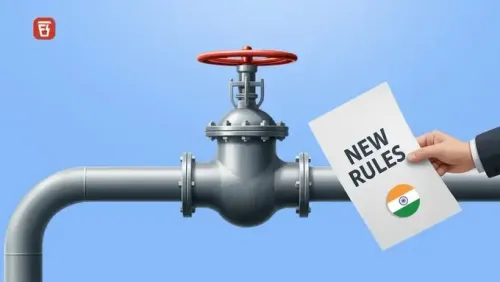
How Have the Petroleum and Natural Gas Rules 2025 Been Amended for Better Business Operations?

Synopsis
In a bold step towards enhancing the operational landscape of the petroleum sector, Union Minister Hardeep Singh Puri announced significant amendments to the Petroleum and Natural Gas Rules, 2025. These changes aim to streamline processes, enhance energy security, and promote sustainable practices in the industry, making it a noteworthy development for all stakeholders.
Key Takeaways
Amendments to the Petroleum and Natural Gas Rules, 2025 enhance business operations.
Applications for petroleum leases will be processed within 180 days.
Long-term leases of up to 30 years can be granted, aiding investment decisions.
Lessees must report on their infrastructure capacity annually.
Penalties for non-compliance have been significantly increased.
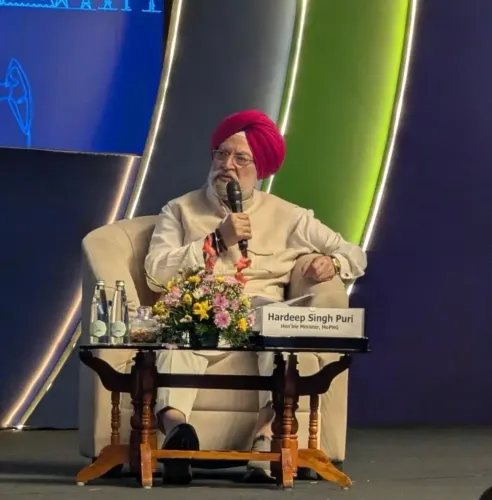
New Delhi, Dec 11 (NationPress) The Union Minister for Petroleum and Natural Gas, Hardeep Singh Puri, announced on Thursday that the Petroleum and Natural Gas Rules, 2025 have undergone significant amendments aimed at facilitating business operations.
In a statement shared on social media platform X, Puri emphasized India's commitment to enhancing its infrastructure for domestic hydrocarbon exploration and production, as the nation strives for energy security under the proactive leadership of Prime Minister Narendra Modi.
The amended rules provide a broader array of rights under a single petroleum lease, allowing lessees to conduct various mineral oil operations and engage in decarbonization and comprehensive energy projects at oilfields.
Applications for petroleum leases will now be processed within 180 days, with long-term leases extending up to 30 years, potentially renewable for the economic lifespan of the field. This change enables lessees to make informed investment decisions.
Puri also highlighted that lessees must submit an annual declaration to the Union government regarding their infrastructure capacity and are allowed to collaboratively develop or share facilities based on mutual agreements.
Furthermore, the amended regulations stipulate that the seat for arbitration of lease and contract disputes will be New Delhi when all parties are Indian companies; alternatively, a neutral arbitration seat can be chosen if a foreign entity is involved.
The new rules introduce standardized lease formats for administrative efficiency and require the submission of a reduction strategy to achieve zero gas flaring and lower greenhouse gas emissions.
National Oil Companies (NOCs) are mandated to promptly report all new discoveries, submit field development plans within specific timelines, and secure government approval for development areas while providing regular updates on production activities.
Additionally, penalties have been increased to Rs 25 lakh, with a daily fine of Rs 10 lakh for ongoing violations, as stated by Union Minister Puri.
Point of View
It's clear that the recent amendments to the Petroleum and Natural Gas Rules, 2025 represent a significant shift towards creating a more efficient and sustainable energy sector in India. This aligns with the government's vision to enhance domestic production while ensuring environmental responsibility.
NationPress
20 Sept 2026
Frequently Asked Questions
What are the main changes in the Petroleum and Natural Gas Rules 2025?
The key changes include broader rights under petroleum leases, faster lease application processing, longer lease terms, and requirements for lessees to report on infrastructure capacity and sustainability measures.
How will these amendments affect business operations?
These amendments are designed to facilitate smoother operations, allowing lessees to conduct various activities under one lease and make long-term investments with confidence.
What penalties have been introduced for non-compliance?
Penalties have been increased to Rs 25 lakh for violations, with an additional daily fine of Rs 10 lakh for ongoing infractions.
Where will arbitration for disputes be held?
Arbitration for lease and contract disputes will be in New Delhi if all parties are Indian companies; otherwise, a neutral location can be chosen.
What is the significance of these amendments for energy security?
These changes aim to strengthen India's energy sector by enhancing domestic exploration and sustainable practices, ultimately contributing to national energy security.