Haryana CM Nayab Singh Saini pitches for semiconductor hub, AI centre at NITI Aayog meet
Synopsis
Haryana CM Nayab Singh Saini used the NITI Aayog platform to stake an early claim in India's technology race — seeking a national AI Centre of Excellence, a semiconductor and GCC hub, and a spot among the country's first 50 industrial parks, all anchored to a $1 trillion state economy target by 2047.
Key Takeaways
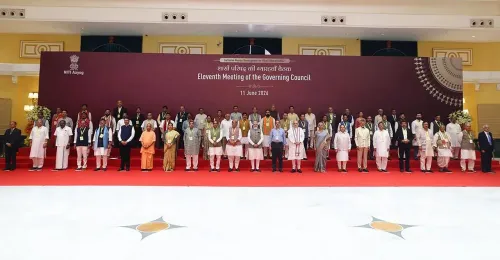
Haryana CM Nayab Singh Saini presented development demands at a NITI Aayog meeting in New Delhi on 12 June .
Saini sought inclusion among the first 50 industrial parks and a special package to develop Haryana as a semiconductor, data centre, and electronics hub .
He requested a national-level AI Centre of Excellence and a dedicated Central package for AI and GCC hubs in the state.
Haryana was the first state to implement NEP 2020 ; the Super-100 Scheme has sent 267 students to IITs, NITs, and medical colleges in five years.
The state targets a contribution of more than $1 trillion to the Indian economy and per capita income above ₹40 lakh by 2047 .
61 women's colleges are operational in Haryana, with a college within every 20-km radius .
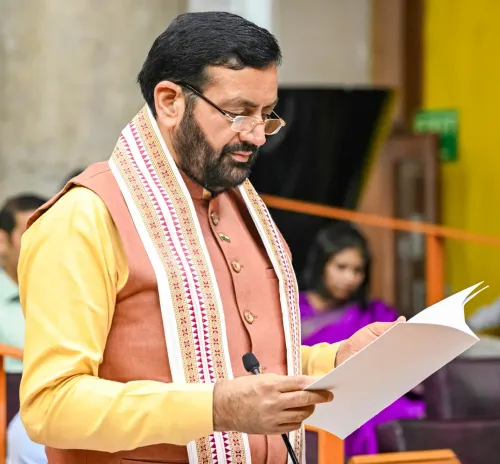
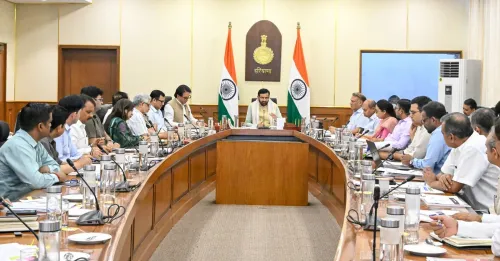
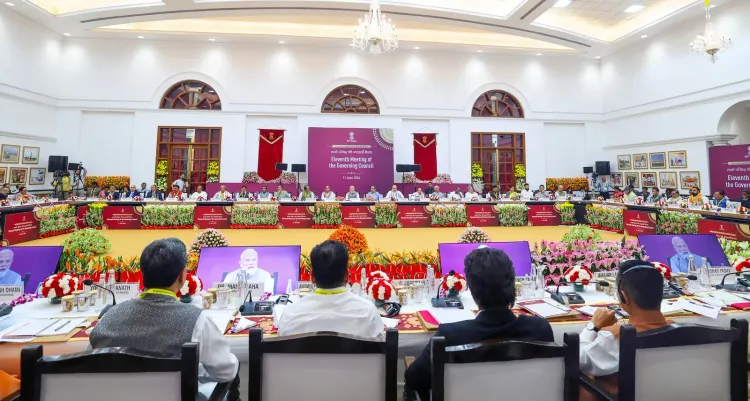
Haryana Chief Minister Nayab Singh Saini on Thursday, 12 June urged the Centre to prioritise the state for semiconductor manufacturing, artificial intelligence infrastructure, and industrial park development at a NITI Aayog meeting in New Delhi. Saini presented a wide-ranging set of demands tied to Haryana's Vision Document 2047, which targets a contribution of more than $1 trillion to the Indian economy and a per capita income exceeding ₹40 lakh by 2047.
Key Demands Placed Before the Centre
Chief Minister Saini urged the Central government to include Haryana among the first 50 industrial parks to be developed under its ambitious industrial development scheme. He also sought a special incentive package to position the state as a hub for semiconductor, data centre, and electronics manufacturing.
Further, Saini requested the establishment of a national-level AI Centre of Excellence in Haryana and a dedicated Central package to develop AI and Global Capability Centre (GCC) hubs in the state. He also called for additional Central assistance for Industrial Model Townships, sector-specific industrial parks, green hydrogen projects, and renewable energy initiatives, while stressing that Haryana should be accorded priority under the National Innovation and Research Fund.
Education and Human Capital Highlights
Saini highlighted several education milestones, noting that Haryana was the first state in the country to implement the National Education Policy (NEP) 2020. To strengthen early education outreach, the state organised 17,859 School Readiness Fairs, drawing participation from over 2 lakh children and 2.5 lakh parents.
The Super-100 Scheme, launched in 2018, has enabled 267 students over the past five years to secure admission to IITs, NITs, and medical colleges. The state has also established 250 PM SHRI Schools, 218 Model Sanskriti Senior Secondary Schools, and, this year, 250 CM EEE (Chief Minister Efficiency and Early English) Schools.
Focus on Women's Higher Education
Expanding access to higher education for women remains a stated priority. Haryana has ensured a college within every 20-km radius, with 61 women's colleges currently operational across the state. Saini underscored the government's commitment to developing human capital as a cornerstone of the state's long-term growth strategy.
Haryana's Vision 2047 in Context
Addressing the NITI Aayog meeting, Saini framed Haryana's development agenda within the broader national goal of Viksit Bharat 2047. He noted that the state's Vision Document 2047 has been aligned with the national roadmap, with skill development, employment generation, entrepreneurship, and human resource development identified as the four pillars of the state's approach.
With India's semiconductor and AI ambitions accelerating, Haryana's push for a dedicated Centre of Excellence and GCC ecosystem positions it as an early mover among states competing for high-technology investment in the next growth cycle.
Point of View
States that move early with specific asks tend to secure the first tranches of funding. But Haryana's $1 trillion economy target by 2047 is an ambitious number for a state whose current GSDP is a fraction of that, and the path from aspiration to allocation depends heavily on whether the Centre's industrial park and GCC schemes are funded at the scale being promised. The education highlights are genuine, but the gap between school readiness fairs and producing the engineering talent that a semiconductor hub actually needs is substantial — and that pipeline, not the policy ask, will determine whether this vision holds.
NationPress
26 Oct 2026
Frequently Asked Questions
What did Haryana CM Nayab Singh Saini demand at the NITI Aayog meeting?
Saini sought inclusion among India's first 50 industrial parks, a special incentive package for semiconductor and electronics manufacturing, a national-level AI Centre of Excellence, and Central support for GCC hubs and green hydrogen projects in Haryana. The demands were presented at a NITI Aayog meeting in New Delhi on 12 June.
What is Haryana's Vision Document 2047?
It is the state's long-term development blueprint aligned with the national Viksit Bharat 2047 goal. Haryana aims to contribute more than $1 trillion to the Indian economy and raise per capita income to over ₹40 lakh by 2047, with skill development and technology manufacturing as key pillars.
Was Haryana the first state to implement NEP 2020?
Yes, according to Chief Minister Saini's address, Haryana was the first state in the country to implement the National Education Policy 2020. The state has since established 250 PM SHRI Schools, 218 Model Sanskriti Senior Secondary Schools, and 250 CM EEE Schools.
What is the Super-100 Scheme and how has it performed?
The Super-100 Scheme, launched in 2018, supports meritorious students in gaining admission to premier institutions. Over the past five years, 267 students under the scheme have secured seats in IITs, NITs, and medical colleges, according to the Chief Minister.
How is Haryana expanding access to women's higher education?
Haryana has established colleges within every 20-km radius across the state, with 61 women's colleges currently operational. Expanding higher education access for women is cited as a key priority in the state's human capital development agenda.