Haryana Eyes Global Electronics Hub: CM Saini's Bold Industrial Plan
Synopsis
Haryana CM Nayab Singh Saini has laid out a sweeping industrial vision to make the state a global hub for electronics, IT, and the booming AVGC-XR creative sector — backed by capital subsidies, AI-powered education, and dedicated policy frameworks that could reshape the state's economic identity.
Key Takeaways
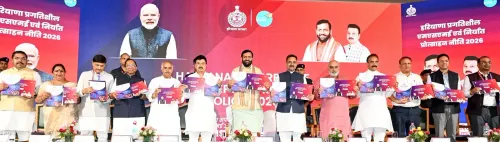
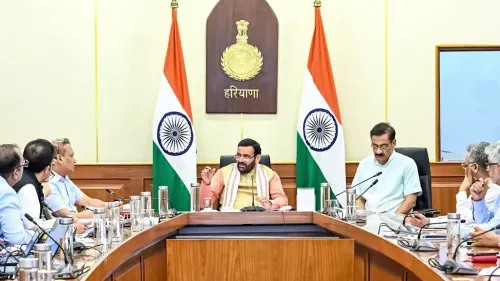
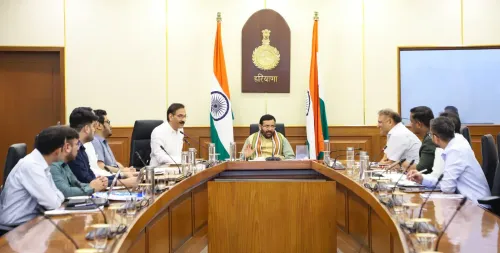
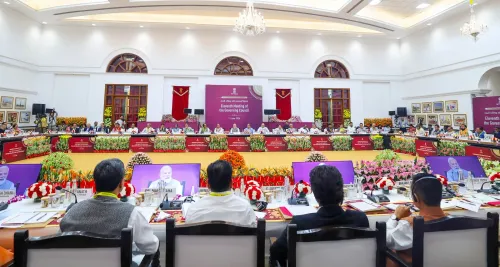
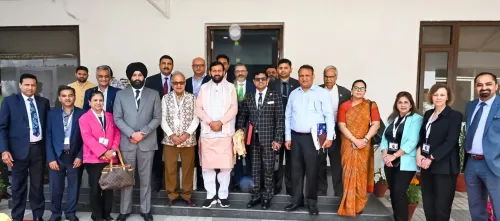
Chief Minister Nayab Singh Saini met industry leaders in New Delhi on April 23, 2025 to outline Haryana's upcoming industrial policy targeting ESDM, IT, and AVGC-XR sectors.
The new policy will offer capital subsidies, tax benefits, skill development support , and ease-of-doing-business provisions to attract domestic and global investors.
Microsoft's Sandeep Arora proposed integrating AI, machine learning, and data analytics training into Haryana's schools and ITIs to build a future-ready workforce.
Haryana is developing a dedicated AVGC-XR policy to support animation, gaming, visual effects, and e-sports — a sector identified as a national priority by the Government of India's AVGC Task Force (2022) .
Industry representatives recommended establishing global warehouses abroad and Centres of Excellence domestically to boost exports and drive innovation.
FICCI AVGC-XR Forum Chairman Ashish Kulkarni urged the government to strengthen the e-sports ecosystem and promote incubators to nurture startups and talent in the creative technology sector.
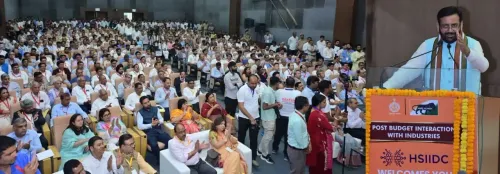
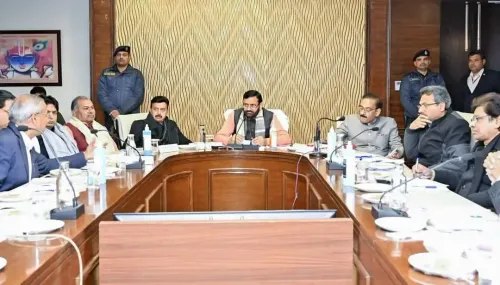
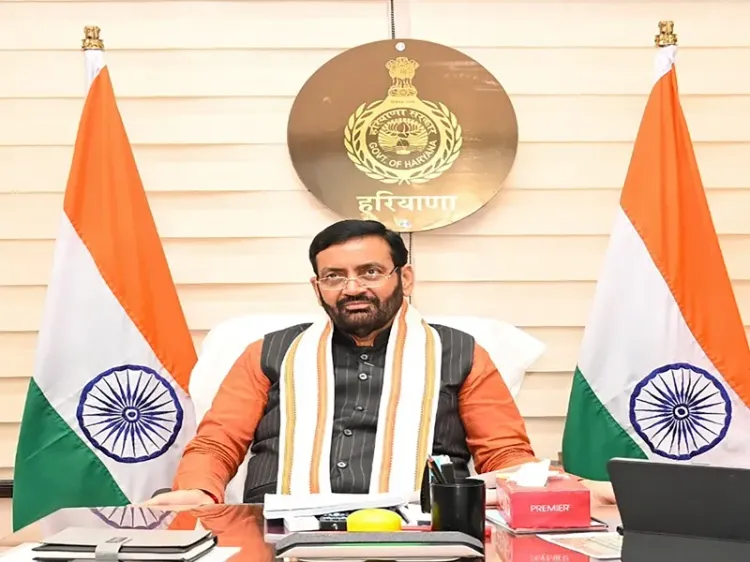
New Delhi, April 23: Haryana Chief Minister Nayab Singh Saini has unveiled an ambitious roadmap to transform Haryana into a globally competitive destination for Electronics System Design and Manufacturing (ESDM), Information Technology (IT), Animation, Visual Effects, Gaming, and Comics (AVGC-XR) sectors. The announcement came during a high-level consultation with industry leaders in New Delhi on Thursday, where the state government outlined a sweeping industrial policy designed to accelerate investment, innovation, and large-scale employment generation.
Haryana's New Industrial Policy: Key Pillars
Chief Minister Saini emphasized that sectors like ESDM, IT, and AVGC-XR are rapidly emerging as foundational pillars of India's national economy. He underscored that Haryana's robust physical infrastructure, seamless connectivity, and investor-friendly regulatory environment position it uniquely to capture global capital flows.
The proposed industrial policy will offer a comprehensive incentive basket, including capital subsidies, tax benefits, skill development support, and streamlined ease-of-doing-business provisions. These measures are designed to ensure both the smooth establishment of new enterprises and the accelerated expansion of existing ones.
Industries and Commerce Minister Rao Narbir Singh, who was also present at the meeting, stated that the government's core objective is to position Haryana as the preferred investment destination for leading domestic and international corporations.
Industry Recommendations and Strategic Priorities
Industry representatives at the consultation put forward several forward-looking recommendations. They called for the identification of futuristic product categories and the selection of anchor companies to be groomed into global players — a move that would simultaneously benefit associated Micro, Small, and Medium Enterprises (MSMEs) through supply chain integration.
Delegates stressed the importance of building a strong Research and Development (R&D) ecosystem for startups and establishing Centres of Excellence to catalyse innovation across sectors. On the export front, industry bodies recommended setting up global warehouses abroad to facilitate smoother product storage and distribution for Haryana-based companies targeting international markets.
Several firms also expressed keen interest in adopting Industrial Training Institutes (ITIs), seeking to co-design curriculum and training programs to ensure a pipeline of skilled talent precisely tailored to industry requirements.
AI-Powered Education and Future-Ready Workforce
Sandeep Arora from Microsoft presented a compelling case for integrating Artificial Intelligence (AI)-based education into schools, ITIs, and higher educational institutions across the state. Under the proposed initiative, students would receive structured training in AI, machine learning, and data analytics from an early stage — equipping them with skills to compete in the global digital economy.
This initiative aligns closely with India's National Education Policy (NEP) thrust on future-ready skills and reflects a growing recognition that the talent pipeline, not just infrastructure, determines a state's competitiveness in the global technology race.
The government has also committed to providing dedicated policy support and financial incentives to promote R&D activities and foster a culture of innovation across the ESDM and IT ecosystems.
AVGC-XR Sector: A Dedicated Policy Framework
In a significant move for India's creative economy, the Haryana government is developing a dedicated policy exclusively for the AVGC-XR sector — covering Animation, Visual Effects, Gaming, Comics, and Extended Reality. This structured framework aims to provide a clear growth platform for what is increasingly recognised as a high-value, technology-driven creative industry.
FICCI AVGC-XR Forum Chairman Ashish Kulkarni and other industry stakeholders recommended strengthening the e-sports ecosystem to unlock new employment and revenue opportunities for youth. They also advocated for the promotion of incubators and Centres of Excellence to nurture innovation, support startups, and develop specialised talent within the AVGC-XR domain.
This comes amid a broader national push — the Government of India's AVGC Task Force, constituted in 2022, had already identified the sector as a priority for generating high-quality employment and boosting exports. Haryana's dedicated policy would position it among the frontrunner states — alongside Karnataka and Maharashtra — in capturing this emerging opportunity.
Strategic Significance and What Comes Next
Haryana's pivot toward ESDM and AVGC-XR is strategically timed. India's electronics manufacturing sector is projected to reach $300 billion by 2026, driven by Production Linked Incentive (PLI) schemes and the global China-plus-one supply chain realignment. States that build enabling ecosystems now stand to capture disproportionate investment flows over the next decade.
Notably, Haryana already hosts significant IT and manufacturing infrastructure in corridors like Gurugram and Manesar, giving it a structural head start over many competing states. The new policy, once finalised and notified, is expected to build on this foundation with targeted sectoral incentives.
With the industrial policy currently in formulation, stakeholders and investors will be closely watching the official notification timeline. The government's ability to translate these consultations into a notified, time-bound policy — with clear implementation benchmarks — will determine whether Haryana can genuinely emerge as a global electronics and creative technology powerhouse.
Point of View
The real test lies not in the ambition of the policy on paper but in its execution: previous state-level ESDM and IT initiatives across India have often stalled at the incentive-announcement stage without building the deep institutional infrastructure — R&D ecosystems, quality ITIs, reliable power — that global investors actually demand. The inclusion of Microsoft and FICCI voices adds credibility, but Haryana must also reckon with stiff competition from Karnataka, Telangana, and Tamil Nadu, which have decade-long head starts in tech investment. The AVGC-XR push is genuinely differentiated and timely — but only a notified, enforceable policy with clear timelines will separate intent from impact.
NationPress
19 Sept 2026
Frequently Asked Questions
What is Haryana's plan to become a global electronics hub?
Haryana is formulating a new industrial policy targeting ESDM, IT, and AVGC-XR sectors with capital subsidies, tax benefits, skill development support, and ease-of-doing-business provisions. Chief Minister Nayab Singh Saini announced the initiative during a consultation with industry leaders in New Delhi on April 23, 2025.
What is the AVGC-XR policy Haryana is developing?
Haryana is working on a dedicated policy for the Animation, Visual Effects, Gaming, Comics, and Extended Reality (AVGC-XR) sector to provide a structured growth platform for this creative and technology-driven industry. The policy is expected to include support for incubators, Centres of Excellence, and the e-sports ecosystem.
How does Haryana plan to develop a skilled tech workforce?
Haryana plans to integrate AI-based education into schools, ITIs, and colleges, training students in AI, machine learning, and data analytics from an early stage. Microsoft's Sandeep Arora presented this initiative at the industry consultation, and several companies also expressed interest in directly adopting ITIs to co-design curricula.
Which industries were represented at CM Saini's industrial policy meeting?
The meeting included representatives from Microsoft, FICCI's AVGC-XR Forum, and various industry bodies focused on electronics manufacturing, IT, gaming, and animation. Industries and Commerce Minister Rao Narbir Singh also attended the consultation alongside Chief Minister Nayab Singh Saini.
Why is Haryana targeting the electronics and AVGC sectors for investment?
India's electronics manufacturing sector is projected to reach $300 billion by 2026, and the AVGC sector has been identified as a national priority by a Government of India task force since 2022. Haryana's existing infrastructure in corridors like Gurugram and Manesar gives it a competitive foundation to attract global investors in these high-growth sectors.