Labour Empowerment Key to Viksit Bharat 2047: Haryana CM Saini
Synopsis
Haryana CM Nayab Singh Saini announced a State Social Security Board for auto and transport drivers, a 35% minimum wage hike making Haryana the first state under the Code on Wages, and appointment letters for workers by June 15 — framing labour empowerment as the cornerstone of PM Modi's Viksit Bharat 2047 vision.
Key Takeaways
Haryana becomes the first state in India to implement a 35% minimum wage hike under the Code on Wages , pushing wages to Rs 19,425 .
CM Nayab Singh Saini announced a new State Social Security Board to extend welfare benefits to auto drivers and transport drivers .
All eligible workers will receive formal appointment letters by June 15 , strengthening employment security and institutional transparency.
Minimum wages in Haryana grew from Rs 2,903 in 2005 to Rs 6,289 in 2014 and now stand at Rs 19,425 — a threefold rise in eleven years.
Over 54.32 lakh unorganised workers in Haryana are registered on the e-Shram portal ; 33.58 lakh organised workers are enrolled across 4.5 lakh establishments .
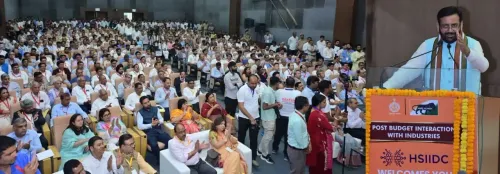
The announcements were made at a state-level Labour Awareness and Felicitation Programme at Tau Devi Lal Stadium, Gurugram on April 26, 2025 .
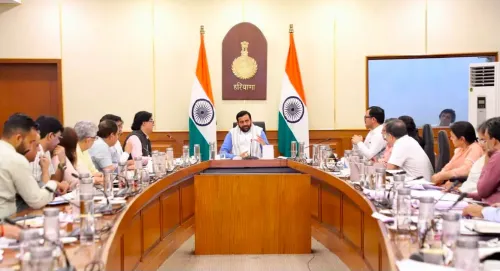
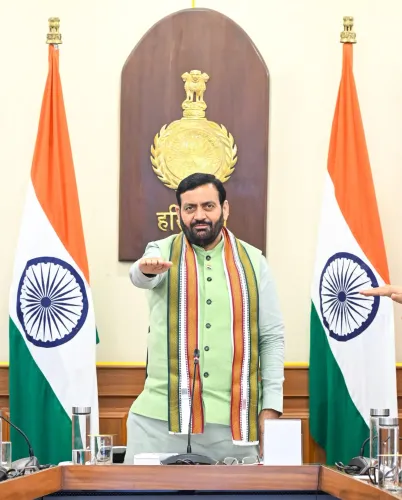
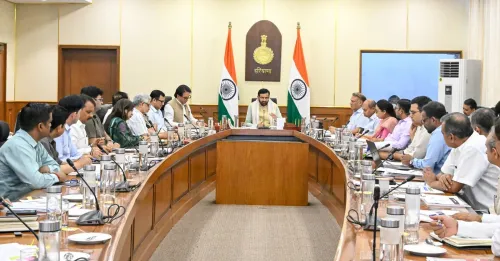
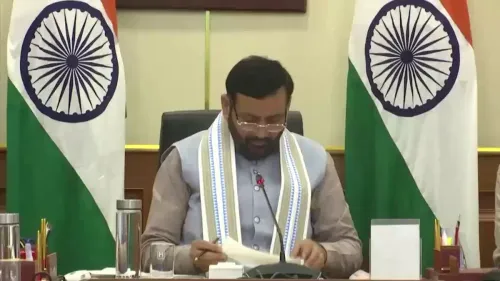
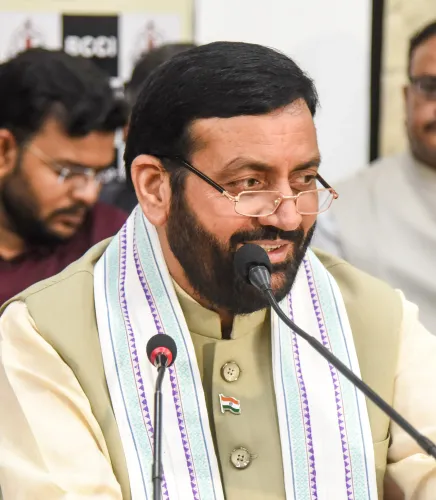
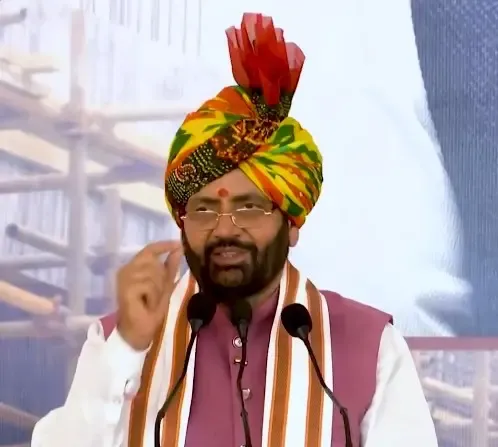
Gurugram, April 26: Haryana Chief Minister Nayab Singh Saini declared on Sunday that Prime Minister Narendra Modi's ambitious vision of a 'Viksit Bharat' by 2047 cannot be achieved without meaningful labour empowerment and the active participation of the workforce. Speaking at a state-level event in Gurugram, Saini outlined a series of landmark welfare measures aimed at strengthening the economic and social standing of workers across Haryana.
State Social Security Board for Auto and Transport Drivers
Responding to a demand raised by the Bharatiya Mazdoor Sangh, CM Saini announced the formation of a dedicated State Social Security Board to ensure the upliftment of organised workers, including auto drivers and transport drivers — a segment that has historically remained outside formal welfare frameworks.
The board will extend social security benefits to this previously underserved category, marking a significant policy shift in how Haryana approaches gig and semi-formal workforce welfare. This move comes at a time when states across India are grappling with the challenge of integrating informal workers into structured benefit systems.
Appointment Letters for Workers by June 15
Referencing an already-announced service security framework, the Chief Minister confirmed that the process of issuing appointment letters to eligible workers is actively underway. He assured that all qualifying workers would receive their appointment letters by June 15, a step designed to strengthen employment security and boost institutional transparency in labour contracts.
This initiative is particularly significant for daily-wage and contractual workers who have long operated without formal documentation, leaving them vulnerable to arbitrary dismissal and denial of benefits.
Haryana First State to Implement 35% Minimum Wage Hike Under Code on Wages
In a landmark reform, CM Saini highlighted that Haryana has become the first state in India to implement a 35 per cent increase in minimum basic wages under the provisions of the Code on Wages — a central legislation that consolidates multiple wage-related laws.
The trajectory of wage growth in the state tells a striking story. The minimum wage stood at just Rs 2,903 in 2005, rising to Rs 6,289 by 2014 — a near doubling over a decade. Under the current government, minimum wages have surged to Rs 19,425, representing a more-than-threefold increase over the past eleven years.
This acceleration in wage growth outpaces the national average and signals Haryana's intent to position itself as a model state for labour welfare under the broader framework of competitive federalism.
e-Shram Portal and Worker Registration Milestones
The Chief Minister also highlighted the reach of the Centre's e-Shram Portal, launched to register workers in the unorganised sector. In Haryana, more than 54.32 lakh workers have been enrolled on the portal, reflecting significant administrative outreach.
In the organised sector, 33.58 lakh workers are registered across 4.5 lakh establishments in the state — a data point that underscores Haryana's relatively robust formal employment ecosystem compared to many other Indian states.
Broader Implications: Labour Policy in a Pre-Election Context
The announcements come ahead of key political cycles and reflect a deliberate effort by the BJP-led Haryana government to consolidate its working-class support base. Notably, the Bharatiya Mazdoor Sangh — the labour wing affiliated with the RSS — has been a consistent voice for formalising welfare for drivers and gig workers, and the government's swift response signals strong ideological alignment and political intent.
Critics and labour economists, however, argue that the real test lies in implementation — particularly whether the State Social Security Board will be adequately funded and whether appointment letters will translate into enforceable employment rights on the ground.
As India's labour force continues to evolve with the rise of platform-based and gig employment, Haryana's policy moves could set a precedent that other states are compelled to follow — or contest. The June 15 deadline for appointment letters and the operationalisation of the new security board will be closely watched as indicators of the government's actual commitment to labour empowerment.
Point of View
And the State Social Security Board for drivers addresses a long-standing gap in India's welfare architecture. What mainstream coverage misses is the broader signal: as gig and platform work reshapes India's labour market, states that move first on formalisation will gain both economic and electoral advantages. The real question is whether these promises survive the implementation gap — India's policy graveyard is full of well-announced boards and portals that never delivered on the ground.
NationPress
19 Sept 2026
Frequently Asked Questions
What did Haryana CM Nayab Singh Saini announce for workers?
Haryana CM Nayab Singh Saini announced the formation of a State Social Security Board for auto and transport drivers, a 35% minimum wage hike making Haryana the first state to implement it under the Code on Wages, and issuance of appointment letters to all eligible workers by June 15.
What is the current minimum wage in Haryana in 2025?
The current minimum wage in Haryana stands at Rs 19,425, up from Rs 6,289 in 2014 and Rs 2,903 in 2005. This represents a more than threefold increase over the past eleven years under the current state government.
Why is Haryana's minimum wage hike significant nationally?
Haryana has become the first state in India to implement a 35 per cent increase in minimum basic wages under the Code on Wages, a central legislation consolidating multiple labour laws. This sets a benchmark that other states may be compelled to follow.
What is the State Social Security Board announced in Haryana?
The State Social Security Board is a new welfare mechanism announced by Haryana CM Saini to extend social security benefits to organised workers, including auto drivers and transport drivers who were previously excluded from formal welfare frameworks.
How many workers are registered on the e-Shram portal in Haryana?
More than 54.32 lakh unorganised sector workers in Haryana have been registered on the Centre's e-Shram portal. Additionally, 33.58 lakh workers are registered in the organised sector across 4.5 lakh establishments in the state.